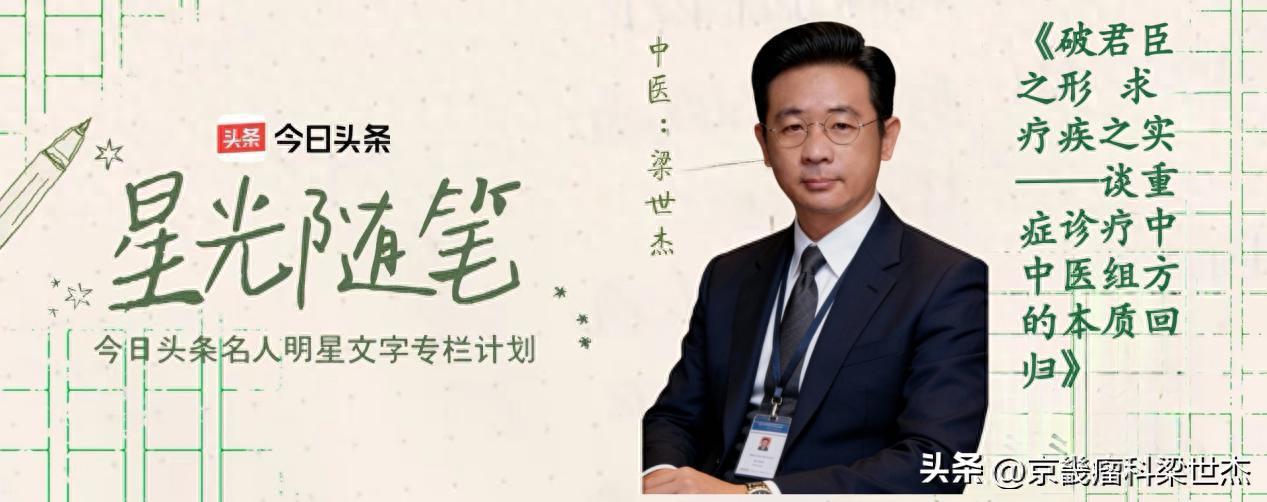
梁世傑:破君臣之形 求療疾之實—談重症診療中中醫組方的本質迴歸
君臣佐使,作爲中醫方劑配伍的核心準則,千百年來如圭臬般指導着臨牀組方,於感冒、胃痛等常見病、小病的診療中,寥寥數味藥分清主次、各司其職,便能精準對症、效如桴鼓。可當面對癌症這類寒熱錯雜、虛實糾纏的重大危急重症時,固守君臣佐使的形式桎梏,還是直擊療效核心,早已是無需辯駁的臨牀抉擇——療效爲綱,形式爲末,於重症而言,拋開療效談配伍規矩,無異於捨本逐末。
餘瀛鰲餘老在接受奧地利記者採訪時曾談到:所謂經方與時方的論爭,由來已久……所謂經方,指的就是張仲景《傷寒雜病論》的方劑,其組成的特點就是藥味少而精,而且有君臣佐使的搭配,歷代運用之後證明確有很好的療效。時方有的藥味很多,藥味一多就難以說清楚配伍了,當然時方也很有效,不可偏廢……據不完整的統計資料,大約有10萬個以上……。可見,無論經方還是時方餘教授以療效爲先。
《內經》言“君一臣二,制之小也;君一臣三佐五,制之中也;君一臣三佐九,制之大也”,本是對不同病情方劑規模的闡釋,卻被後世部分醫者固化爲不可逾越的形式枷鎖。須知常見病病機單純,或寒或熱、或虛或實,君臣佐使的層級劃分能讓藥力集中,如桂枝湯以桂枝爲君溫通營衛,芍藥爲臣斂陰和營,姜棗爲佐使調和脾胃,五味藥分工明確,成千古名方。但癌症之病,絕非單一病機可概括,患者多歷經手術、放化療後正氣大虧,又兼癌毒盤踞、痰瘀互結,往往既有畏寒乏力的陽虛之象,又有口乾咽痛的陰虛之徵,既有腫塊堅硬的實證表現,又有氣血耗竭的虛證本質,這般複雜局面,豈是簡單的君臣層級能覆蓋?
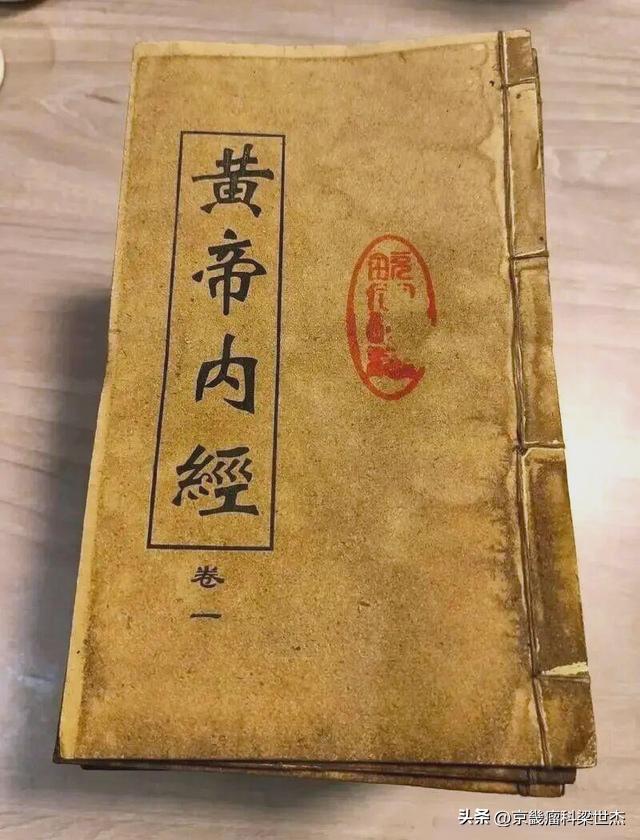
臨牀中,重症複方常達20至30味藥,多以數方合璧,如四君子湯健脾扶正、血府逐瘀湯活血消癥、海藻玉壺湯化痰散結,再配伍解毒抗癌之品,共奏扶正祛邪之功。此時若強行劃分君臣佐使,便會陷入兩難:是將健脾的黨蔘定爲君,還是將抗癌的重樓立爲主?是視活血的桃仁爲臣,還是將養陰的麥冬歸爲佐?正如王永炎院士所言,複方中多種藥材的化學成分相互作用,形成複雜的系統,明確區分一味藥的絕對“君臣佐使”角色,早已是操作難題。這種複雜性,恰是重症病機的外在體現,組方的核心是貼合病機、兼顧多端,而非削足適履迎合形式。
君臣佐使理論的侷限性,早已被學界共識。其一,概念交叉重複,臣藥與佐助藥界限模糊,同爲輔助主症,臣藥是直接協同君藥,佐助藥是輔助君臣、兼治次症,實際應用中難有精準界定;其二,部分方劑無法用其解釋,如僅兩味藥的甘草乾薑湯,強行分君臣不過是牽強附會,而重症合方的複雜性,更讓這一理論形同虛設。曾有結腸癌術後化療患者,噁心納差、神疲乏力,兼見口乾口苦、腫塊未消,醫者以香砂六君子湯爲基礎,合入柴胡黃芩疏肝清熱、重樓莪術解毒消癥、雞血藤黃芪益氣養血,全方20餘味藥,既補脾胃之虛,又清餘毒之熱,既活血消癥,又兼顧氣血,患者服藥後噁心緩解、血象恢復、精神轉佳,這般療效,絕非靠君臣佐使的形式規整得來,而是靠對病機的精準把握、對藥力的統籌兼顧。
回望中醫發展史,從來都是療效爲先、理論服務臨牀,而非理論束縛臨牀。張仲景著《傷寒雜病論》,創麻黃湯、大承氣湯等名方,君臣佐使清晰,是因傷寒病傳變有序、病機單純;而面對雜病重症,其合方思路早已突破單一君臣框架,如鱉甲煎丸治癥瘕積聚,23味藥合多方之意,寒熱並用、虛實兼顧,雖難分明確君臣,卻成治癥良方,流傳千年。反觀當下,部分醫者固守君臣佐使的形式,面對重症時糾結於某味藥的定位,卻忽視了患者正氣虧虛、癌毒肆虐的核心矛盾,最終延誤病情,這正是背離了中醫“治病求本”的初心。
於重症診療而言,理法方藥的核心邏輯從未改變——辨證審因、確定治則、遣方用藥,君臣佐使本是理法方藥中“方藥”環節的輔助工具,是爲了讓組方更清晰,而非成爲束縛組方的牢籠。當工具不再適配需求時,便應迴歸本質:只要辨證準確、治則明晰,合方也好、大方也罷,能扶正祛邪、緩解痛苦、延長生存期,便是好方。正如面對垂危患者,醫者首要考慮的是如何挽狂瀾於既倒,而非糾結於藥物的“名分”,這既是對生命的敬畏,也是中醫“以人爲本”的核心體現。
中醫的生命力,在於其臨牀療效,而非理論的完美無缺。君臣佐使是中醫組方的智慧結晶,卻非金科玉律;複方合方是重症診療的必然選擇,更是中醫應對複雜疾病的優勢所在。打破形式桎梏,堅守療效初心,以病機爲核心,以扶正祛邪爲準則,讓組方服務於患者、服務於臨牀,方能讓中醫在重症診療中彰顯價值,守護生命安康。這既是對傳統中醫的傳承,更是對中醫發展的創新,唯有如此,中醫才能在時代浪潮中,始終立足臨牀、造福百姓。
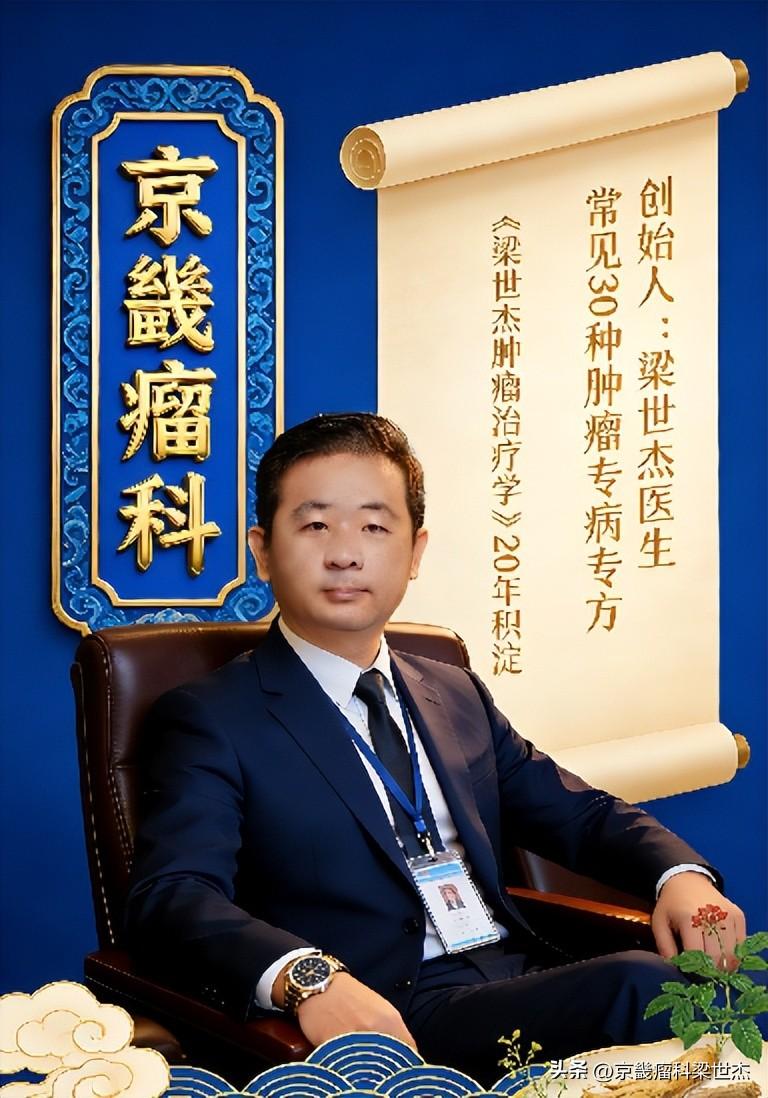
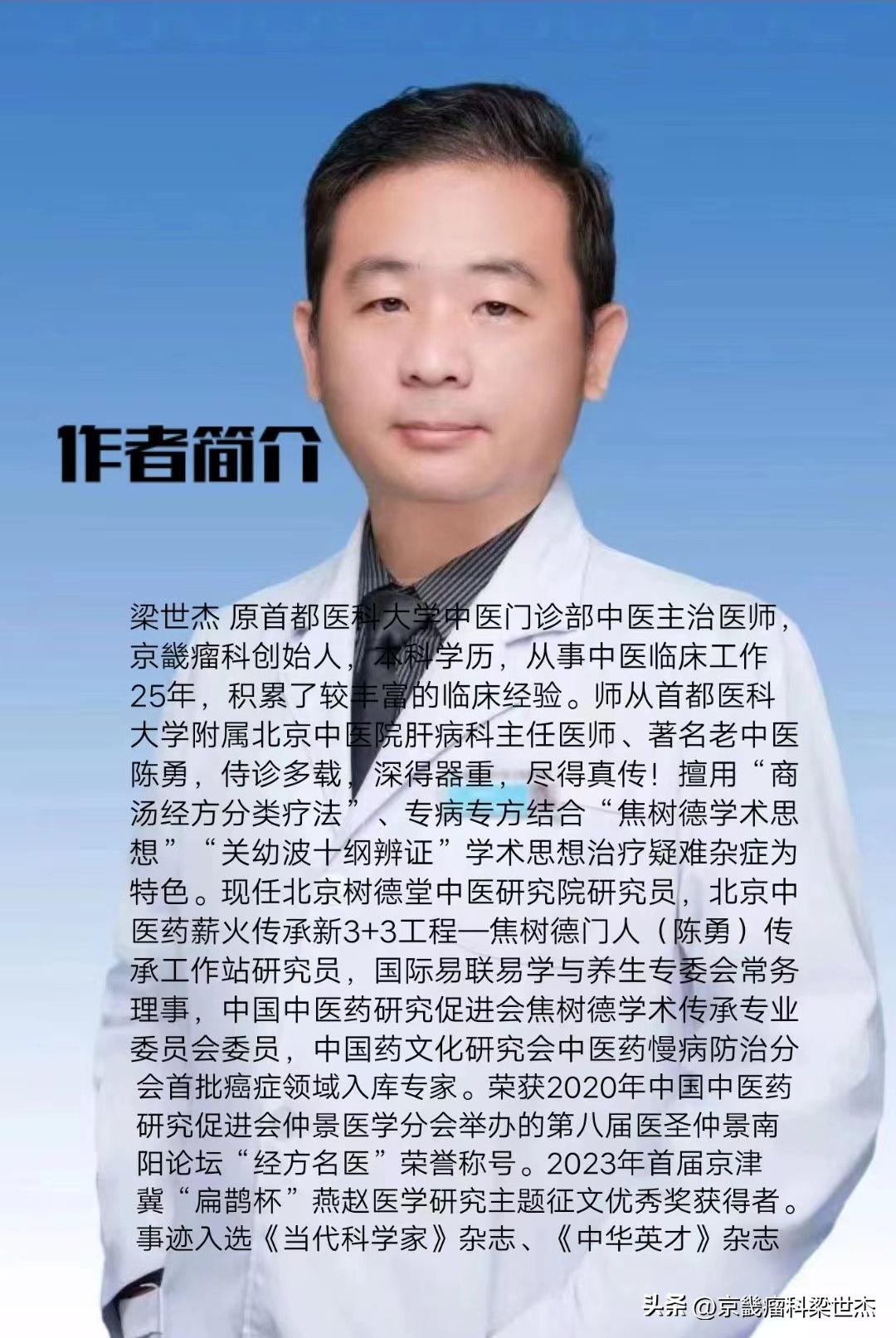
作者簡介:梁世傑 原首都醫科大學中醫門診部中醫主治醫師,京畿瘤科創始人,本科學歷,從事中醫臨牀工作25年,積累了較豐富的臨牀經驗。師從首都醫科大學附屬北京中醫院肝病科主任醫師、著名老中醫陳勇,侍診多載,深得器重,盡得真傳!擅用“商湯經方分類療法”、專病專方結合“焦樹德學術思想”“關幼波十綱辨證”學術思想治療疑難雜症爲特色。現任北京樹德堂中醫研究院研究員,北京中醫藥薪火傳承新3+3工程—焦樹德門人(陳勇)傳承工作站研究員,國際易聯易學與養生專委會常務理事,中國中醫藥研究促進會焦樹德學術傳承專業委員會委員,中國藥文化研究會中醫藥慢病防治分會首批癌症領域入庫專家。榮獲2020年中國中醫藥研究促進會仲景醫學分會舉辦的第八屆醫聖仲景南陽論壇“經方名醫”榮譽稱號。2023年首屆京津冀“扁鵲杯”燕趙醫學研究主題徵文優秀獎獲得者。事蹟入選《當代科學家》雜誌、《中華英才》雜誌。
Liang Shi-jie: Breaking Free from the Forms of Ruler and Subject, Seeking the True Purpose of Healing – Discussing the Essence of Traditional Chinese Medicine Formulations in Critical Care Diagnosis and Treatment
The principles of “jun,” “zheng,” “zuo,” and “shou,” which serve as the core guidelines for the composition of traditional Chinese medicine prescriptions, have guided clinical formulation for thousands of years, acting as a benchmark. In the diagnosis and treatment of common and minor ailments such as colds and stomachaches, a few simple herbs can be distinguished in terms of their primary and secondary roles, each performing its designated function, allowing for precise diagnosis and effective treatment. However, when faced with critical and life-threatening conditions like cancer, which involve complex mixtures of heat and cold, and entanglements of yin and yang, adhering strictly to the forms of “jun,” “zhen,” “zu,” and “shou” or directly addressing the core of efficacy has become an indisputable clinical choice: efficacy is the primary concern, while formality is secondary. For severe conditions, discussing prescribing rules without considering efficacy amounts to neglecting the essential aspects and focusing on mere formality.
Yu Yingao, the elder, mentioned in an interview with an Austrian journalist that the debate between traditional formulas and contemporary formulas has been ongoing for a long time… Traditional formulas refer to the prescriptions in Zhang Zhongjing’s “Treatise on Febrile and Miscellaneous Diseases.” The characteristic of their composition is that they contain fewer ingredients but are highly effective, with a clear arrangement of sovereign, assistant, and auxiliary herbs. Over the centuries, their use has been proven to yield excellent therapeutic results. Contemporary formulas, on the other hand, often contain numerous ingredients, making it difficult to clearly explain their combination. Of course, contemporary formulas are also highly effective and should not be neglected… According to incomplete statistical data, there are approximately over 100,000 such formulas. It is evident that, regardless of whether it is traditional or contemporary, Professor Yu prioritizes efficacy.
The Inner Canon states, “When the ruler is one and the subordinates are two, the system is small; when the ruler is one and the subordinates range from three to five, the system is moderate; when the ruler is one and there are three subordinates and nine assistants, the system is large.” This was originally intended to explain the scale of different medicinal formulations for various conditions. However, some later practitioners rigidly interpreted it as an insurmountable form of constraint. It is essential to recognize that common diseases often have straightforward pathophysiological mechanisms, involving either cold or heat, deficiency or excess. The hierarchical division of roles among the ruler, subordinates, and assistants allows the concentrated application of medicinal effects. For example, Gui Zhi Tang features Gui Zhi as the ruler to warm and regulate the qi and blood, Pai Shao as the subordinate to consolidate the yang and harmonize the qi and blood, Jiang Zhuang as the assistants to harmonize the spleen and stomach. The five herbs have distinct roles, resulting in a legendary formula. However, the disease of cancer cannot be summarized by a single pathophysiological mechanism. Patients often experience significant depletion of qi after undergoing surgery, radiotherapy, and chemotherapy, coupled with the presence of cancer toxins, phlegm, and blood stasis. They may exhibit symptoms of yang deficiency, such as coldness and weakness, as well as symptoms of yin deficiency, such as dryness in the mouth and throat. They may show signs of hard masses indicative of an objective manifestation of excess, as well as the underlying essence of qi and blood exhaustion. Such complexity cannot be adequately addressed by simplistic hierarchical systems.
In clinical practice, complex formulas for severe conditions often consist of 20 to 30 ingredients, with many formulas combining multiple components. For example, the Four Gentlemen Decoction tonifies the spleen and supports qi, the Blood-Clearing Decoction disperses blood stasis and eliminates symptoms, the Seaweed Jade Vessel Decoction clears phlegm and dissolves nodules, and various antidotes and anti-cancer agents are added. By doing so, the formula achieves the goal of supporting qi and eliminating pathogenic factors. If one were to rigidly categorize the “jun,” “ze,” and “shou” roles at this juncture, it would lead to a dilemma: should the tonifying Dang Shen be designated as the “jun,” or should the anticancer Rehmannia glutinosa be considered the main component? Should the blood-activating Tao Ren be classified as the “ze,” or should the nourishing Yin Mai Dong be considered the “shou”? As Academician Wang Yongyan has noted, the chemical compositions of various herbs in a formula interact with each other to form a complex system, making it extremely challenging to clearly define the absolute roles of individual ingredients as “jun,” “ze,” or “shou.” This complexity is, in fact, an external manifestation of the underlying mechanisms of severe diseases. The core of the formula is to align with these mechanisms and accommodate various aspects, rather than trying to fit a square peg into a round hole to conform to superficial requirements.
The limitations of the theory of jun, zhu, zuo, and shi have long been acknowledged by scholars. Firstly, the concepts overlap and blur the boundaries between jun medicines and zhu/zuo medicines, as both serve to support the main symptoms. Jun medicines directly collaborate with the principal medicine, while zhu/zuo medicines assist the jun and zhu/zuo, making it difficult to define them precisely in practical applications. Secondly, some formulations cannot be explained by this theory. For example, the formula consisting of only two ingredients: licorice and ginger. Attempting to categorize it as either jun or zhu/zuo is merely arbitrary. The complexity of severe syndromes further renders this theory largely ineffective. A patient who had undergone chemotherapy for colon cancer experienced symptoms such as nausea, poor appetite, fatigue, dry mouth, and bitter taste, with the tumor not yet resolved. The physician formulated a treatment based on Xiang-Sha Six Gentlemen Decoction, incorporating Chai Hu and Huang Qin to clear the liver and remove heat, Sheng Lou and E Zhu to detoxify and resolve symptoms, and Ji Xue Teng and Huang Qi to nourish blood and tonify qi. The entire formula consisted of more than 20 ingredients. This treatment not only addressed the deficiency of the spleen and stomach but also eliminated residual toxins, promoted blood circulation, and balanced qi and blood. The patient’s symptoms improved significantly after taking the medication, with improvements in nausea, blood counts, and overall mood. Such results cannot be attributed to the rigid framework of the jun, zhu, zuo, and shi theory but rather to the precise understanding of the disease mechanism and the comprehensive consideration of the effects of different medications.
Looking back at the history of traditional Chinese medicine, efficacy has always been the primary concern, with theory serving clinical practice rather than theory restricting clinical practice. Zhang Zhongjing wrote “Treatise on Febrile and Miscellaneous Diseases,” creating famous formulas such as the Ma Huang Decoction and the Da Chengqi Decoction. The roles of sovereigns, ministers, assistants, and auxiliaries were clearly defined, which was due to the ordered transmission of febrile diseases and their simple pathogenesis. However, when faced with severe miscellaneous diseases, the approach of combining formulas had already transcended the single framework of sovereigns and ministers. For example, the Bi Jia Jian Wan was used to treat masses and accumulations, with 23 herbs working together to address both heat and cold, and both solid and fluid conditions. Although it was difficult to clearly distinguish between sovereigns and ministers, it became a valuable remedy for treating various conditions and has been passed down for thousands of years. Contrast this with the present day, where some practitioners cling to the form of sovereigns, ministers, and assistants. When confronted with severe cases, they become entangled in the positioning of individual herbs, neglecting the core conflict of patients’ deficient qi and rampant cancerous toxins, ultimately leading to delayed treatment and a departure from the original intention of traditional Chinese medicine, which is to seek the root cause of diseases.
In the context of intensive care treatment, the core logic of theories, methods, prescriptions, and medications has never changed – namely, diagnosis based on symptoms, identification of the underlying cause, establishment of treatment principles, selection of prescriptions and medications. The roles of “jun” (leading figures) and “zuo” (supporting figures) in the process of formulating prescriptions are merely auxiliary tools designed to make the composition of the prescriptions clearer, rather than to constrain them. When these tools no longer meet the needs, it is essential to return to the fundamental principles: as long as the diagnosis is accurate and the treatment principles are clear, whether the prescriptions are small or large, they can help correct imbalances, alleviate suffering, and prolong survival. This reflects both respect for life and the core principle of traditional Chinese medicine, which prioritizes human well-being.
The vitality of traditional Chinese medicine lies in its clinical efficacy, not in the perfection of its theories. The principles of “jun,” “zhu,” “zuo,” and “shi” are the intellectual culmination of traditional Chinese medicine’s formulation techniques, but they are not absolute rules. Combination of formulas is a natural choice for treating severe conditions, and it is also a key advantage of traditional Chinese medicine in dealing with complex diseases. By breaking free from formal constraints, adhering to the original goal of efficacy, focusing on the disease mechanism, and adhering to the principle of supporting the healthy and eliminating the pathogenic, traditional Chinese medicine can serve patients and the clinical field, thereby demonstrating its value in treating severe conditions and safeguarding human well-being. This approach not only preserves the traditions of traditional Chinese medicine but also innovates its development. Only in this way can traditional Chinese medicine remain firmly rooted in clinical practice and benefit the people throughout the course of time.
Author profile: Liang Shi-jie was a chief physician of traditional Chinese medicine at the Traditional Chinese Medicine Outpatient Clinic of Capital Medical University. He was the founder of Jingyi Tumor Clinic. He holds a bachelor’s degree and has been engaged in clinical work in traditional Chinese medicine for 25 years, accumulating extensive clinical experience. He studied under Chen Yong, a renowned senior traditional Chinese medicine practitioner at the Hepatology Department of Beijing Traditional Chinese Medicine Hospital affiliated to Capital Medical University. Over the years, he gained great respect and acquired genuine expertise. He specializes in using the “Shang Tang Classic Classification Therapy” and combining specific treatments for specific diseases with the “Jiao Shu-de Academic Thought” and the “Guan You-bo Ten-Principle Diagnosis” approach to treat complex medical conditions. He is currently a researcher at the Beijing Shu-de-Tang Traditional Chinese Medicine Research Institute and a researcher at the Beijing New 3+3 Project for the Inheritance of Traditional Chinese Medicine – Jiao Shu-de’s Disciples (Chen Yong) Heritage Workstation. He is a Standing director of the International Yi-lian Yi-xue and Health Preservation Committee and a member of the Committee for the Inheritance of Jiao Shu-de’s Academic Thought of the China Research Promotion Association for Traditional Chinese Medicine. He is also a member of the inaugural Cancer Expert Pool of the China Cultural Research Association for Traditional Chinese Medicine’s Prevention of Chronic Diseases. He was awarded the title of “Expert in Classic Prescriptions” at the Eighth Nanyang Forum of the Zhang Zhongjing Medical Division of the China Research Promotion Association in 2020. In 2023, he won the Excellence Award in the First Beijing-Tianjin-Hebei “Bian Que Cup” Yan-Zhao Medical Research Theme Essay Competition. His achievements have been featured in the magazines “Contemporary Scientists” and “China’s Elite”.