梁世傑:揚長避短方能行穩致遠,經方與時方的千年纏鬥與相擁
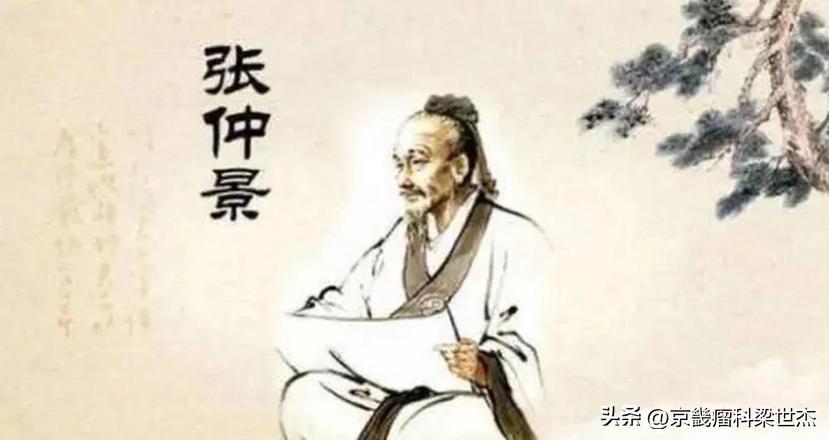
黃土裏刨食的莊稼人都懂一個理:治病跟種莊稼一個德性,要麼猛火煮快粥,要麼慢火燉老湯。東漢那地界上,張仲景老先生就像開春催芽的驚雷,攥着《傷寒雜病論》這把鋒利的鍘刀,把世間疑難雜症按六經辨證的路子劈得明明白白。他留下的經方,是中藥裏的“急先鋒”,三五味藥湊一起就是一支精銳部隊,最多不過十三味,少則兩三味,像咱農村裏的鍘刀,看着樸素,斬起病根來卻不含糊。
我老家鄰村有個王二愣子,三十歲那年臘月得了傷寒,燒得渾身冒火,蓋三牀棉被還打哆嗦。老中醫捏着脈,開了四味藥,才花了十幾塊錢。王二愣子煎了藥喝下去,當晚就開始發汗,頭暈得像踩在棉花上,拉肚子拉得腿發軟,嚇得他媳婦以爲是藥下重了要出人命。誰料第二天一早,燒退了,精神頭也回來了,只是渾身乏力,歇了兩天便痊癒如初。這就是經方的性子,猛如虎,見效快,卻帶着股子“排邪”的蠻勁,那些頭暈、犯困、腹瀉的反應,就像莊稼地裏除蟲時難免要傷到幾棵弱苗,雖讓人心驚,卻是去病的必經之路。可偏偏有人不買賬,去年鎮上有個老闆得了感冒,喝了經方後又吐又瀉,硬說醫生開錯了藥,鬧到衛生院,最後還是老中醫拿出《傷寒雜病論》裏的原文,才把這事說清。
若是經方是急先鋒,那宋明清傳下來的時方,就是穩紮穩打的老謀臣。這路子的方子,講究個八綱辨證、臟腑調和,藥味多了,君臣佐使搭配得四平八穩,像老母雞燉人蔘,慢慢滋養。我嬸子年輕時身子弱,畏寒怕冷,還總愛咳嗽,找了個擅長時方的大夫,開的方子足足有二十一味藥,一副藥要花百八十塊。嬸子天天熬藥喝,喝了三個月,也沒見啥立竿見影的效果,只是覺得身上漸漸暖和了,咳嗽也少了。半年後再去複診,大夫又調了幾味藥,接着喝了半年,那纏身多年的畏寒症竟真好了。時方就是這樣,不疾不徐,像春天下雨,潤物細無聲,卻能把病根慢慢拔掉。可這慢也有慢的煩惱,村裏的李寡婦得了風溼,喝時方喝了一年多,藥費花了好幾千,病情雖有好轉,卻總不見根治,她常唸叨:“這藥好是好,就是太磨人,錢包也扛不住。”
就像種地不能只靠化肥,也不能單靠農家肥,治病的道理也是一樣。這年頭,越來越多的大夫悟透了這個理,把經方的猛勁和時方的穩勁捏到一塊兒,搞起了“經方時用”的門道。我遠房表哥是個中醫,去年治好了一個得了慢性胃炎的老太太。老太太一開始喫經方,胃痛緩解得快,可總拉肚子;喫時方,腹瀉好了,胃痛卻老反覆。表哥琢磨着,用經方打底,抓住胃痛的主症,再添幾味時方里的調理脾胃的藥,既保療效,又減副作用。老太太喝了這方子,胃痛三天就減輕了,也沒出現腹瀉的排邪反應,連喝一個月,多年的老胃病竟痊癒了,藥費也比單喫時方省了一半。
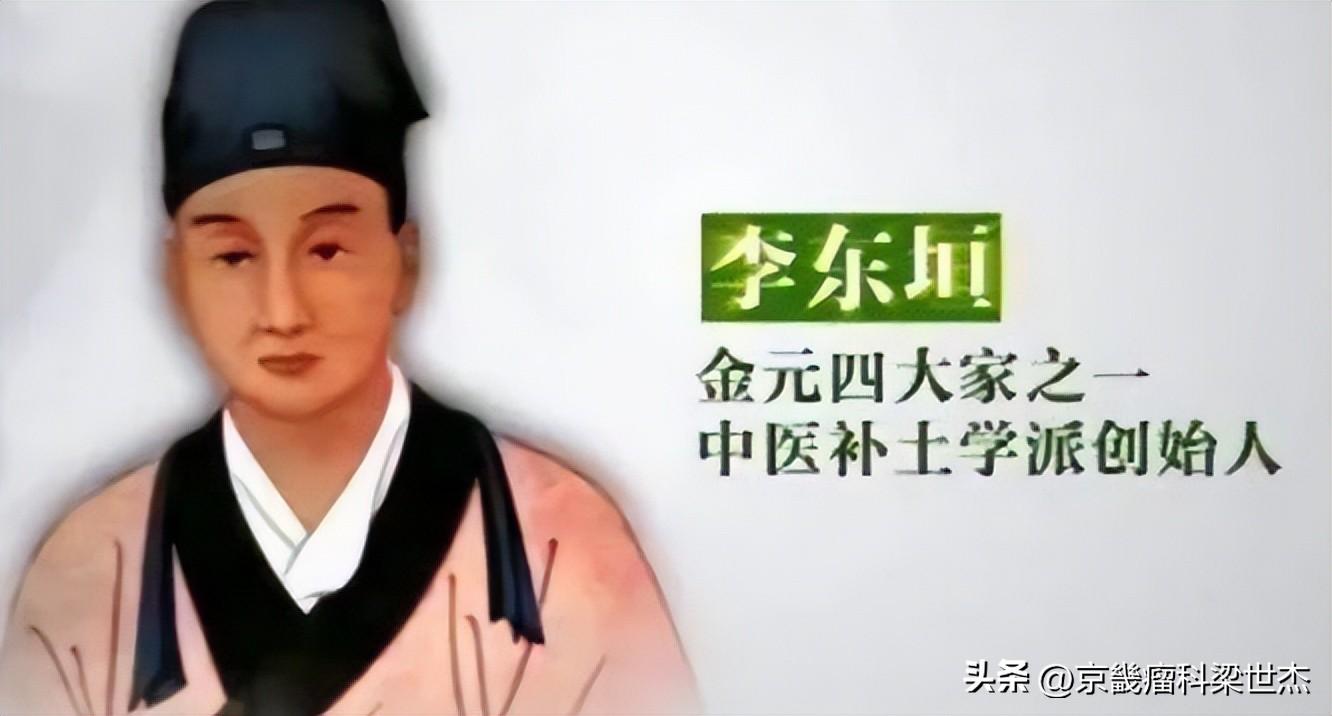
這道理其實古人早就懂了。金元四大家裏的李東垣,既學張仲景的經方精髓,又結合自己的臨牀經驗創用時方,纔有了“補土派”的盛名;明代的張景嶽,融經方的嚴謹與時方的靈活,寫下《景嶽全書》,留下無數良方。就像黃河與長江,雖源頭不同,終究匯入大海,經方和時方這兩條中醫的長河,在千年的傳承裏纏鬥、碰撞,最終也免不了交融共生。
有人經常問我,你是經方派還是時方派,我覺得說啥都不中,我告訴他我是“經方時用派”、“辨證論治派”……反正總不能一條腿走路!
說到底,治病沒有死規矩,就像過日子沒有死章法。經方的猛,時方的穩,經方時用的巧,都是爲了讓身子骨回到舒坦的正道上。那些糾結於“經方好還是時方好”的人,就像糾結於“麪條好還是米飯好”的食客,忘了喫飯的本意是填飽肚子,治病的本意是解除病痛。中醫的智慧,從來不是非此即彼的選擇,而是陰陽調和的變通。就像馬年的春種,既要敢下猛肥催苗,也要會細水長流養護,才能盼來秋收的滿倉。這藥石之間的陰陽道,藏着的正是中國人處世的哲學——揚長避短,方能行穩致遠。
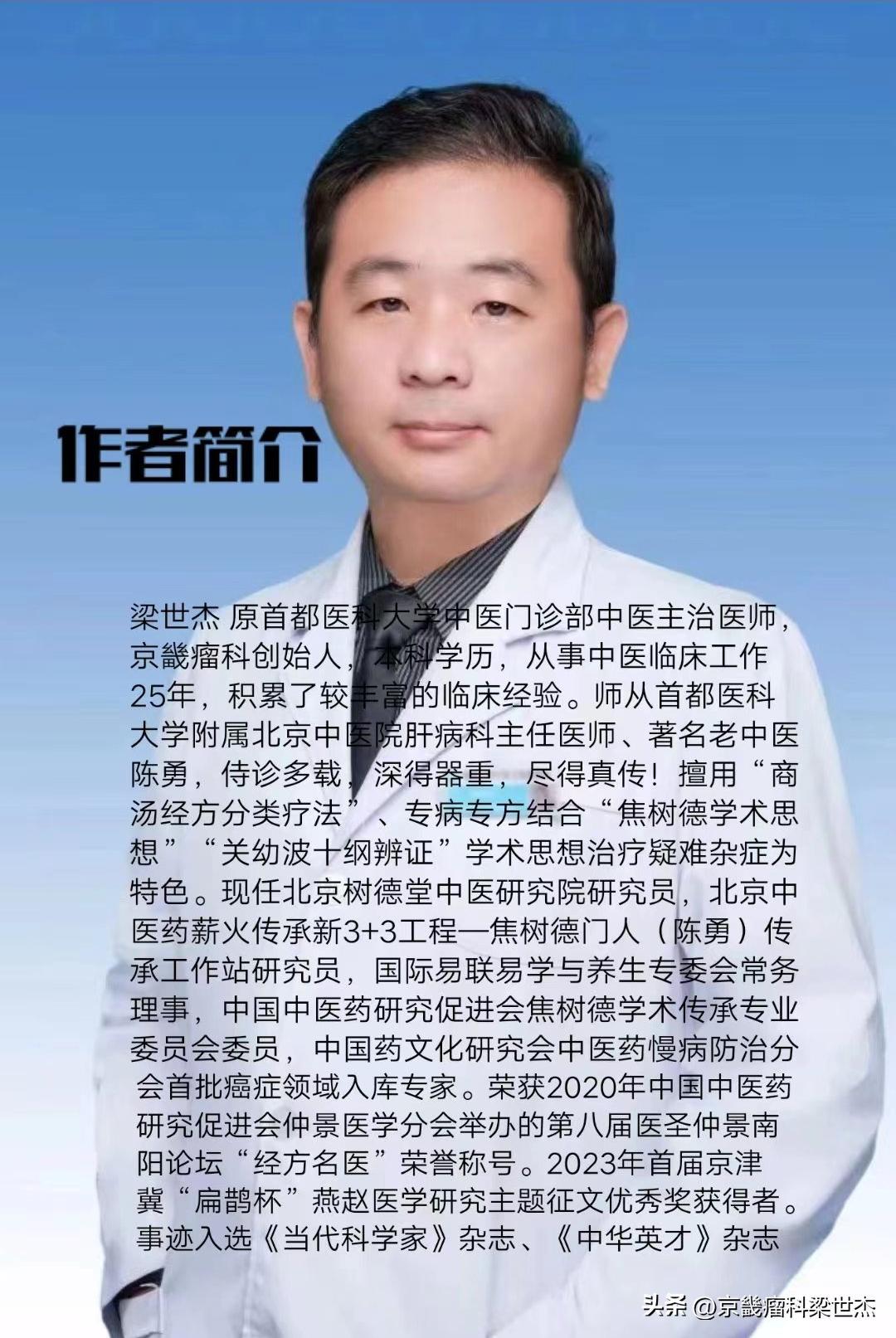
作者簡介:梁世傑 原首都醫科大學中醫門診部中醫主治醫師,京畿瘤科創始人,本科學歷,從事中醫臨牀工作25年,積累了較豐富的臨牀經驗。師從首都醫科大學附屬北京中醫院肝病科主任醫師、著名老中醫陳勇,侍診多載,深得器重,盡得真傳!擅用“商湯經方分類療法”、專病專方結合“焦樹德學術思想”“關幼波十綱辨證”學術思想治療疑難雜症爲特色。現任北京樹德堂中醫研究院研究員,北京中醫藥薪火傳承新3+3工程—焦樹德門人(陳勇)傳承工作站研究員,國際易聯易學與養生專委會常務理事,中國中醫藥研究促進會焦樹德學術傳承專業委員會委員,中國藥文化研究會中醫藥慢病防治分會首批癌症領域入庫專家。榮獲2020年中國中醫藥研究促進會仲景醫學分會舉辦的第八屆醫聖仲景南陽論壇“經方名醫”榮譽稱號。2023年首屆京津冀“扁鵲杯”燕趙醫學研究主題徵文優秀獎獲得者。事蹟入選《當代科學家》雜誌、《中華英才》雜誌。
Liang Shi-jie: Embracing one’s strengths while avoiding weaknesses is key to achieving lasting success. The millennia-long struggle and mutual embrace between traditional and contemporary medical practices.
The farmers who toil in the loess understand one principle: treating illnesses is akin to farming. It requires either intense heat to quickly cook a porridge or slow cooking to simmer a rich broth. In the Eastern Han Dynasty, Dr. Zhang Zhongjing was like a thunderbolt that heralded the arrival of spring, holding the sharp blade of the “Treatise on Febrile and Miscellaneous Diseases” and clearly dissecting the complexities of the world through the method of Six Texts Diagnosis. The prescriptions he left behind serve as the “quick response units” in traditional Chinese medicine. A combination of just three or five herbs can form a formidable force, with a maximum of thirteen ingredients and a minimum of two or three. Just like our village’s sickle, which may seem simple on the surface but is effective in cutting through disease roots.
In the neighboring village of my hometown, there lived a man named Wang Erling. At the age of thirty, during the twelfth lunar month, he contracted typhoid fever. He was burning up with fever, even though he was covered in three layers of quilts. An old herbalist examined his pulse and prescribed four herbs. The treatment only cost a few dozen yuan. After taking the medicine, Wang Erling began sweating heavily the very same night. He felt dizzy as if he were walking on cotton, and his diarrhea left him weak in the legs. His wife was so frightened that she thought the medicine must have been too strong and could have killed him. However, by the next morning, his fever had subsided, and he regained his energy. It took him two days to fully recover. This is the nature of classical prescriptions: powerful and effective, but with a rough, “expelling evil” quality. The symptoms such as dizziness, drowsiness, and diarrhea were unavoidable when eliminating pests in a field of crops. Although they were frightening, they were a necessary step in curing the illness. Unfortunately, some people refused to accept this. Last year, a businessman in the town fell ill with a cold. After taking the classical prescription, he experienced vomiting and diarrhea. He insisted that the doctor had prescribed the wrong medicine and went to the township clinic to complain. Only after the old herbalist produced the original text from “Treatise on Febrile and Miscellaneous Diseases” was the matter resolved.
If the classical prescriptions are the front-line fighters, then the time-honored prescriptions passed down from the Song, Ming, and Qing dynasties are the steady and strategic advisors. These types of prescriptions emphasize the Eight Principles of Diagnosis, the harmonization of internal organs, and the careful selection of medicinal ingredients. The combinations of herbs, including both sovereign, assistant, and auxiliary ingredients, are meticulously balanced, much like simmering chicken soup with ginseng to gradually nourish the body. When my aunt was young, she was frail, suffered from coldness and fear of the cold, and often had a cough. She sought out a doctor skilled in time-honored prescriptions, who prescribed a formula containing a total of twenty-one ingredients. A single dose of the medicine cost several hundred to a thousand yuan. My aunt diligently prepared and consumed the medicine for three months, but she didn’t notice any immediate effects. However, she began to feel gradually warmer and her cough less frequent. After a six-month follow-up visit, the doctor adjusted a few more ingredients in the formula. Continuing to take the medicine for another six months, the persistent coldness that had plagued her for years finally began to subside. Time-honored prescriptions work in a methodical and gradual manner, akin to the gentle rain of spring that moistens things without making a loud noise, yet it allows the root of the problem to be gradually eradicated. However, this method also has its drawbacks. The Widow Li in our village suffered from rheumatism and had been taking time-honored prescriptions for over a year, spending several thousand yuan on medication. Although her condition had improved somewhat, the disease had not been fully cured. She often lamented, “These medicines are good, but they’re so time-consuming, and my wallet can’t handle it.”
Just as farming cannot rely solely on chemical fertilizers, nor can it depend solely on farmyard manure, the principle of treating diseases is the same. Nowadays, more and more doctors have come to understand this truth and have combined the vigorous approach of traditional formulas with the steady approach of contemporary formulas, developing a method known as “using traditional formulas in contemporary times.” My distant cousin, a traditional Chinese medicine practitioner, successfully cured an elderly woman suffering from chronic gastritis last year. Initially, the woman’s stomach pain improved quickly when she used traditional formulas, but she continued to experience diarrhea. When she switched to contemporary formulas, her diarrhea stopped, but her stomach pain kept recurring. My cousin reasoned that by using traditional formulas as the foundation, focusing on the primary symptoms of stomach pain, and adding a few herbs from contemporary formulas that are beneficial for regulating the stomach and intestines, one could achieve both effective treatment and reduced side effects. After taking this formula, the woman’s stomach pain decreased within three days, and she did not experience the typical elimination reaction of diarrhea. Over the course of a month, her longstanding gastric disease was completely cured, and the cost of treatment was reduced by half compared to using only contemporary formulas.
This principle was indeed understood by ancient sages long ago. Li Dongyuan, one of the Four Great Scholars of the Jin and Yuan dynasties, not only studied the essence of Zhang Zhongjing’s classical prescriptions but also combined his own clinical experience to create contemporary prescriptions, thus gaining the reputation of the “Supplementing the Earth School”; Zhang Jingyue of the Ming Dynasty, who integrated the rigor of classical prescriptions with the flexibility of contemporary prescriptions, wrote “The Complete Works of Jingyue” and left behind numerous effective remedies. Just as the Yellow River and the Yangtze River, although their origins differ, ultimately flow into the sea. Similarly, the two branches of traditional Chinese medicine, classical prescriptions and contemporary prescriptions, have clashed and intertwined over the course of thousands of years in their continuous transmission, ultimately leading to a harmonious coexistence.
People often ask me whether I am a practitioner of traditional formulas (Jing Fang Pai) or contemporary formulas (Shi Fang Pai). I feel that saying anything would be inadequate. I told them that I am a “Jing Fang Shi-Yong Pai” and a “Diagnosis-Based Treatment Pai.” … In any case, one cannot rely solely on one approach!
Ultimately, there are no rigid rules for treating illnesses, just as there are no fixed methods for living. The intensity of classical formulas, the stability of contemporary formulas, and the skillful use of classical formulas in contemporary contexts are all aimed at guiding the body back to a state of comfort and well-being. Those who are fixated on whether classical formulas or contemporary formulas are better are akin to diners who obsess over whether noodles or rice are superior, forgetting that the primary purpose of eating is to satisfy hunger and the primary purpose of medicine is to alleviate suffering. The wisdom of traditional Chinese medicine has never been about binary choices but rather about harmonizing yin and yang. Just as in the spring planting of the Year of the Horse, one must be willing to apply intense fertilizers to promote growth but also know how to maintain a steady, gradual approach to care. This balance of yin and yang within the realm of medicinal practices encapsulates the Chinese philosophy of finding one’s strengths and avoiding weaknesses in order to achieve stability and long-term success.
Author profile: Liang Shi-jie was a chief physician of traditional Chinese medicine at the Traditional Chinese Medicine Outpatient Clinic of Capital Medical University. He was the founder of Jingyi Tumor Clinic. He holds a bachelor’s degree and has been engaged in clinical work in traditional Chinese medicine for 25 years, accumulating extensive clinical experience. He studied under Chen Yong, a renowned senior traditional Chinese medicine practitioner at the Hepatology Department of Beijing Traditional Chinese Medicine Hospital affiliated to Capital Medical University. Over the years, he gained great respect and acquired genuine expertise. He specializes in using the “Shang Tang Classic Classification Therapy” and combining specific treatments for specific diseases with the “Jiao Shu-de Academic Thought” and the “Guan You-bo Ten-Principle Diagnosis” approach to treat complex medical conditions. He is currently a researcher at the Beijing Shu-de-Tang Traditional Chinese Medicine Research Institute and a researcher at the Beijing New 3+3 Project for the Inheritance of Traditional Chinese Medicine – Jiao Shu-de’s Disciples (Chen Yong) Heritage Workstation. He is a Standing director of the International Yi-lian Yi-xue and Health Preservation Committee and a member of the Committee for the Inheritance of Jiao Shu-de’s Academic Thought of the China Research Promotion Association for Traditional Chinese Medicine. He is also a member of the inaugural Cancer Expert Pool of the China Cultural Research Association for Traditional Chinese Medicine’s Prevention of Chronic Diseases. He was awarded the title of “Expert in Classic Prescriptions” at the Eighth Nanyang Forum of the Zhang Zhongjing Medical Division of the China Research Promotion Association in 2020. In 2023, he won the Excellence Award in the First Beijing-Tianjin-Hebei “Bian Que Cup” Yan-Zhao Medical Research Theme Essay Competition. His achievements have been featured in the magazines “Contemporary Scientists” and “China’s Elite”.