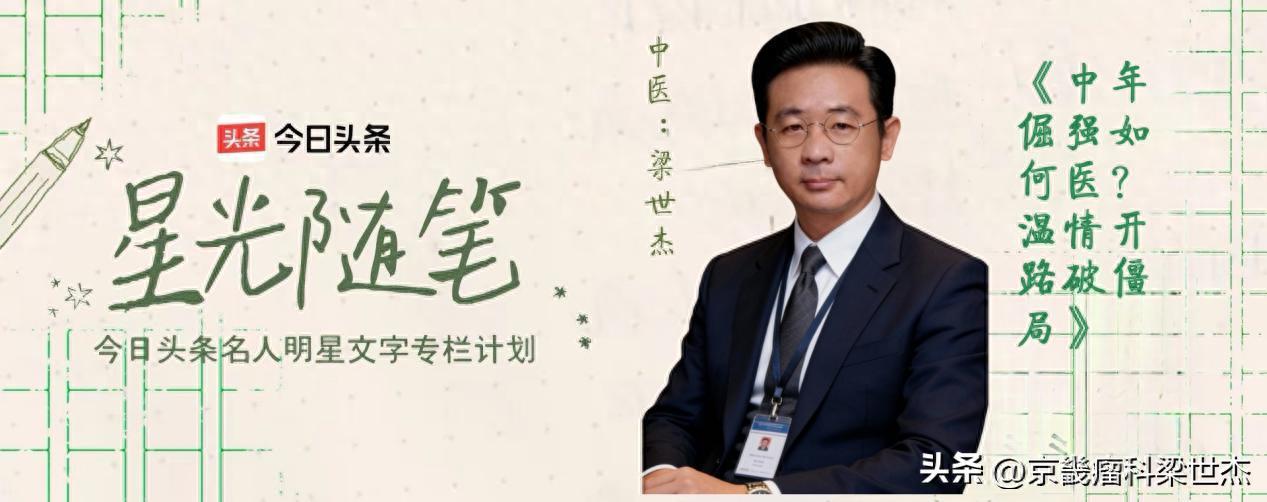
梁世傑:中年倔強如何醫?溫情開路破僵局
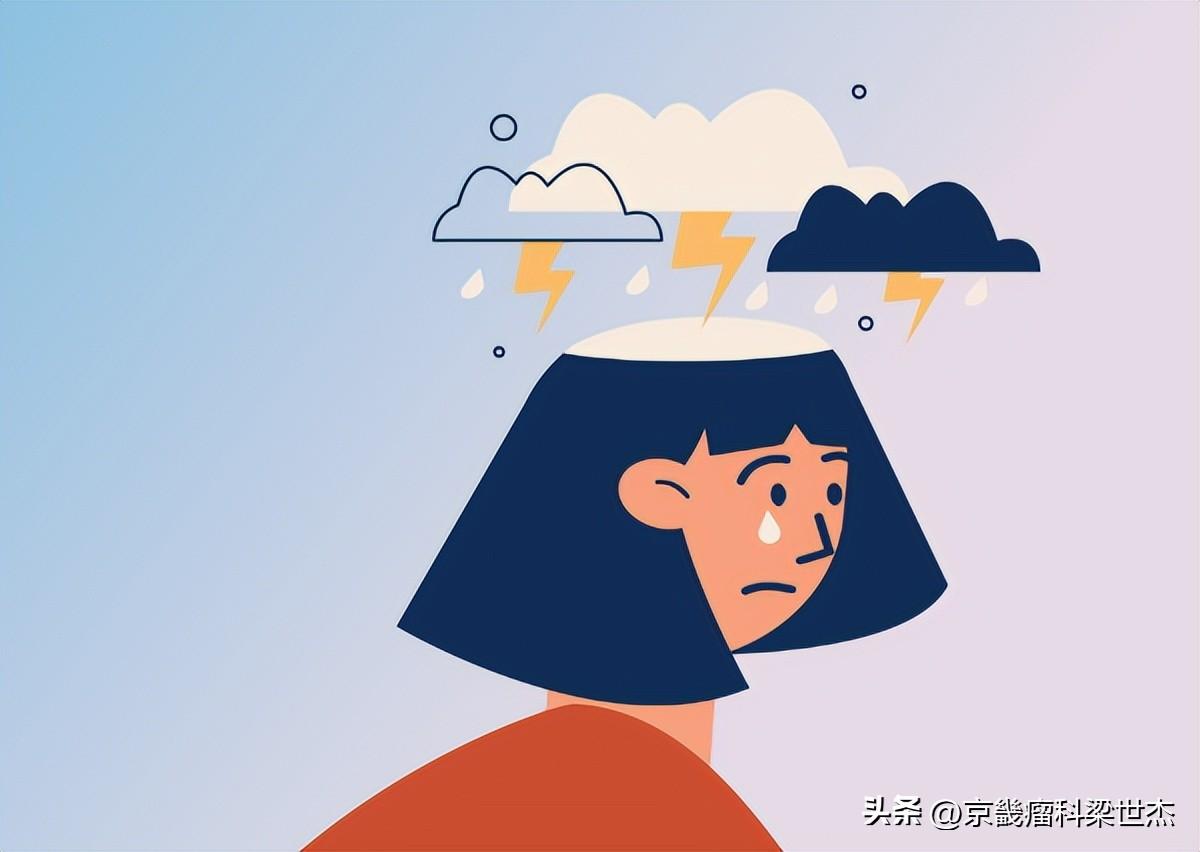
在時光長河的悄然流淌中,人到中年,就像一艘在風浪中航行已久的船,船身有了歲月的痕跡,船上的零件也偶爾會發出“抗議”的聲響。這時候,人們往往容易陷入對衰老的糾結與恐懼之中,卻常常忽略了,比起關注自己是怎麼老的,更該把目光聚焦在怎麼讓自己好起來。而在這探尋康復的道路上,醫患之間的相處藝術,就如同那指引船隻穿越迷霧的燈塔,至關重要。
中年倔強:否定即“殺身之禍”
人到中年,彷彿進入了一個特殊的“心理雷區”。此時的人們,歷經了生活的風風雨雨,形成了自己一套固有的思維模式和行爲習慣,就像一座堅固的城堡,對外界的批評和否定有着本能的牴觸。你說他的不對,那簡直就像是在他的城堡上扔炸彈,他連“殺你的心都有”。這並非是中年人蠻不講理,而是你否定他的那一刻,就如同否定了他的前半生。他前半生所有的努力、選擇和堅持,在你這一句話面前,似乎都變得毫無意義。他寧可沿着現有的軌道“撞南牆”,也不願意接受改變。
有這樣一個真實的例子,一位中年男士,有着多年的吸菸習慣。家人多次勸他戒菸,他不僅不聽,反而大發雷霆。在他看來,吸菸是他緩解壓力、享受生活的一種方式,家人讓他戒菸,就是在否定他的生活方式,否定他這麼多年對生活的理解。這種心理,在很多中年人身上都普遍存在。據一項社會調查顯示,超過70%的中年人在面對他人對自己生活習慣或觀點的否定時,會產生強烈的牴觸情緒。這就提醒我們,在與中年以上的人交流時,尤其是醫患之間,一定要注意方式方法,避免激化矛盾。
醫患相處:恆順衆生,溫情爲先
面對中年以上患者,醫生要胸懷溫情,這便是“恆順衆生”的智慧。“恆順衆生”並非是要一味地迎合患者,而是在理解他們心理特點的基礎上,給予尊重和關懷。在醫療過程中,如果醫生試圖強行改變患者的習慣和認知,往往容易適得其反,激化矛盾或產生怨恨。就像試圖強行改變河流的流向,只會引發更大的水流衝擊。
曾經有一位醫生,技術精湛,但性格比較直爽,對待患者總是直言不諱。有一位中年患者,因爲長期不健康的飲食習慣導致身體出現問題。醫生在診斷後,直接嚴厲地批評了患者的飲食習慣,要求他立刻改變。患者聽後,不僅沒有接受醫生的建議,反而對醫生產生了牴觸情緒,後續的治療也不配合。相反,另一位醫生在面對類似情況時,總是先耐心傾聽患者的想法,用溫和的語氣表達自己的擔憂和建議。他會說:“我知道您這麼多年形成的飲食習慣很難改變,但爲了您的健康,我們可以慢慢調整,我會陪着您一起。”患者感受到醫生的理解和關懷,更願意接受醫生的建議,積極配合治療。
情緒價值:治癒之外的溫暖力量
在醫療領域,技術固然重要,但情緒價值同樣不可忽視。很多時候,患者尋求的不僅僅是身體上的治癒,更是心靈上的慰藉。就像在黑暗中行走的人,不僅需要一盞明燈照亮前方的路,更需要有人陪伴在身邊,給予溫暖和鼓勵。
我見過這樣一位醫生,他的醫術並不是最頂尖的,但他的診室裏總是圍滿了患者。爲什麼呢?因爲他能給患者提供情緒價值。他會耐心地傾聽患者的訴說,用幽默的語言緩解患者的緊張情緒,讓患者在輕鬆愉快的氛圍中接受治療。有一位中年患者,因爲長期患病,心情非常低落,對治療也失去了信心。這位醫生知道後,並沒有一味地強調治療的效果,而是和患者聊起了生活中的趣事,分享自己遇到的困難和克服的方法。患者在他的感染下,心情逐漸開朗起來,重新燃起了對治療的希望。最終,在醫生的精心治療和患者的積極配合下,患者的病情得到了明顯改善。
據一項針對患者的調查顯示,超過80%的患者認爲,在就醫過程中,醫生的情緒關懷對他們的治療效果有着重要的影響。這充分說明,情緒價值在醫療過程中具有不可替代的作用。
雙劍合璧:技術與溫情共築健康
如果我們既能滿足患者的情緒價值,又擁有精湛的醫療技術,那豈不是如虎添翼?技術是治癒疾病的基石,而溫情則是拉近醫患關係的橋樑。當醫生用溫暖的心去對待患者,用專業的技術去治療疾病時,患者會感受到被尊重和被關愛,從而更加信任醫生,積極配合治療。
有一位老中醫,他不僅醫術高超,而且對待每一位患者都關懷備至。他會根據患者的不同情況,制定個性化的治療方案,同時還會關注患者的心理狀態,給予鼓勵和支持。在他的診室裏,經常能看到患者康復後送來的錦旗和感謝信。這些錦旗和感謝信,不僅是對他醫術的認可,更是對他溫情服務的讚美。
人到中年,在探尋康復的道路上,醫患之間需要更多的理解和包容。醫生要胸懷溫情,恆順衆生,給予患者情緒價值;患者也要積極配合醫生的治療,相信醫生的專業能力。讓我們攜手共進,莫糾老態,共尋康途,在技術與溫情的交融中,書寫更多健康的美好篇章。那麼,在這醫患相處的新徵程中,我們究竟還能創造出多少溫暖人心的故事呢?讓我們拭目以待。
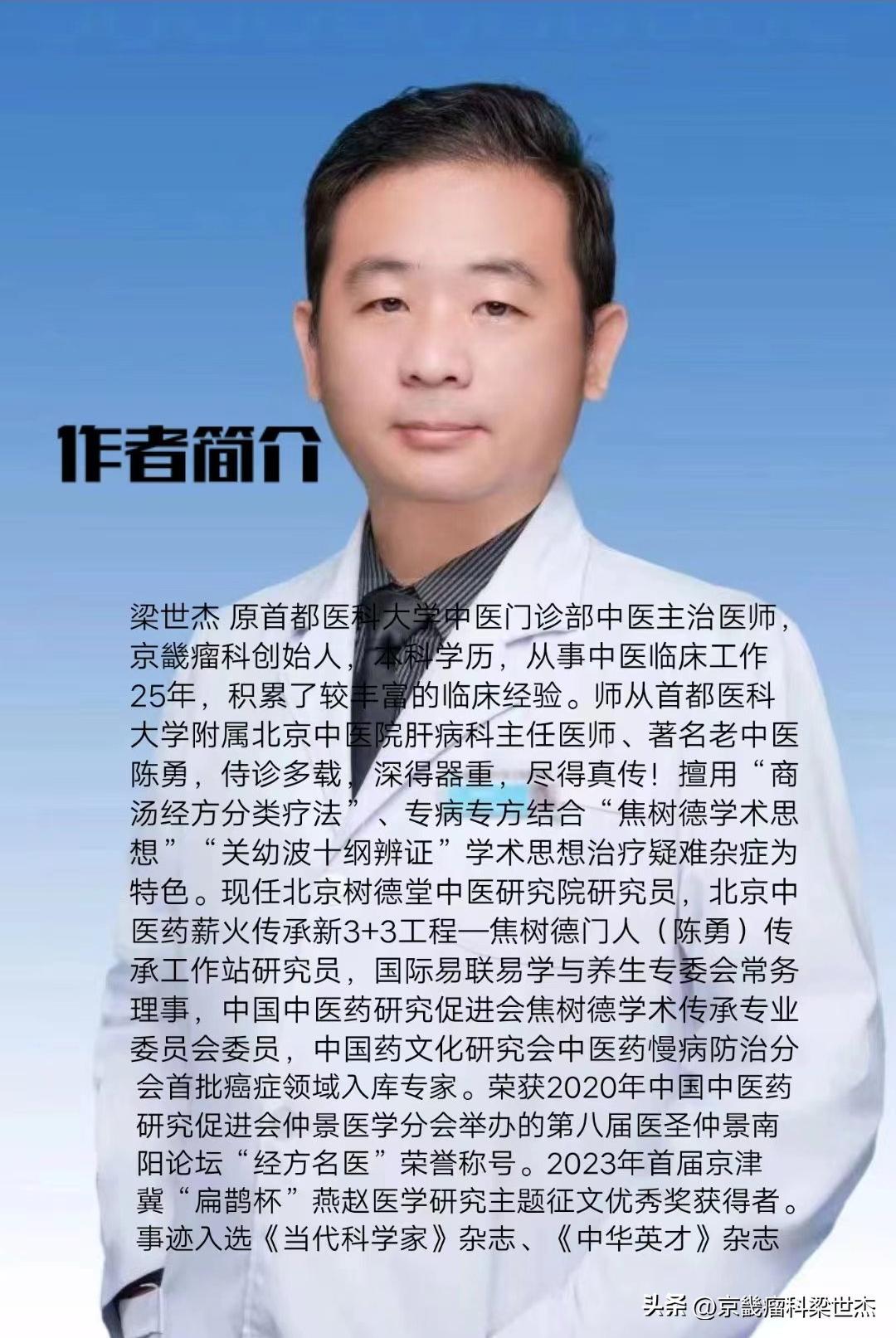
作者簡介:梁世傑 原首都醫科大學中醫門診部中醫主治醫師,京畿瘤科創始人,本科學歷,從事中醫臨牀工作25年,積累了較豐富的臨牀經驗。師從首都醫科大學附屬北京中醫院肝病科主任醫師、著名老中醫陳勇,侍診多載,深得器重,盡得真傳!擅用“商湯經方分類療法”、專病專方結合“焦樹德學術思想”“關幼波十綱辨證”學術思想治療疑難雜症爲特色。現任北京樹德堂中醫研究院研究員,北京中醫藥薪火傳承新3+3工程—焦樹德門人(陳勇)傳承工作站研究員,國際易聯易學與養生專委會常務理事,中國中醫藥研究促進會焦樹德學術傳承專業委員會委員,中國藥文化研究會中醫藥慢病防治分會首批癌症領域入庫專家。榮獲2020年中國中醫藥研究促進會仲景醫學分會舉辦的第八屆醫聖仲景南陽論壇“經方名醫”榮譽稱號。2023年首屆京津冀“扁鵲杯”燕趙醫學研究主題徵文優秀獎獲得者。事蹟入選《當代科學家》雜誌、《中華英才》雜誌。
Liang Shijie: How can middle-aged stubbornness be treated? Warm words open the way to breaking the deadlock
In the quiet passage of time, people reach middle age, like a ship that has sailed through the winds and waves for a long time. The hull has traces of the years, and the parts on the ship occasionally make a "protest." At this time, people are often easily caught in the tangle and fear of aging, but often ignore that instead of focusing on how old they are, they should focus on how to make themselves better. And on the road to recovery, the art of getting along with doctors and patients is essential, like the lighthouse that leads a ship through the fog.
Midlife stubbornness: denial is a "killer hazard"
People enter middle age as if they''ve entered a special "psychological minefield." People at this time, having weathered the storms of life, have developed their own set of inherent thinking patterns and behavior habits, like a solid castle that is instinctively resistant to criticism and rejection from the outside world. If you say he''s wrong, it''s almost like throwing a bomb on his castle. He even "kills your heart." It''s not that middle-aged people are unreasonable, but that the moment you deny him is like denying him the first half of his life. All his efforts, choices and persistence in the first half of his life seemed meaningless in the face of your words. He would rather "bump into the South Wall" along the existing track than accept change.
There is a real example of a middle-aged man who had a smoking habit for many years. His family repeatedly urged him to quit smoking, and not only did he not listen, he burst into rage. In his view, smoking was a way for him to relieve stress and enjoy life, and by letting his family quit, they were repudiating his lifestyle and his understanding of life for so many years. This mentality is common to many middle-aged people. According to a social survey, more than 70 percent of middle-aged people experience strong resistance when faced with other people''s disapproval of their lifestyle habits or opinions. This reminds us that when communicating with people over the age of 19, especially between doctors and patients, we must pay attention to ways and means to avoid inflaming conflicts.
Working with doctors and patients: Always follow the common good, and warm affection first
In the face of patients over the age of 20, doctors should have a warm heart, which is the wisdom of "consistent obedience to all living beings." "The eternal obedience of all sentient beings" is not an attempt to pander to the patient, but to treat them with respect and care on the basis of understanding their psychological characteristics. In the medical process, if doctors try to force changes in patients'' habits and perceptions, it often backfires, inflaming contradictions or creating resentment. It''s like trying to forcefully change the direction of a river, which only triggers a bigger current shock.
Once upon a time there was a doctor who was very technical, but who had a relatively straightforward personality and was always forthright with his patients. There was a middle-aged patient whose physical problems were caused by long-term unhealthy eating habits. After the diagnosis, the doctor directly and severely criticized the patient''s eating habits and asked him to change them immediately. After hearing this, the patient not only did not accept the doctor''s advice, but instead developed a resistance to the doctor, and the subsequent treatment did not cooperate. Conversely, when faced with a similar situation, another doctor always listened patiently to the patient''s thoughts first and expressed his concerns and advice in a gentle tone. He will say: "I know the eating habits you have developed over the years are difficult to change, but for your health we can adjust slowly and I will be with you." Patients feel the understanding and care of the doctor, are more willing to accept the advice of the doctor and actively cooperate with the treatment.
Emotional Value: A Warming Power Beyond Healing
In healthcare, while technology is important, the value of emotion cannot be ignored. In many cases, patients seek not only physical healing, but also spiritual comfort. Just like a person walking in the dark, he needs not only a bright light to illuminate the road ahead, but also someone to be there for warmth and encouragement.
I have seen a doctor whose expertise is not at the very top, but whose room is always filled with patients. Why? Because he provides emotional value to the patient. He will listen patiently to the patient''s complaints, use humorous language to ease the patient'' tense emotions, and let the patient receive treatment in a relaxed and pleasant atmosphere. There was a middle-aged patient who was in a very depressed mood because of his long-term illness and had lost confidence in the treatment. After the doctor learned, he did not always emphasize the effectiveness of the treatment, but spoke with the patient about life interesting things, sharing his difficulties and ways to overcome them. Under his infection, the patient grew more cheerful and rekindled hope for treatment. In the end, with the careful treatment of the doctor and the active cooperation of the patient, the patient''s condition improved significantly.
According to a survey of patients, more than 80 percent of patients believe that their doctor''s emotional attention has an important impact on their treatment outcome during their visit. This fully illustrates the irreplaceable role of emotional value in the medical process.
Double Sword: Technology and Tenderness to Build Health
Wouldn''t it be a tiger''s wing if we could both satisfy the patient''s emotional value and have sophisticated medical technology? Technology is the cornerstone of healing diseases, and affection is the bridge between doctor and patient. When doctors treat patients with a warm heart and use professional techniques to treat diseases, patients will feel respected and loved, so they will trust the doctor more and cooperate with the treatment.
There was an old Chinese medicine practitioner who was not only skilled in medicine, but also treated each patient with great care. He will develop a personalized treatment plan according to the different conditions of the patient, while also paying attention to the patient''s psychological state, giving encouragement and support. In his office, you can often see flags and letters of thanks from patients after they recover. These medals and letters of thanks are not only a recognition of his medical skill, but also a praise for his kind service.
When people reach middle age, they need more understanding and inclusion between doctors and patients in their search for recovery. Doctors should have a warm heart and always be obedient to all living beings, and give emotional value to patients. Patients should also actively cooperate with the doctor''s treatment and trust the doctor''''s professional ability. Let us work together, instead of aging, to find a path to wellness, and in the mixture of technology and warmth, write more beautiful chapters of health. So how many more heart-warming stories can we create in this new journey of spending time with patients? Let''s see.
Author profile: Liang Shi-jie was a chief physician of traditional Chinese medicine at the Traditional Chinese Medicine Outpatient Clinic of Capital Medical University. He was the founder of Jingyi Tumor Clinic. He holds a bachelor’s degree and has been engaged in clinical work in traditional Chinese medicine for 25 years, accumulating extensive clinical experience. He studied under Chen Yong, a renowned senior traditional Chinese medicine practitioner at the Hepatology Department of Beijing Traditional Chinese Medicine Hospital affiliated to Capital Medical University. Over the years, he gained great respect and acquired genuine expertise. He specializes in using the “Shang Tang Classic Classification Therapy” and combining specific treatments for specific diseases with the “Jiao Shu-de Academic Thought” and the “Guan You-bo Ten-Principle Diagnosis” approach to treat complex medical conditions. He is currently a researcher at the Beijing Shu-de-Tang Traditional Chinese Medicine Research Institute and a researcher at the Beijing New 3+3 Project for the Inheritance of Traditional Chinese Medicine – Jiao Shu-de’s Disciples (Chen Yong) Heritage Workstation. He is a Standing director of the International Yi-lian Yi-xue and Health Preservation Committee and a member of the Committee for the Inheritance of Jiao Shu-de’s Academic Thought of the China Research Promotion Association for Traditional Chinese Medicine. He is also a member of the inaugural Cancer Expert Pool of the China Cultural Research Association for Traditional Chinese Medicine’s Prevention of Chronic Diseases. He was awarded the title of “Expert in Classic Prescriptions” at the Eighth Nanyang Forum of the Zhang Zhongjing Medical Division of the China Research Promotion Association in 2020. In 2023, he won the Excellence Award in the First Beijing-Tianjin-Hebei “Bian Que Cup” Yan-Zhao Medical Research Theme Essay Competition. His achievements have been featured in the magazines “Contemporary Scientists” and “China’s Elite”.