科技不興,取之於哲:中醫拒絕固步自封,開放融合是其常態
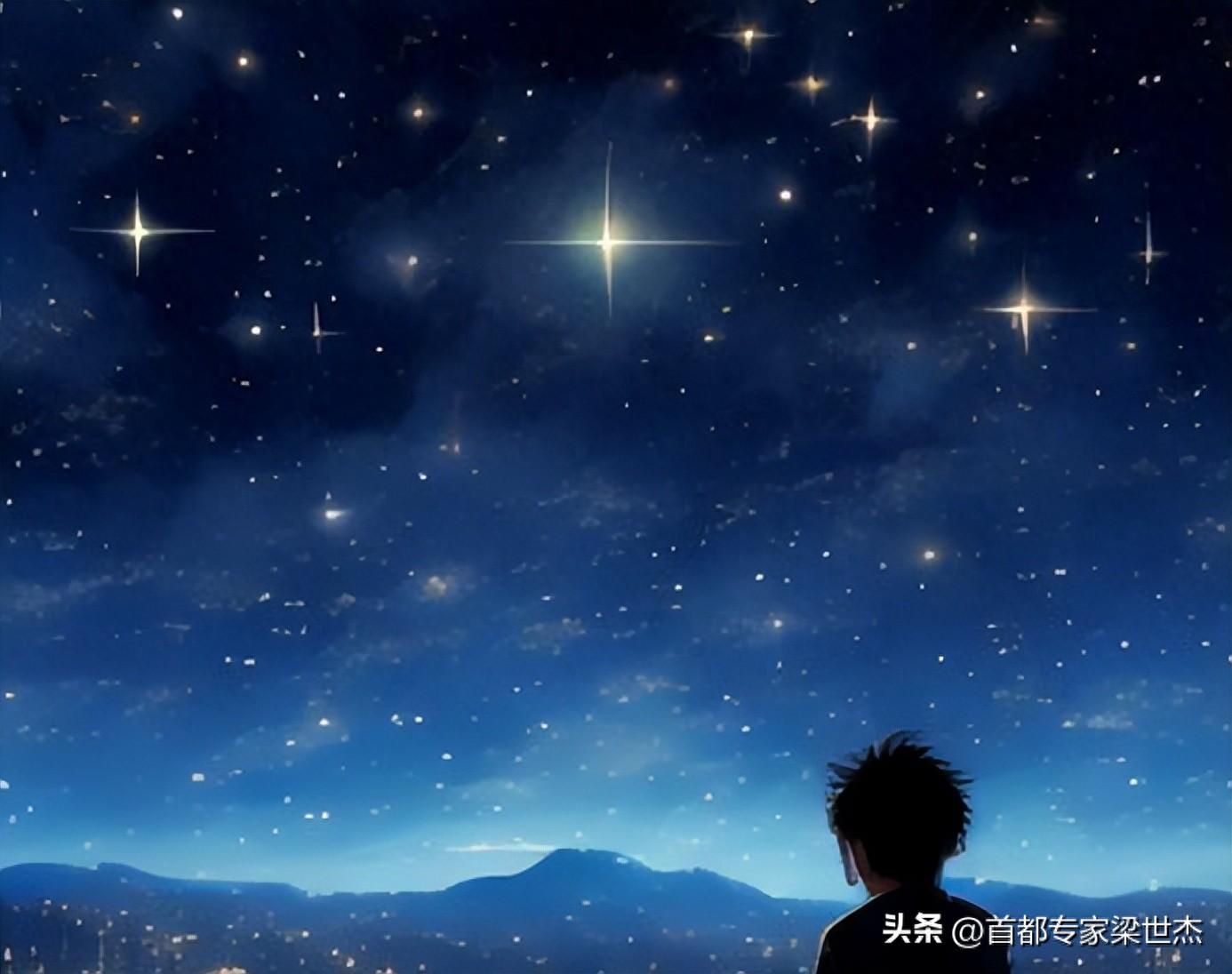
在人類文明的浩瀚星空中,中醫宛如一顆璀璨而獨特的星辰,散發着神祕而迷人的光芒。它穿越了悠悠歷史長河,從遠古走來,歷經無數風雨洗禮,卻始終保持着蓬勃的生命力。那些說中醫落後、保守、固步自封、不求上進的人,就像是在夜空中盲目指責星辰不亮的人,完全忽略了這顆星辰背後那波瀾壯闊、開放融合的壯麗史詩。
溯源:從神農嘗百草到百家智慧匯聚
讓我們把時光的指針撥回到遠古時代,神農嘗百草的傳說如同一首激昂的序曲,拉開了中醫發展的宏大帷幕。神農氏爲了探尋能夠治病救人的草藥,不惜以身試毒,他的勇敢和奉獻精神,爲中醫奠定了最初的基石。此後,中醫的發展就像一條奔騰不息的河流,不斷匯聚着來自各方的智慧源泉。
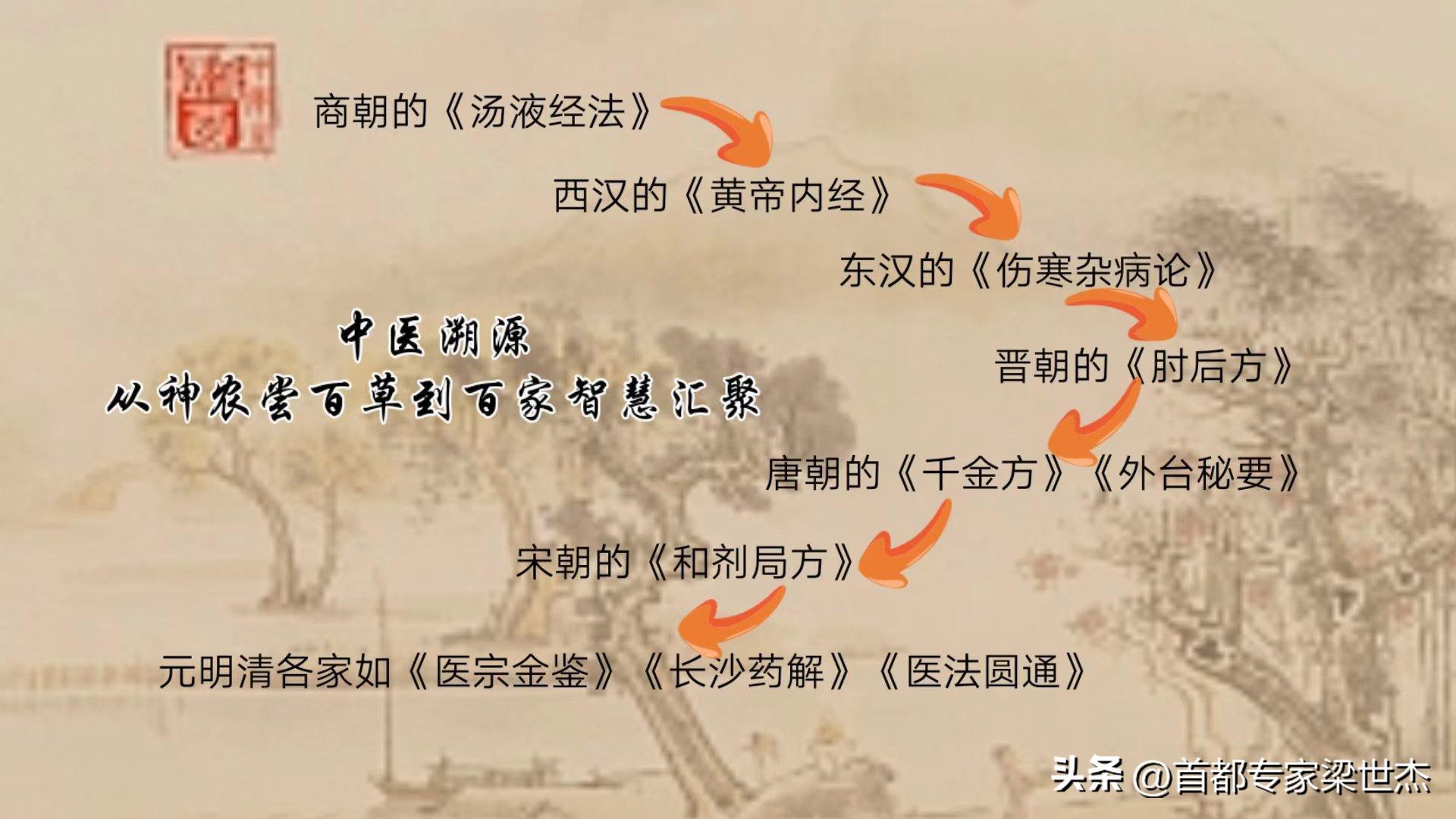
從商朝的《湯液經法》,到西漢的《黃帝內經》,再到東漢的《傷寒雜病論》,一部部經典著作如同一座座巍峨的豐碑,見證了中醫的成長與壯大。晉朝的《肘後方》、唐朝的《千金方》《外臺祕要》、宋朝的《和劑局方》,以及元明清各家的著作如《醫宗金鑑》《長沙藥解》《醫法圓通》等,這些典籍就像一顆顆璀璨的明珠,鑲嵌在中醫的歷史長河中。它們無一不是從諸子百家中尋求先進的理論和觀點,並將其融匯到中醫當中。
在古代,科技的發展就像一個蹣跚學步的孩童,生產力和科學技術相對落後。這就好比一個廚師在沒有先進廚具的情況下烹飪美食,只能更多地依靠自身的經驗和智慧。古代的醫者們就像這些智慧的廚師,他們從古代哲學中攝取了豐富的營養,使中醫逐漸接近於哲學。據統計,在中醫的經典著作中,不同經典對哲學的顯性引用程度不同,《黃帝內經》中哲學框架佔比可達30%-40%,中醫理論體系約70%-80%的基礎概念(如藏象、經絡、病因病機)建立在古代哲學框架之上,一般著作中直接引用古代哲學觀點的篇幅佔比高達15%,這充分說明了古代哲學對中醫發展的重要影響。
融合:道儒思想與中醫的深度交融
道家:天人合一的哲學滋養
西漢時期,黃老之學盛行,就像一陣春風,吹進了醫學理論的花園。《淮南子》提出“形者生之舍也,氣者生之充也,神者生之制也”,這與《內經》的形神觀不謀而合。道家思想從老子的哲學抽象,到西漢黃老之學的政治實踐,最終如同潺潺溪流,深度融入了中醫學理論的長河。《黃帝內經》對道家概念的吸收,就像是一場華麗的變身,標誌着中醫從扁鵲創立的早期經脈醫學,逐漸向以時空自然生成爲哲學指導的醫學模式轉變。
道家的天人合一思想和陰陽平衡思想、中和思想,成爲了中醫的理論哲學核心。就像一把精準的鑰匙,打開了中醫理解人體與自然關係的大門。比如,中醫強調人體與自然的和諧統一,認爲人體的疾病與自然環境的變化密切相關。在季節交替、氣候變化時,人體容易受到外邪的侵襲,從而引發疾病。這就體現了天人合一的思想。而陰陽平衡思想則貫穿於中醫的診斷、治療和養生的各個方面。中醫認爲,人體的陰陽平衡是健康的基礎,一旦陰陽失衡,就會導致疾病的發生。通過調整陰陽,使人體恢復平衡,從而達到治療疾病的目的。
儒家:多元智慧融入中醫體系
儒家的思想也如同璀璨的星辰,爲中醫的天空增添了獨特的光彩。《易經》的三陰三陽陰陽理論,就像一顆閃耀的流星,劃過中醫理論的夜空,融入到了中醫理論當中。易學的河圖洛書理論以及天地生成理論,形成了中醫的九宮八風,這些都被詳細地記錄在《內經》中。
儒家的五行運動理論,也如同一條堅韌的紐帶,將中醫哲學與自然規律緊密相連。它與五臟四時相結合,形成了獨特的中醫理論觀點。比如,中醫認爲,五行對應着人體的五臟,木對應肝,火對應心,土對應脾,金對應肺,水對應腎。同時,五行還與四季相對應,春屬木,夏屬火,長夏屬土,秋屬金,冬屬水。人體的五臟在不同的季節有不同的生理特點和養生方法。在春季,肝氣旺盛,應該注意養肝護肝;在夏季,心氣旺盛,應該注意養心安神。
儒家的社會治理模式也巧妙地融入到了中醫當中,比如中醫的組方的君臣佐使觀點。就像一個和諧的團隊,君藥是團隊的核心,起到主要的治療作用;臣藥是輔助君藥的,增強君藥的功效;佐藥則是協助君臣藥治療兼證,或抑制君臣藥的毒性;使藥則是引導諸藥到達病所,或調和諸藥的藥性。這種組方原則,體現了中醫的整體觀念和辯證思維。
發展:金屬時代與中醫理論的完善
戰國時代,金屬如青銅、鐵等逐漸被創造出來,這就像是一場科技的革命,爲五行理論的發展和完善提供了有力的支撐。五行理論就像一個不斷成長的少年,在金屬的滋養下逐漸茁壯起來,並被引入到了中醫學術當中。金屬的特性與五行中的金相對應,金具有清肅、收斂、下降等特性,這與中醫對人體肺臟功能的認識相契合。肺主氣,司呼吸,主宣發肅降,與金的特性相符。
駁斥:中醫絕非落後保守,而是開放發展
種種根據都像一個個響亮的耳光,有力地反駁了那些說中醫落後、保守、固步自封、不求上進的人。中醫從古到今都是在融合當時社會各家知識和學術觀點,它的形成和發展過程就像一場盛大的宴會,不斷地邀請各方的賓客,共同分享智慧的盛宴。它是一個開放的體系,而不是一個封閉的城堡;它是不斷髮展的,而不是固步自封的。
在現代科技生產力發達的今天,中醫並沒有被時代淘汰,而是逐漸走向現代化。它就像一位歷經滄桑卻依然充滿活力的老者,在吸收現代科技的同時,依然堅守着自己的傳統和特色。中醫的現代化發展,就像是一艘揚帆起航的船,在科技的海洋中乘風破浪,駛向更加廣闊的未來。
中醫,這顆人類文明的璀璨明珠,它承載着中華民族的智慧和情感,是我們中華民族的瑰寶。我們應該以客觀、理性的態度看待中醫,尊重它的歷史和文化價值,傳承和發揚它的優秀傳統。讓中醫這顆古老的星辰,在未來的天空中繼續閃耀着獨特的光芒,爲人類的健康事業做出更大的貢獻。
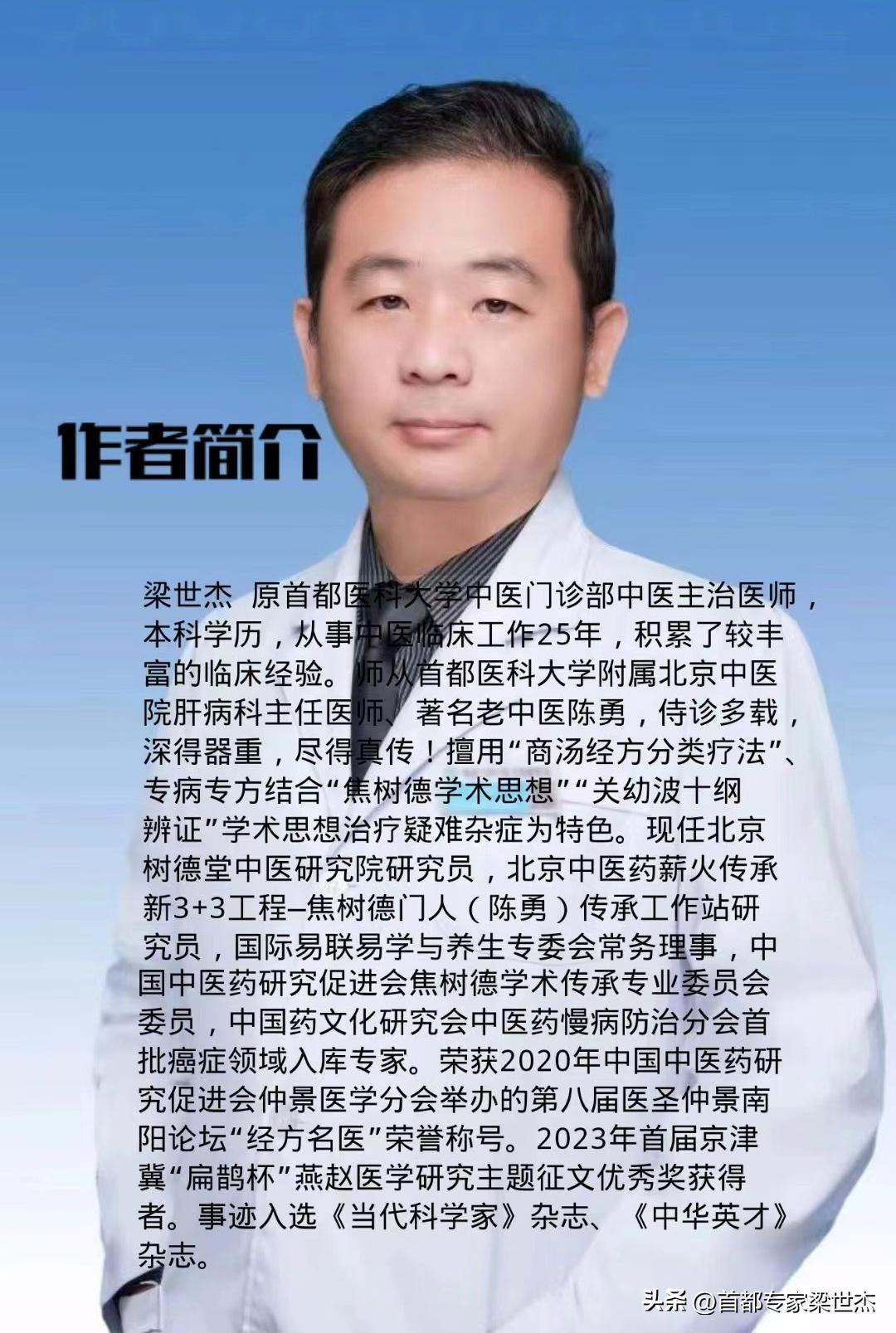
作者簡介:梁世傑 原首都醫科大學中醫門診部中醫主治醫師,本科學歷,從事中醫臨牀工作25年,積累了較豐富的臨牀經驗。師從首都醫科大學附屬北京中醫院肝病科主任醫師、著名老中醫陳勇,侍診多載,深得器重,盡得真傳!擅用“商湯經方分類療法”、專病專方結合“焦樹德學術思想”“關幼波十綱辨證”學術思想治療疑難雜症爲特色。現任北京樹德堂中醫研究院研究員,北京中醫藥薪火傳承新3+3工程—焦樹德門人(陳勇)傳承工作站研究員,國際易聯易學與養生專委會常務理事,中國中醫藥研究促進會焦樹德學術傳承專業委員會委員,中國藥文化研究會中醫藥慢病防治分會首批癌症領域入庫專家。榮獲2020年中國中醫藥研究促進會仲景醫學分會舉辦的第八屆醫聖仲景南陽論壇“經方名醫”榮譽稱號。2023年首屆京津冀“扁鵲杯”燕趙醫學研究主題徵文優秀獎獲得者。事蹟入選《當代科學家》雜誌、《中華英才》雜誌。
Technology is no longer a fad, but a philosophy: Traditional Chinese Medicine refuses to settle for self-imposed status, and openness and integration are its norm.
In the vast sky of human civilization, Chinese medicine is like a bright and unique star, radiating a mysterious and charming light. It has passed through a long history, coming from ancient times, and has been baptized by numerous storms and waves, yet it has always maintained its thriving vitality. Those who say that Chinese medicine is backward, conservative, obstinate, and unprogressive are like those who blindly accuse the star of not shining in the night sky, completely ignoring the magnificent epic of the waves and open fusion behind the star.
Tracing the origins: From Shennong to taste a hundred plants to gather a thousand wisdoms
Let us turn the clock back to ancient times, when the legend of Shennong''s taste of a hundred plants was like a rousing prelude to the development of traditional Chinese medicine. Shennong tested poison on his own in search of herbal remedies that could cure diseases and save people, and his bravery and dedication laid the first cornerstone of Chinese medicine. Since then, the development of traditional Chinese medicine has been like a constant river, constantly bringing together sources of wisdom from all sides.
From the Traditional Chinese Materia Medica of the Shang Dynasty, to the Huang Dynasty Internal Medicine of the Western Han Dynasty, and to the Theory of Typhoid Syndrome of the Eastern Han Dynasty each classical work is like a monumental monument that bears witness to the growth and expansion of traditional Chinese medicine. The Behind the elbows of the Jin Dynasty, the thousand golden recipes of the Tang Dynasty, and the Hidden Secrets of the Outer Table, and the Medicine Bureau recipes of Song Dynasty. As well as the writings of Yuan, Ming and Qing dynasties such as "The Jinqin of Medicine," "Tsinghua Materia Medica" and "The Complete Guide to Medical Law," these classics are like bright pearls that are embedded in the long history of Chinese medicine. They nonetheless seek advanced theories and perspectives from the various scholarly texts and incorporate them into traditional Chinese medicine.
In ancient times, technology developed like a toddler, and productivity and science and technology were relatively backward. It''s like a chef who cooks good food without advanced cookware, and can only rely more on his own experience and wisdom. The ancient healers were like these wise chefs who took rich nutrition from ancient philosophy, bringing Chinese medicine closer to philosophy. According to statistics, in the classical works of Chinese medicine, different classics have different degrees of explicit references to philosophy, and the philosophical framework in the Huangdi Yinan accounts for 30% - 40%. About 70% to 80% of the basic concepts of the traditional Chinese medicine theory system (such as Tibetan elephant, meridians, causes and diseases) are based on the framework of ancient philosophy, and the proportion of pages in general literature directly quoting the views of ancient philosophers accounts for as much as 15%, which fully illustrates the important influence of ancient philosophies on the development of traditional Chinese Medicine.
Integration: The Deep Convergence of Taoism and Confucianism with Chinese Medicine
Taoism: The philosophy of heaven and man being nourished
During the Western Han Dynasty, the teachings of the Huang elderly flourished, and like a spring wind, they entered the garden of medical theory. The Huainan Poem states that "the form is born with a residence, the spirit is born with an enrichment, and the divine is born with the means," which coincides with the conception of the form and the divinity in the Inner Scriptures. Taoist thought, from the philosophical abstraction of Laozi to the political practice of Huang Laozi''s study in the West Han Dynasty, is finally deeply integrated into the long river of Chinese medical theory. Huangdi Yin''s absorption of Taoist concepts is like a gorgeous transformation, marking the gradual shift of traditional Chinese medicine from early meridian medicine, which was founded by the lentils, to a model of medicine guided by philosophy.
Taoist ideas of unity between man and nature, yin and yang balance, and neutrality have become the core of the theoretical philosophy of traditional Chinese medicine. It is like a precise key that opens the door to understanding the relationship between the human body and nature in TCM. For example, traditional Chinese medicine emphasizes the harmony and unity of the human body with nature, and believes that human diseases are closely related to changes in the natural environment. When the seasons change and the climate changes, the human body is vulnerable to the invasion of external evils, which can trigger diseases. This reflects the idea of unity between man and nature. The idea of yin and yang balance permeates all aspects of the diagnosis, treatment and maintenance of traditional Chinese medicine. According to traditional Chinese medicine, the yin and yang balance of the human body is the foundation of health, and once the yin andyang imbalance is unbalanced, it will lead to the occurrence of diseases. By adjusting yin and yang, the body is restored to balance, thereby achieving the purpose of treating diseases.
Confucianism: the integration of diverse wisdom into the Chinese medicine system
Confucian thought is also like a bright star, adding a unique glow to the sky of traditional Chinese medicine. The theory of yin, yang, yang, yin and yang in the Theory of Traditional Chinese Medicine, like a shining meteor, scratched through the night sky of traditional Chinese medicine and was incorporated into traditional Chinese Medicine. The theory of easily learned Hutushu and the theory of the creation of heaven and earth formed the nine palaces and eight winds of traditional Chinese medicine, which were detailed in the Inner Book.
Confucian theory of the five-way motion is also like a strong bond that closely ties the philosophy of traditional Chinese medicine to the laws of nature. It combines with the five organs and four timings, forming a unique theoretical view of traditional Chinese medicine. For example, according to traditional Chinese medicine, the five branches correspond to the human body''s five organs: wood corresponds to the liver, fire corresponds to heart, earth corresponds to spleen, gold corresponds to lungs, and water corresponds to kidneys. At the same time, the five branches correspond to the four seasons, the spring is wood, the summer is fire, the long summer is earth, the autumn is gold, and the winter is water. The human body''s five organs have different physiological characteristics and maintenance methods in different seasons. In spring, the liver is strong, and attention should be paid to maintaining and protecting the liver; In the summer, the spirit is strong, and attention should be paid to maintaining the peace of mind.
Confucian models of social governance have also been subtly incorporated into traditional Chinese medicine, such as the view of a gentleman named Sasai, whose prescription is based on traditional Chinese Medicine. Like a harmonious team, a medicinal drug is the core of the team and plays the primary therapeutic role. The prescription drugs are complementary to the medicinal ones and enhance the efficacy of the medicinal drugs. Complementary medicines are those that assist in the treatment and validation of a king''s medication or inhibit the toxicity of a monarch''s medicinal medication; Making a medicine is to either guide the medicine to the place of illness or to reconcile the drug''s medicinal properties. This principle of prescription reflects the holistic concept and dialectical thinking of Chinese medicine.
Development: The Metal Age and the Perfection of Chinese Medicine Theory
During the Warring States era, metals such as bronze and iron were gradually created, which was like a technological revolution, providing strong support for the development and perfection of the five-line theory. Like a growing teenager, the theory of the five rays grew strong under the nourishment of metals and was introduced into traditional Chinese medicine. The properties of the metal correspond to those of gold in the five branches, and gold has characteristics such as purification, contraction, and decline, which are consistent with the understanding of the human lung function in traditional Chinese medicine. The lungs mainly breathe, and they mainly pronounce and lower, which is consistent with the properties of gold.
Reject: Traditional Chinese Medicine is not backward and conservative, but open to development
The various grounds are like loud slaps at those who say that traditional Chinese medicine is backward, conservative, obstinate, and does not seek progress. From ancient times to the present, traditional Chinese medicine has been integrating knowledge and academic views from all parts of the society at that time, and its formation and development is like a grand banquet, constantly inviting guests from all sides to share wisdom. It is an open system, not a closed castle; It is constantly evolving, not rigid.
At a time when modern technology and productivity are developed, traditional Chinese medicine has not been eliminated by the times, but is gradually being modernized. It is like an old man who has lived through the vicissitudes but is still vibrant, absorbing modern technology while still maintaining its own traditions and characteristics. The modern development of traditional Chinese medicine is like a sailing ship, riding the wind and breaking the waves in the sea of technology to sail towards a wider future.
Traditional Chinese medicine, a shining pearl of human civilization, carries the wisdom and emotions of the Chinese nation and is a treasure of our nation. We should view Chinese medicine in an objective and rational manner, respect its historical and cultural values, and carry forward and promote its excellent traditions. Let the ancient star of traditional Chinese medicine continue to shine in the skies of the future and make greater contributions to the cause of human health.
Author Profile: Liang Shi-jie was a chief physician of traditional Chinese medicine at the Traditional Chinese Medicine Outpatient Clinic of Capital Medical University. He holds a bachelor’s degree and has been involved in clinical work in traditional Chinese medicine for 25 years, accumulating extensive clinical experience. He studied under Chen Yong, a renowned senior traditional Chinese medicine practitioner at the Hepatology Department of Beijing Hospital Affiliated to Capital Medical University. Over the years, he gained great respect and acquired genuine expertise. He specializes in using the “Shang Tang Classic Classification Therapy” and combining specific treatments for specific diseases with the “Jiao Shu-de Academic Thought” and the “Guan You-bo Ten-Principle Diagnosis” approach to treat complex and rare conditions. Currently, he serves as a researcher at the Beijing Shu-de-Tang Traditional Chinese Medicine Research Institute and a researcher at the Jia Shu-de Disciples (Chen Yong) Heritage Workstation of the Beijing New 3+3 Project for the Succession of Traditional Chinese Medicine. He is a member of the Executive Committee of the International Yi-lian Yi-xue and Health Preservation Committee, a member of the Jia Shu-de Academic Heritage Committee of the China Research Promotion Association for Traditional Chinese Medicine, and a first-batch expert in the cancer field of the China Cultural Research Association for Traditional Chinese Medicine’s Prevention of Chronic Diseases. He was awarded the title of “Expert in Classic Prescriptions” at the Eighth Symposium of the Medicine Saint Zhang Zhongjing of Nanyang, organized by the China Research Promotion Association of Traditional Chinese Medicine in 2020. In 2023, he won the Excellence Award in the First Beijing-Tianjin-Hebei “Bian Que Cup” Symposium on Yan-Zhao Medical Research. His achievements have been featured in the magazines “Contemporary Scientists” and “China’s Elite”.