梁世傑:莫陷“創新”虛妄之阱
在當今這個科技飛速發展、思潮日新月異的時代,中醫面臨着繼承與創新的雙重挑戰,猶如一艘在時代浪潮中航行的巨輪,既要在傳統中錨定方向,又要在創新中揚起風帆。

中醫,首先要做好繼承,這是不容置疑的根基。就如同建造一座宏偉的大廈,沒有堅實的地基,再華麗的建築也不過是空中樓閣。中醫的經典著作,如《黃帝內經》《傷寒雜病論》《本草綱目》等,是中醫理論的源頭活水,蘊含着無數先人對人體、疾病和自然的深刻洞察。這些經典歷經歲月沉澱,其中的每一個方劑、每一種診療方法,都是先輩們在無數次臨牀實踐中總結出來的寶貴經驗。據統計,在中醫古籍中記載的方劑多達數十萬首,這些方劑涵蓋了各種病症的治療,是中醫傳承的瑰寶。
然而,當下卻有一種令人無奈和嘆息的現象:現在的科研,最多的還是反覆用現代的科學研究方式來證明中醫的科學性,藉以恢復中醫人的底氣。這就像是一個孩子,總是要通過別人的認可來證明自己的價值,而忽略了自己內心深處的力量。中醫有着自身獨特的理論體系和診療方法,它源於對自然和人體的整體觀察與感悟,與現代科學的研究範式有所不同。我們固然需要藉助現代科學的技術和手段來進一步揭示中醫的奧祕,但不能本末倒置,爲了證明而證明。曾經有科研團隊花費大量的時間和精力,用現代醫學的實驗方法去驗證一個經典中醫方劑的療效,雖然最終得到了一些數據上的支持,但卻忽略了中醫方劑背後整體的辨證論治思想,這樣的研究又有多少實際的意義呢?
再說說創新,創新固然是推動中醫發展的動力,但不能爲了創新而創新。經濟學裏有個“邊際創新”理論,說的是在別人的基礎上做1%的改動,就能形成差異化。我們不得不承認,有極少數的科研團隊也在用這樣的形式修正傳統,用於邀功行賞。他們似乎把創新當成了一種任務,一種可以獲取名利的手段,而忽略了創新的本質是爲了更好地解決臨牀問題,提高中醫的療效。比如,有些科研人員對傳統的中藥方劑進行簡單的成分提取和組合,就宣稱是一種創新,但這種創新往往缺乏對中醫整體觀念和辨證論治思想的深入理解,在實際應用中可能效果並不理想。據相關調查顯示,近年來一些所謂的“創新理論”“創新中藥”在臨牀上的有效率並沒有顯著提高,反而因爲過度追求新奇而忽略了藥物的安全性有效性,和中醫理論的自洽性。
現實是殘酷的,90%的普通人,根本沒資格對傳統中醫談原創。那些你以爲的新想法,可能早就有人試過了,甚至已經被驗證行不通。中醫的發展是一個漫長的歷史過程,無數的醫家在各個時代都進行了不懈的探索和實踐。我們今天所面臨的很多問題,先輩們可能早就思考過並嘗試過解決。就像中醫對一些疑難病症的治療,古人在沒有現代科技輔助的情況下,通過長期的觀察和實踐,已經積累了很多有效的經驗和方法。我們不應該盲目地認爲自己能夠輕易地提出全新的理論和方法,而應該虛心地向傳統學習,在前人的基礎上進行深入的研究和創新。
我曾經聽過這樣一個故事,有一位年輕的中醫研究者,他自認爲有了一個全新的治療思路,想要打破傳統的中醫辨證方法。於是,他開始進行實驗和研究,投入了大量的精力和資金。然而,當他深入研究相關的中醫古籍和臨牀案例時,才發現自己的所謂“新思路”其實早在幾百年前就已經被一位古代醫家提出並應用過了,而且那位醫家的治療效果還非常顯著。這位年輕的研究者感到十分慚愧,也深刻認識到了自己的淺薄和浮躁。
中醫的繼承與創新,是一場漫長而艱辛的旅程。我們不能在繼承的道路上停滯不前,讓中醫的寶貴經驗逐漸失傳;也不能在創新的道路上迷失方向,爲了追求表面的新奇而忽略了中醫的本質。我們要以敬畏之心對待傳統,以務實之態進行創新。就像一棵參天大樹,只有深深紮根於傳統的土壤,才能枝繁葉茂,綻放出創新的花朵。
讓我們銘記中醫的初心,在繼承中堅守,在創新中前行,讓中醫這顆古老的明珠在新時代煥發出更加耀眼的光芒,爲人類的健康事業做出更大的貢獻。
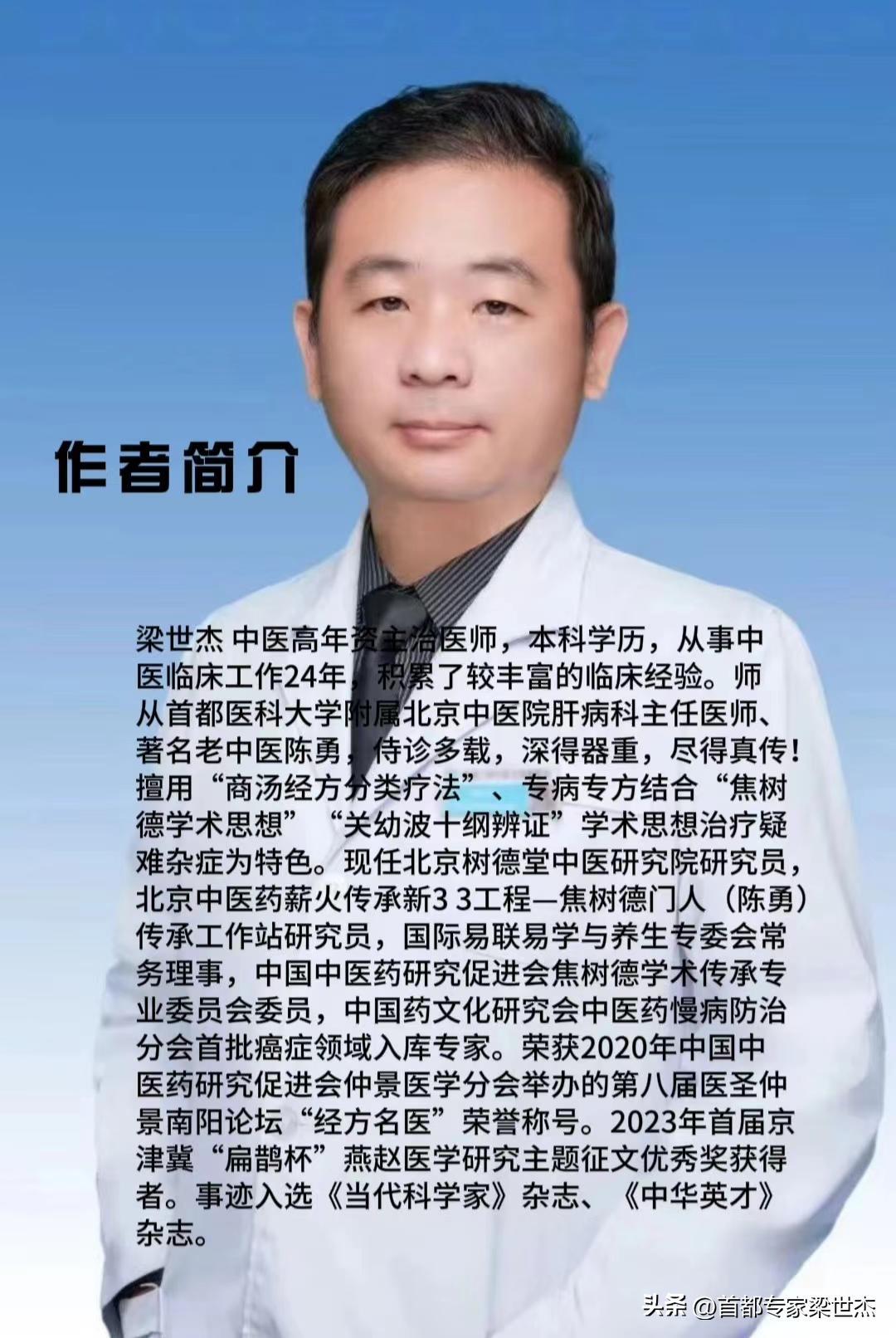
作者簡介:梁世傑 中醫高年資主治醫師,本科學歷,從事中醫臨牀工作24年,積累了較豐富的臨牀經驗。師從首都醫科大學附屬北京中醫院肝病科主任醫師、著名老中醫陳勇,侍診多載,深得器重,盡得真傳!擅用“商湯經方分類療法”、專病專方結合“焦樹德學術思想”“關幼波十綱辨證”學術思想治療疑難雜症爲特色。現任北京樹德堂中醫研究院研究員,北京中醫藥薪火傳承新3+3工程—焦樹德門人(陳勇)傳承工作站研究員,國際易聯易學與養生專委會常務理事,中國中醫藥研究促進會焦樹德學術傳承專業委員會委員,中國藥文化研究會中醫藥慢病防治分會首批癌症領域入庫專家。榮獲2020年中國中醫藥研究促進會仲景醫學分會舉辦的第八屆醫聖仲景南陽論壇“經方名醫”榮譽稱號。2023年首屆京津冀“扁鵲杯”燕趙醫學研究主題徵文優秀獎獲得者。事蹟入選《當代科學家》雜誌、《中華英才》雜誌。
Liang Shijie: Don''t fall into the false trap of "innovation"
In today''s era of rapid technological development and rapid changes in thinking, traditional Chinese medicine faces the dual challenge of inheritance and innovation. Like a giant ship sailing in the wave of the times, it must not only anchor the direction in tradition, but also lift the sails in innovation.
In Chinese medicine, the first step is to inherit well, which is the unquestioned foundation. It is like building a grand edifice without a solid foundation, and any gorgeous building is nothing more than an aerial palace. The classical works of traditional Chinese medicine, such as the Inner Book of Huangdi, the Theory of Typhoid and the Materia Medica, are the source of traditional medicine theory, and contain the profound insight of countless ancestors about the human body, diseases and nature. These classics have evolved over the years, and each of the formulations and treatments in them is a valuable experience that has been learned from countless clinical practices by previous generations. According to statistics, there are as many as hundreds of thousands of prescriptions recorded in ancient Chinese medicine books, which cover the treatment of various conditions and are treasures of the traditional Chinese medicine.
However, there is a frustrating and sighing phenomenon at present: most of the current scientific research is to repeatedly use modern scientific research methods to prove the scientific nature of traditional Chinese medicine, so as to restore the confidence of Chinese medicine practitioners. It''s like being a child who always has to prove his or her worth through the approval of others, while ignoring his or her inner strength. TCM has its own unique theoretical system and diagnosis and treatment method, which stems from the holistic observation and enlightenment of nature and the human body, and differs from the research paradigm of modern science. Although we need to use modern scientific techniques and means to further reveal the mysteries of traditional Chinese medicine, we cannot invert this to prove it for the sake of proof. There have been scientific research teams that have spent a lot of time and effort using modern medical experimental methods to verify the efficacy of a classical Chinese medicine prescription. Although ultimately supported by some data, it ignores the overall dialectical thinking behind traditional Chinese medicine prescriptions. How much practical significance does such a study have?
Let''s also talk about innovation. While innovation is a driving force for the development of traditional Chinese medicine, it cannot be innovative for the sake of innovation. There is a theory of "marginal innovation" in economics, which says that a 1% change on someone else''s basis can lead to differentiation. We have to admit that a very small number of research teams are also using this form of revision of tradition to reward merit. They seem to regard innovation as a task, a means of gaining fame and fortune, while ignoring the nature of innovation to better solve clinical problems and improve the efficacy of traditional Chinese medicine. For example, some researchers claim to be an innovation in simple ingredient extraction and combination of traditional Chinese herbal remedies, but this innovation often lacks a deep understanding of the overall concept of Chinese medicine and dialectical healing ideas, and may not have an ideal effect in practical application. According to relevant surveys, the clinical effectiveness of some so-called "innovative theories" and "innovative Chinese medicine" has not improved significantly in recent years, but the over-pursuit of novelty has neglected the safety and effectiveness of the drugs and the conformity of traditional Chinese medicine theory.
The reality is cruel, and 90% of the ordinary people are in no position to speak originally about traditional Chinese medicine. The idea you think is new may have been tried by somebody already, or even proved unworkable. The development of traditional Chinese medicine is a long historical process, and countless medical practitioners have unremittingly explored and practiced it in various eras. Many of the problems we face today may have been thought about and tried to solve earlier generations. Just like the treatment of some difficult diseases in traditional Chinese medicine, the ancient people have accumulated many effective experiences and methods through long-term observation and practice without the aid of modern technology. We should not blindly assume that we can easily come up with new theories and methods, but should humbly learn from tradition and conduct in-depth research and innovation on the basis of previous people.
I once heard a story about a young Chinese medicine researcher who thought he had a whole new approach to healing and wanted to break with the traditional Chinese medicine method of diagnosis. So he began to conduct experiments and research, investing a lot of energy and money. However, when he delved into relevant traditional Chinese medicine books and clinical cases, he discovered that his so-called "new idea" had actually been proposed and applied by an ancient medical practitioner hundreds of years ago, and that the medical practitioner''s treatment effect was remarkable. The young researcher felt ashamed and recognized his shallowness and irritability.
The inheritance and innovation of traditional Chinese medicine is a long and difficult journey. We must not stop on the path of inheritance and let the valuable experience of traditional Chinese medicine gradually be lost; Nor can we lose our way on the path of innovation, neglecting the essence of traditional Chinese medicine in pursuit of superficial novelty. We must treat tradition with awe and innovate in a pragmatic manner. Like a giant tree, it is only when it is deeply rooted in traditional soil that it can grow and blossom innovatively.
Let us remember the original intention of traditional Chinese medicine, stay true to it in inheritance, and move forward in innovation, so that this ancient pearl of traditional medicine will shine brighter in the new era and make greater contributions to human health.
Author Bio: Liang Shijie is a senior medical practitioner in traditional Chinese medicine with an undergraduate degree. He has been engaged in traditional medicine clinical work for 24 years and has accumulated a wealth of clinical experience. Following Chen Yong, chief physician of liver disease at Beijing Traditional Medicine Hospital, affiliated with Capital Medical University, and renowned old Chinese medicine, he has been treated for many years and received great attention. He specializes in the treatment of difficult diseases using "conversational traditional therapy" and special treatments combined with the academic ideas of Jiao Shude and Guan Yubo''s ten-level diagnosis.He is currently a researcher at the Shude Tang TCM Research Institute in Beijing, a fellow at the new 3 + 3 project of traditional Chinese medicine flame inheritance in Beijing - a scholar at the inheritance workstation of Jiao Shude''s protégés (Chen Yong),He is a standing committee member of the International Expert Committee on E-learning and Health Care, a member of the Jiao Shude Academic Heritage Special Committee of the Chinese Association for the Advancement of Chinese Medicine Research, and the first cancer specialist to be included in the chapter of the Chinese Pharmaceutical Culture Research Association. Won the 2020 China Association for the Promotion of Traditional Chinese Medicine Zhongjing Medical Branch held the eighth session of the Medical Saint Zhongjing Nanyang Forum "Classic Prescription Famous Doctor" honorary title. The winner of the first Beijing-Tianjin-Hebei "Pingui Cup" Yanzhao Medical Research Essay Award in 2023. His work was featured in the journal Current Scientist and the journal Chinese Talent.