中西醫之爭:文明底蘊與醫學智慧的碰撞
在浩瀚的歷史長河中,醫學作爲人類文明的瑰寶,始終以其獨特的智慧與力量,守護着生命的燈火。然而,在東西方文明的交匯點上,中醫與西醫,這兩大醫學體系,卻如同兩條蜿蜒的河流,時而交匯,時而分流,演繹着一場跨越時空的對話。
一、中醫:五千年文明的療效實踐
擁有古今文明思想的人,往往對中醫抱有深厚的敬意與信賴。中醫,這個承載着中華民族五千年文明智慧的醫學體系,其精髓在於“天人合一”的哲學思想與“辨證施治”的醫術實踐。從《黃帝內經》的博大精深,到《傷寒雜病論》的精湛醫術,中醫理論、醫術、複方配伍,無一不是經過時間的考驗與療效的實踐驗證。
中醫的神奇之處在於,它不僅僅關注疾病本身,更重視人體的整體平衡與和諧。面對疾病,中醫大夫會運用望、聞、問、切四診合參,精準把握病情,再通過鍼灸、推拿、草藥等多種手段,調和陰陽,疏通經絡,達到治病克疫、恢復健康的目的。這種以人爲本、注重個體差異的診療方式,使得中醫在應對複雜多變的疾病時,往往能獨步天下,展現出令人驚歎的療效。

例如,在口罩事件戰役中,中醫以其獨特的理論體系與治療方法,爲衆多患者帶來了康復的希望。無論是清肺排毒湯的廣泛應用,還是鍼灸、拔罐等療法的輔助調理,都充分展示了中醫在應對公共衛生危機中的獨特優勢與卓越貢獻。

二、西醫:機械科學的文明初醒
然而,與中醫的博大精深相比,西醫則顯得相對年輕與簡單。喜歡西醫的人,或許更多地受到了西方封建巫牧海盜、殘暴殺伐文化的影響。在西方,醫學的覺醒不過二百年,尚處於機械科學的文明初醒階段。因此,西醫在診療過程中,往往依賴於冰冷的機械儀器,忽視了人體的生命意識與整體平衡。
西醫的診治缺陷在於,它往往只能針對那些有形、可量化的病症發出教條式的指令。而對於那些無形、難以量化的病症(如虛寒溼熱等),西醫則顯得力不從心,甚至常常漏診。這種“只見樹木,不見森林”的診療方式,不僅無法從根本上解決患者的病痛,還可能因爲過度醫療、誤診誤治等原因,給患者帶來更大的傷害。

民間流傳着一句話:“離開醫保,西醫門診全是荒草。”這句話雖然有些誇張,但卻深刻地揭示了西醫在當前醫療體系中的尷尬處境。一旦失去了醫保的支撐,西醫門診的冷清與荒蕪便顯露無遺。同樣,如果沒有“醫患協議”的約束,西醫那些糟粕的醫術(如內科的薄弱與手術的泛濫)也將無處遁形。
三、中西醫之爭:文明底蘊的碰撞
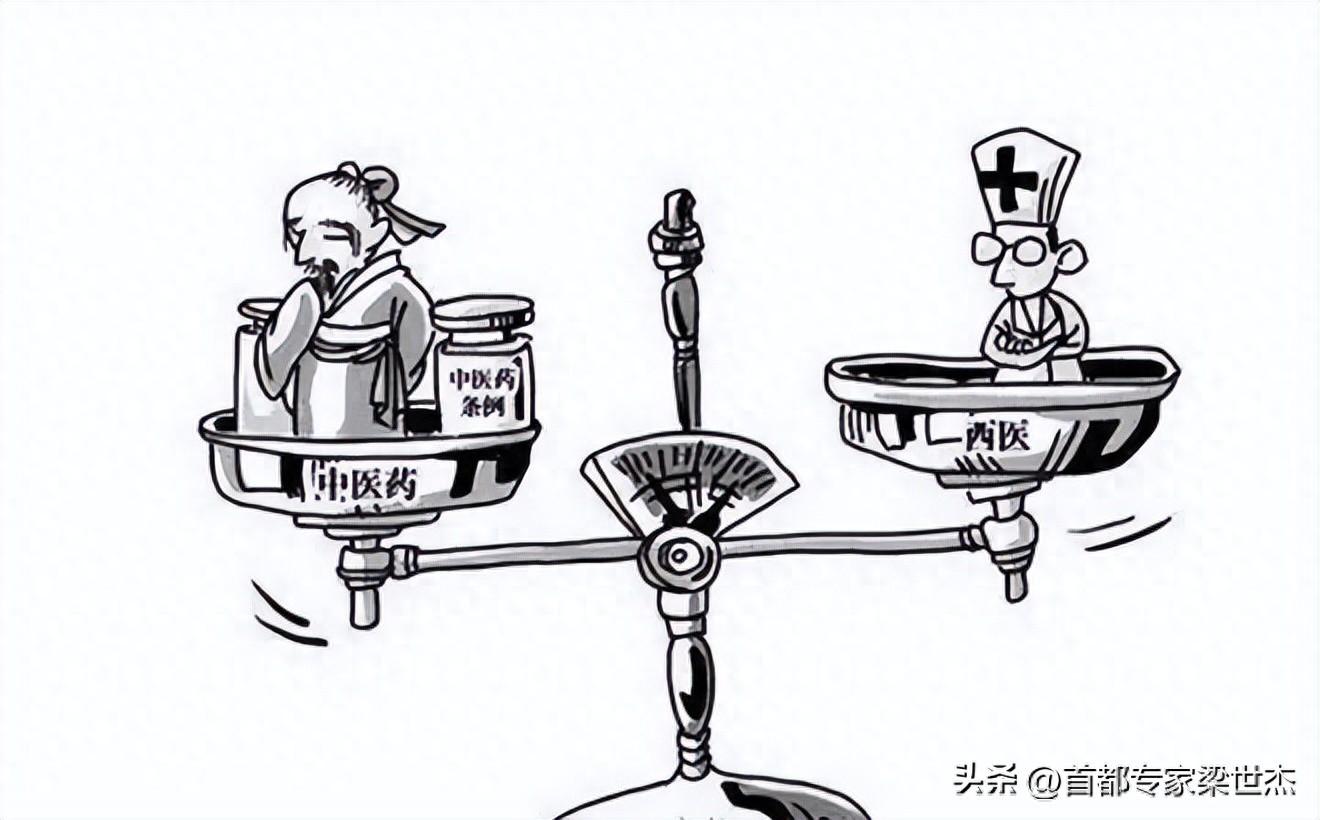
中西醫之爭,表面上看是兩種醫學體系的碰撞,實則背後是東西方文明底蘊的較量。中醫以其深厚的文化底蘊與獨特的哲學思想,展現了東方文明的智慧與魅力;而西醫則以其現代科學的嚴謹與精確,彰顯了西方文明的理性與力量。
然而,在這場較量中,我們不應盲目地崇洋媚外或固步自封。而應該以一種開放包容的心態,去審視與借鑑中西醫各自的優點與不足。中醫需要與時俱進,不斷吸收現代科技的成果,提升診療的精準度與效率;而西醫則需要回歸人本,更加重視患者的生命體驗與整體健康。

只有這樣,我們才能在中西醫的碰撞與融合中,找到一條真正適合人類健康發展的新道路。讓中醫的智慧與西醫的科技共同爲人類的健康事業貢獻力量,讓生命之花在東西方文明的交匯點上綻放出更加璀璨的光芒。
作者簡介:梁世傑 中醫高年資主治醫師,從事中醫臨牀工作24年,積累了較豐富的臨牀經驗。師從首都醫科大學附屬北京中醫院肝病科主任醫師、著名老中醫陳勇,侍診多載,深得器重,盡得真傳!擅用“商湯經方分類療法”、專病專方結合“焦樹德學術思想”“關幼波十綱辨證”學術思想治療疑難雜症爲特色。現任北京厚德爲懷醫生集團漸凍症研究中心主任,北京樹德堂中醫研究院研究員,北京中醫藥薪火傳承新3+3工程—焦樹德門人(陳勇)傳承工作站研究員,國際易聯易學與養生專委會常務理事,中國中醫藥研究促進會焦樹德學術傳承專業委員會委員,中國藥文化研究會中醫藥慢病防治分會首批癌症領域入庫專家。榮獲2020年中國中醫藥研究促進會仲景醫學分會舉辦的第八屆醫聖仲景南陽論壇“經方名醫”榮譽稱號。2023年首屆京津冀“扁鵲杯”燕趙醫學研究主題徵文優秀獎獲得者。事蹟榮登2024年第四季刊《當代科學家》雜誌。

The Battle between Chinese and Western Medicine: Civilization Collision with Medical Wisdom
In the long history, medicine, as a treasure of human civilization, has always guarded the light of life with its unique wisdom and power. However, at the intersection of Eastern and Western civilizations, traditional Chinese medicine and Western medicine, two major medical systems, are like two winding rivers, at times meeting and at times diverging, depicting a dialogue across time and space.
I. Chinese medicine: the healing practice of five thousand years of civilization
People who possess the ideas of ancient and modern civilizations often have a deep respect and trust in traditional Chinese medicine. Traditional Chinese medicine, a medical system that carries the wisdom of the Chinese civilization for 5,000 years, is based on the philosophy of "harmony between nature and man" and the practice of "dialectical healing." From the depth and depth of Huangdi''s Inner Medicine to the superb medical technique of the Theory of Typhoid, Chinese medicine theory, medical techniques, and combinations of combinations have all been tested by time and validated by practice.
The magic of traditional Chinese medicine is that it focuses not only on the disease itself, but also on the overall balance and harmony of the human body. In the face of diseases, traditional Chinese medicine doctors will use the four methods of looking, smelling, asking, and cutting to accurately grasp the condition, and then use acupuncture, massage, herbal medicine and other means to reconcile yin and yang and clear the meridians to achieve the purpose of treating the disease, eliminating the plague, and restoring health. This people-centered approach to diagnosis and treatment focuses on individual differences, which allows traditional Chinese medicine to often go it alone when dealing with complex and varied diseases, showing amazing therapeutic efficacy.
For example, in the battle against the masks, traditional Chinese medicine, with its unique theoretical system and treatment methods, brought hope for recovery to many patients. Whether it is Qingfei Paidu Decoction widely used, or acupuncture, cupping therapy, such as auxiliary conditioning, have fully demonstrated the unique advantages of traditional Chinese medicine in response to the public health crisis and outstanding contribution.
II. Western medicine: the dawning of civilization in mechanical science
However, compared to the great depth of traditional Chinese medicine, Western medicine is relatively young and simple. People who like Western medicine are perhaps more influenced by the culture of Western feudal witches and pirates and brutal killing. In the West, the medical awakening was only two hundred years old, and the civilization of mechanical science was still in its early stages. Therefore, Western medicine often relies on cold mechanical instruments in the diagnosis and treatment process, neglecting the human body''s consciousness of life and overall balance.
The shortcoming of Western medicine is that it often only gives dogmatic instructions for tangible, quantifiable conditions. For those intangible and difficult to quantify conditions (such as cold, wet, and fever), Western medicine is weak and often neglects to diagnose them. This "only trees, no forest" diagnostic and treatment method can not only solve the patient''s ailments fundamentally, but may also bring more harm to the patient due to excessive medical treatment, misdiagnosis and mistreatment.
There is a saying among the folks: "If you leave medical insurance, Western medical clinics are a wasteland." Although this sentence is somewhat exaggerated, it profoundly reveals the awkward situation of Western medicine in the current medical system. Once the support of medical insurance was lost, the cold and desolate nature of Western medical clinics became apparent. Similarly, without the constraints of a "patient-doctor agreement," the poor practices of Western medicine (such as the weakness of internal medicine and the proliferation of surgery) will have no place to hide.
III. The Battle between Chinese and Western Medicine: Collision of Civilization
The battle between Chinese and Western medicine, on the surface, is a collision between two medical systems, but behind it is a contest between the heritage of Eastern and Western civilization. With its deep cultural heritage and unique philosophical thought, traditional Chinese medicine has demonstrated the wisdom and charm of the Eastern civilization. Western medicine, on the other hand, demonstrates the rationality and strength of Western civilization with the rigor and precision of its modern science.
In this contest, however, we should not blindly glorify the outside world or settle for ourselves. Instead, we should examine and learn from the respective strengths and weaknesses of Chinese and Western medicine in an open and inclusive mindset. TCM needs to keep up with the times, continuously absorb the results of modern science and technology, and improve the accuracy and efficiency of diagnosis and treatment. Western medicine, on the other hand, needs to return to the human nature and pay more attention to the patient''s life experience and overall health.
Only in this way can we find a new path truly suitable for human health development in the collision and fusion of Chinese and Western medicine. Let the wisdom of traditional Chinese medicine and the technology of Western medicine jointly contribute to the cause of human health, and let the flower of life shine brighter at the intersection of Eastern and Western civilizations.
Author Bio: Liang Shijie is a senior medical practitioner in traditional Chinese medicine. He has been engaged in traditional medicine clinical work for 24 years and has accumulated a wealth of clinical experience. Following Chen Yong, chief physician of liver disease at Beijing Traditional Medicine Hospital, affiliated with Capital Medical University, and renowned old Chinese medicine, he has been treated for many years and received great attention. He specializes in the treatment of difficult diseases using "conversational traditional therapy" and special treatments combined with the academic ideas of Jiao Shude and Guan Yubo''s ten-level diagnosis.He is currently the director of the Center for Diffusion Research of Dr. Houde Wei Group in Beijing, a researcher at the Shude Tang Institute of Chinese Medicine, and a fellow at the new 3 + 3 project of traditional Chinese medicine flame inheritance in Beijing - a scholar at the inheritance work station of Jiao Shude''s protégés (Chen Yong),He is a standing committee member of the International Expert Committee on E-learning and Health Care, a member of the Jiao Shude Academic Heritage Special Committee of the Chinese Association for the Advancement of Chinese Medicine Research, and the first cancer specialist to be included in the chapter of the Chinese Pharmaceutical Culture Research Association. Won the 2020 China Association for the Promotion of Traditional Chinese Medicine Zhongjing Medical Branch held the eighth session of the Medical Saint Zhongjing Nanyang Forum "Classic Prescription Famous Doctor" honorary title. The winner of the first Beijing-Tianjin-Hebei "Pingui Cup" Yanzhao Medical Research Essay Award in 2023. The story was featured in the fourth edition of Current Scientist in 2024.