無法指導中醫臨牀的科研究竟有沒有用?
在醫學的宏大版圖中,中醫宛如一座古老而神祕的城堡,承載着中華民族數千年的健康智慧與生命哲學。它歷經歲月滄桑,在無數患者的病痛與康復間沉澱出獨特而深邃的理論體系與治療方法。然而,當下中醫科研的走向,卻似一場迷途的旅程,讓人不禁憂慮:不能指導中醫臨牀的科研,究竟有沒有用?
河北省中醫藥研究院的主任醫師曹東義一語道破當下中醫科研的困境:“在資助的中醫、中藥項目中,往往是以中藥或者某法、某理論研究爲主,不少項目屬於‘中西醫結合’研究,純粹的中醫科研課題很少。”這就像是一場熱鬧卻偏離主線的舞會,大家都在各自忙碌,卻忘了最初的舞步是爲了展現中醫的獨特魅力。中醫藥研究經費本就捉襟見肘,猶如貧瘠土地上的涓涓細流,難以滋養出繁茂的科研之樹。可即便如此,有限經費中的絕大部分還投入到尋找臟腑“本質”、中藥“有效成分”的實驗研究上。這彷彿是在用西醫的尺子去丈量中醫的天地,結果自然是格格不入。
“搞了很多年,‘成果’出了一大批,卻無法用西醫的術語說清中醫藥的理論,也不能指導中醫臨牀。”曹東義的這句話,如同一記重錘,敲響了中醫科研的警鐘。這就好比一個工匠,辛辛苦苦打造出了一大堆精美的零件,卻發現這些零件根本無法組裝成一臺能正常運轉的機器。據相關統計數據顯示,近年來,中醫科研項目的數量呈逐年上升趨勢,但真正能在臨牀實踐中得到廣泛應用並取得顯著療效的成果卻寥寥無幾。有調查表明,在一些中醫醫院的臨牀治療中,醫生們仍然更多地依賴傳統的經驗和經典方劑,而對於那些所謂的科研“成果”,往往持謹慎態度,因爲它們在實際應用中效果並不理想。
我們不妨以中醫對脾胃病的治療爲例。中醫認爲,脾胃乃後天之本,氣血生化之源。在治療脾胃病時,中醫強調辨證論治,根據患者的具體症狀、體質、舌象、脈象等因素,將脾胃病分爲脾胃虛寒、脾胃溼熱、肝鬱脾虛等多種證型,然後針對不同的證型選用不同的方劑進行治療。例如,對於脾胃虛寒型的患者,常用理中丸來溫中散寒;對於脾胃溼熱型的患者,則用清中湯來清熱化溼。這些經典方劑,都是中醫先輩們在長期的臨牀實踐中總結出來的,療效確切。然而,一些中醫科研卻試圖從西醫的角度去研究脾胃的“本質”和中藥的“有效成分”,結果往往是徒勞無功。因爲中醫的理論體系與西醫有着本質的區別,中醫更注重整體觀念和辨證論治,而西醫則更側重於局部病變和微觀結構。用西醫的方法去研究中醫,就像是用油畫筆去畫中國畫,雖然也能畫出一些線條和色彩,但卻失去了中國畫的神韻和意境。
增加用於中醫的科研經費,保證經費用在適合中醫發展、符合中醫自身規律的項目上,已成了決定中醫能否有所作爲的關鍵因素。這就好比給一棵幼苗提供充足的陽光、水分和肥料,讓它能夠茁壯成長。中醫的發展需要科研的支持,但這種支持應該是有針對性的、符合中醫特點的。我們應該鼓勵開展純粹的中醫科研課題,深入研究中醫的理論體系、辨證規律和治療方法,挖掘中醫的潛在優勢和特色。同時,我們也要建立一套適合中醫特點的科研評價體系,不再以西醫的標準來衡量中醫的科研成果,而是以臨牀療效和患者的滿意度作爲重要的評價指標。
“橘生淮南則爲橘,生於淮北則爲枳。”中醫的發展有其自身的規律和特點,我們不能強行將它套入西醫的框架中。只有讓中醫科研迴歸臨牀,以臨牀需求爲導向,以解決實際問題爲目標,才能真正發揮中醫的優勢,爲人類的健康事業做出更大的貢獻。讓我們共同努力,爲中醫科研撥開迷霧,指引一條正確的發展道路,讓中醫這一古老而偉大的醫學體系在新時代煥發出新的生機與活力。
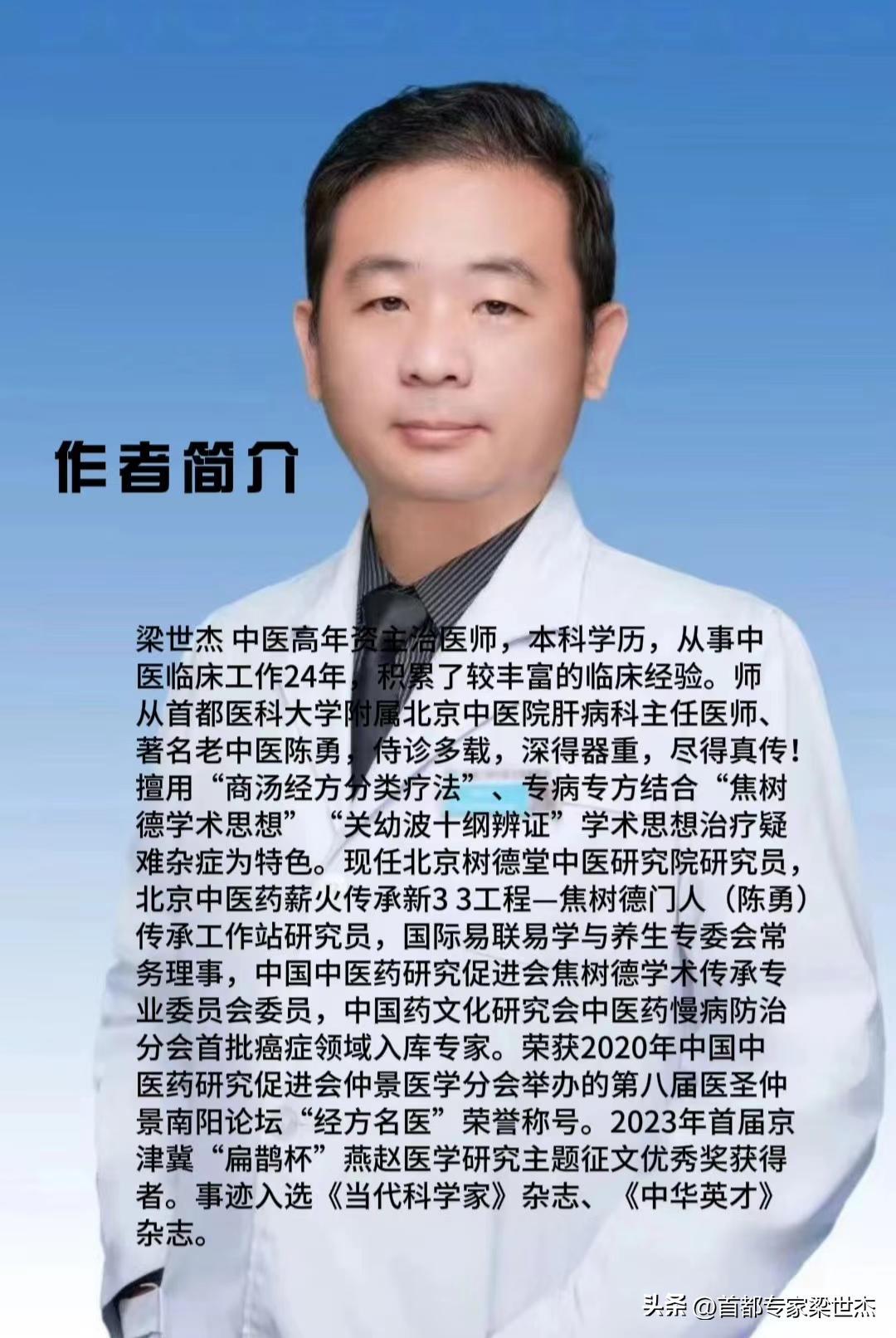
作者簡介:梁世傑 中醫高年資主治醫師,本科學歷,從事中醫臨牀工作24年,積累了較豐富的臨牀經驗。師從首都醫科大學附屬北京中醫院肝病科主任醫師、著名老中醫陳勇,侍診多載,深得器重,盡得真傳!擅用“商湯經方分類療法”、專病專方結合“焦樹德學術思想”“關幼波十綱辨證”學術思想治療疑難雜症爲特色。現任北京樹德堂中醫研究院研究員,北京中醫藥薪火傳承新3+3工程—焦樹德門人(陳勇)傳承工作站研究員,國際易聯易學與養生專委會常務理事,中國中醫藥研究促進會焦樹德學術傳承專業委員會委員,中國藥文化研究會中醫藥慢病防治分會首批癌症領域入庫專家。榮獲2020年中國中醫藥研究促進會仲景醫學分會舉辦的第八屆醫聖仲景南陽論壇“經方名醫”榮譽稱號。2023年首屆京津冀“扁鵲杯”燕趙醫學研究主題徵文優秀獎獲得者。事蹟入選《當代科學家》雜誌、《中華英才》雜誌。
Is research on traditional Chinese medicine’s clinical applications truly useful?
Within the vast landscape of medicine, traditional Chinese medicine (TCM) resembles an ancient and mysterious castle, housing the health wisdom and life philosophy of the Chinese nation spanning thousands of years. It has weathered the vicissitudes of time, accumulating a unique and profound theoretical framework and treatment methods through the experiences of countless patients. However, the current direction of TCM research appears to be akin to a lost journey, prompting concerns about the utility of research that does not guide TCM clinical practice.
Cao Dongyi, a chief physician at the Hebei Provincial Academy of Traditional Chinese Medicine, succinctly described the current predicament facing research into traditional Chinese medicine: “In the projects funded by traditional Chinese medicine and herbal medicine, research often focuses primarily on herbal medicine or specific theories and methods. Many of these projects are ‘integrated traditional Chinese medicine’ studies, and there are very few purely traditional Chinese medicine research topics.” It’s akin to a lively but off-track dance party, where everyone is busy with their own tasks, forgetting that the original purpose of the dance was to showcase the unique charm of traditional Chinese medicine. Funding for traditional Chinese medicine research is already scarce, much like a trickle of water on a barren land, which is unable to nourish a thriving research tree. Even so, a significant portion of the limited funds is still allocated to experimental research aimed at uncovering the “essence” of internal organs and the “active ingredients” of herbal medicines. This approach is akin to using a Western medical measuring tool to gauge the realm of traditional Chinese medicine, resulting in an inevitable clash of perspectives.
“After years of effort, a plethora of ‘achievements’ have been made, but it has been impossible to clearly articulate the theories of traditional Chinese medicine using Western medical terminology, nor can these achievements guide clinical practice in traditional Chinese medicine.” Cao Dongyi’s words sounded like a loud hammer striking a warning bell for research in traditional Chinese medicine. It’s akin to a craftsman who has painstakingly crafted a vast array of exquisite components, only to find that these components cannot be assembled into a machine that functions properly. According to relevant statistical data, the number of research projects in traditional Chinese medicine has been increasing year by year in recent years, but there have been very few achievements that have been widely applied in clinical practice and have yielded significant results. Surveys indicate that in the clinical treatments of some traditional Chinese medicine hospitals, doctors still rely more on traditional experience and classical prescriptions, and tend to be cautious about so-called research “achievements” because their effectiveness in practical applications is not ideal.
Let’s take the treatment of diseases of the spleen and stomach in traditional Chinese medicine as an example. Traditional Chinese medicine believes that the spleen and stomach are the foundation of life and the source of qi and blood generation. In treating diseases of the spleen and stomach, traditional Chinese medicine emphasizes syndrome differentiation and treatment, dividing these diseases into various types such as spleen and stomach deficiency with coldness, spleen and stomach dampness, and liver constraint with spleen deficiency, based on the patient’s specific symptoms, constitution, tongue appearance, and pulse characteristics. Different formulas are then selected to treat different types of syndromes. For example, for patients with a spleen and stomach deficiency type, Li Zhong Pill is commonly used to warm the center and disperse coldness; for those with a spleen and stomach dampness type, Qing Zhong Decoction is used to clear heat and remove dampness. These classic formulas have been derived through the collective experience of traditional Chinese medicine practitioners over many years, and their efficacy is well-established. However, some research in traditional Chinese medicine attempts to study the “essence” of the spleen and stomach and the “active ingredients” of traditional Chinese medicine from a Western medical perspective, which is often futile. This is because the theoretical frameworks of traditional Chinese medicine and Western medicine are fundamentally different. Traditional Chinese medicine places greater emphasis on holistic concepts and syndrome differentiation, while Western medicine focuses more on localized disorders and microstructures. Using Western medical methods to study traditional Chinese medicine is akin to using a Western oil painting brush to create Chinese paintings; while one may be able to produce some lines and colors, it would lose the essence and spirit of Chinese painting.
Increasing funding for research in traditional Chinese medicine (TCM) and ensuring that these funds are used for projects that are conducive to the development of TCM and align with its own principles has become a crucial factor in determining whether TCM can make a meaningful impact. This is akin to providing a young sapling with ample sunlight, water, and nutrients so that it can grow robustly. The development of TCM requires scientific research support, but this support should be targeted and tailored to TCM’s unique characteristics. We should encourage the conduct of purely TCM-related research projects, conducting in-depth studies of TCM’s theoretical framework, diagnostic principles, and treatment methods, and uncovering TCM’s latent strengths and distinctive features. At the same time, we need to establish a scientific evaluation system that is suited to TCM’s characteristics. Rather than relying on Western medical standards to assess TCM research outcomes, we should use clinical efficacy and patient satisfaction as key evaluation metrics.
“The mandarin orange grows well in the south of the Huai River but becomes a different variety when grown in the north of the Huai River.” The development of traditional Chinese medicine follows its own patterns and characteristics. We cannot force it into the framework of Western medicine. Only by returning medical research in traditional Chinese medicine to clinical practice, guided by clinical needs, and aimed at solving real-world problems, can we truly leverage the strengths of traditional Chinese medicine and make greater contributions to human health. Let us work together to shed light on the research in traditional Chinese medicine, charting a correct path for its development, and allowing this ancient and magnificent medical system to flourish anew in the new era.
Author Bio: Liang Shijie is a senior medical practitioner in traditional Chinese medicine with an undergraduate degree. He has been engaged in traditional medicine clinical work for 24 years and has accumulated a wealth of clinical experience. Following Chen Yong, chief physician of liver disease at Beijing Traditional Medicine Hospital, affiliated with Capital Medical University, and renowned old Chinese medicine, he has been treated for many years and received great attention. He specializes in the treatment of difficult diseases using "conversational traditional therapy" and special treatments combined with the academic ideas of Jiao Shude and Guan Yubo''s ten-level diagnosis.He is currently a researcher at the Shude Tang TCM Research Institute in Beijing, a fellow at the new 3 + 3 project of traditional Chinese medicine flame inheritance in Beijing - a scholar at the inheritance workstation of Jiao Shude''s protégés (Chen Yong),He is a standing committee member of the International Expert Committee on E-learning and Health Care, a member of the Jiao Shude Academic Heritage Special Committee of the Chinese Association for the Advancement of Chinese Medicine Research, and the first cancer specialist to be included in the chapter of the Chinese Pharmaceutical Culture Research Association. Won the 2020 China Association for the Promotion of Traditional Chinese Medicine Zhongjing Medical Branch held the eighth session of the Medical Saint Zhongjing Nanyang Forum "Classic Prescription Famous Doctor" honorary title. The winner of the first Beijing-Tianjin-Hebei "Pingui Cup" Yanzhao Medical Research Essay Award in 2023. His work was featured in the journal Current Scientist and the journal Chinese Talent.