梁世傑:象數五行體質學說的底層邏輯
爲何同一養生方案在不同人羣中效果差異顯著,同一診療方法的臨牀收效各有不同?其核心原因並非方藥與劑量問題,而在於診療的基礎環節——體質辨識存在偏差。諸多養生與調理效果不佳的情況,本質是對個體體質狀態的判斷不夠精準。梁世傑醫生提出的象數五行體質學說,以中醫經典理論爲根基,構建了一套獨立於現代醫學檢測儀器的體質辨識體系,通過傳統四診合參,實現了中醫診斷的標準化、規範化與可操作化。本文對該學說的核心邏輯與實踐體系進行系統梳理。
一、核心理念:象爲表,數爲裏,以表知裏
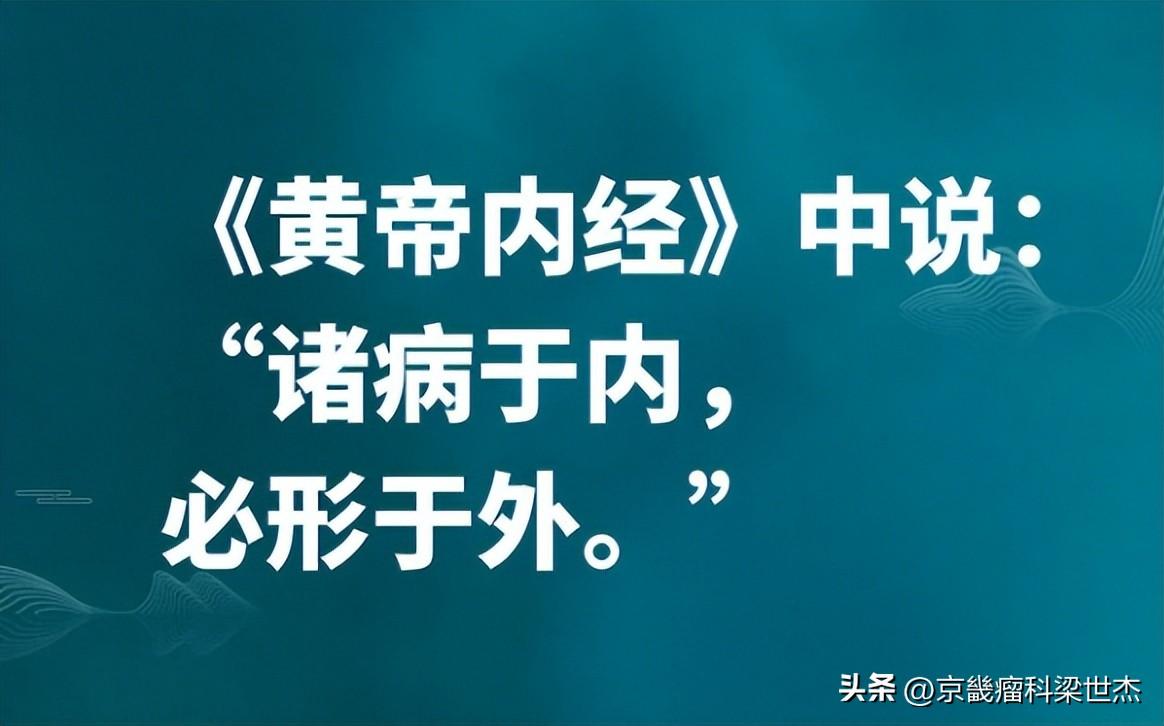
《黃帝內經》提出:“有諸內者,必形諸外”,這是象數五行體質學說的理論本源。人體臟腑功能、氣血津液的盛衰變化,均會通過外在體徵直觀呈現,這是中醫整體觀與司外揣內診療思想的集中體現。
現代西醫診斷側重微觀層面,依託影像學檢查、生化檢驗等技術手段,明確機體器質性病變;中醫診斷側重宏觀層面,通過外在徵象與生命狀態的綜合研判,評估機體整體功能與陰陽失衡狀態。
梁世傑象數五行體質學說的核心爲象數合一:
象:指機體外在可直觀觀察的表象,包括面色、舌象、體態、神態等客觀體徵;
數:指可量化、可描述的生命數據,包括睡眠、飲食、二便、體感、情緒等生活狀態與主觀感受;
五行:指以五行理論爲核心的人體臟腑、氣血、陰陽運行規律。
該體系全程無需抽血、影像學檢查等輔助手段,僅通過四診收集身體信號,將傳統經驗性診斷升級爲標準化診斷體系。
二、實踐方法:四診合參,規範辨識體質
望、聞、問、切四診是中醫診斷的核心方法,在象數五行體質學說中,四診各司其職、相互印證,形成完整的診斷閉環,具備明確的操作規範與診斷指向。
(一)望診:觀外在表象,判臟腑狀態
望診是體質辨識的首要環節,通過觀察外在體徵,直接反映臟腑功能狀態。
面色:面色萎黃提示脾胃虛弱;面色晦暗提示腎虛或血瘀;面色潮紅提示陰虛內熱;面色蒼白提示陽虛寒盛;面部油膩、易生痤瘡提示溼熱內蘊。
舌象:舌體胖大、伴齒痕,爲痰溼內盛表現;舌質紅、舌苔少或無苔,爲陰虛火旺表現;舌苔厚膩發白,爲痰溼阻滯表現。
體態:形體肥胖、行動遲緩,多歸屬痰溼體質;形體消瘦、情緒易躁動,多爲陰虛或氣虛體質。
(二)聞診:辨聲音氣味,分寒熱虛實
聞診包含聽聲音、嗅氣味兩方面,是判斷機體寒熱虛實的輔助依據。
聽聲音:聲音洪亮、呼吸有力,多爲正氣充盛的實證;聲音低微、少氣懶言,爲氣虛表現。
聞氣味:口氣較重、伴反酸異味,多爲胃熱、食積所致;體味黏膩偏重,多爲溼熱內蘊所致。
(三)問診:集生活信息,量化體感狀態
問診是學說的關鍵環節,將患者模糊的主觀不適,轉化爲客觀的診斷依據,實現體感的量化分析。
飲食情況:評估食慾、飲食偏好、大便頻次與性狀;
睡眠情況:記錄睡眠時長、入睡難度、睡眠質量;
寒熱體感:區分畏寒、怕熱表現,判斷手腳溫涼、出汗情況;
情緒狀態:瞭解是否存在煩躁、抑鬱、胸悶、善太息等表現。
問診信息越詳盡,體質歸類的精準度越高。
(四)切診:察脈象變化,證氣血盛衰
切診即脈診,是四診的收尾環節,用於對望、聞、問診結果進行綜合印證。
脈象沉細無力,提示氣虛、陽虛體質;脈象弦滑,提示痰溼、肝鬱體質;脈象細數,提示陰虛內熱體質;脈象澀滯,提示血瘀、氣血運行不暢。
四診合參,實現表象與數據互證、外在體徵與內在功能對照,精準鎖定個體體質類型。
三、體系應用:九大體質分類,實現個體化調理
依託四診收集的綜合信息,梁世傑醫生依據國醫大師王琦院士體質分類標準,全面覆蓋健康狀態與病理偏頗狀態,從根本上規避千人一方的調理誤區,爲個體化干預提供依據。
平和質:陰陽平衡,精力充沛,體徵與生活狀態均處於健康水平;
氣虛質:以神疲乏力、氣短自汗、易感冒、脈象細弱爲核心特徵;
陽虛質:以畏寒肢冷、喜溫惡寒、大便溏薄、舌體胖大爲核心特徵;
陰虛質:以口乾咽燥、手足心熱、失眠多夢、舌紅少苔爲核心特徵;
痰溼質:以身重睏倦、形體肥胖、舌苔厚膩、大便黏滯爲核心特徵;
溼熱質:以面油長痘、口苦口臭、小便黃赤、舌苔黃膩爲核心特徵;
血瘀質:面色晦暗、肌膚瘀斑、肢體刺痛、舌下脈絡瘀阻爲核心特徵;
氣鬱質:情緒抑鬱、胸悶善太息、失眠焦慮、脈象弦爲核心特徵;
特稟質:以過敏傾向、皮膚敏感、易患過敏性疾病爲核心特徵。
四、總結
健康管理與中醫調理的核心前提,是精準的體質判斷。養生的核心不在於投入成本高低,而在於調理方向是否契合自身體質。
梁世傑象數五行體質學說,根植於《黃帝內經》經典理論,以四診合參爲實踐手段,重構了傳統中醫體質診斷體系。該體系不依賴現代醫學儀器,始終保持中醫診療的原生特色,同時具備可觀、可辨、可量化、可執行的嚴謹性。
先明體質,再行養生;知象明理,方得始終。這既是對傳統中醫診斷的迴歸,也是對現代健康管理模式的有益補充。
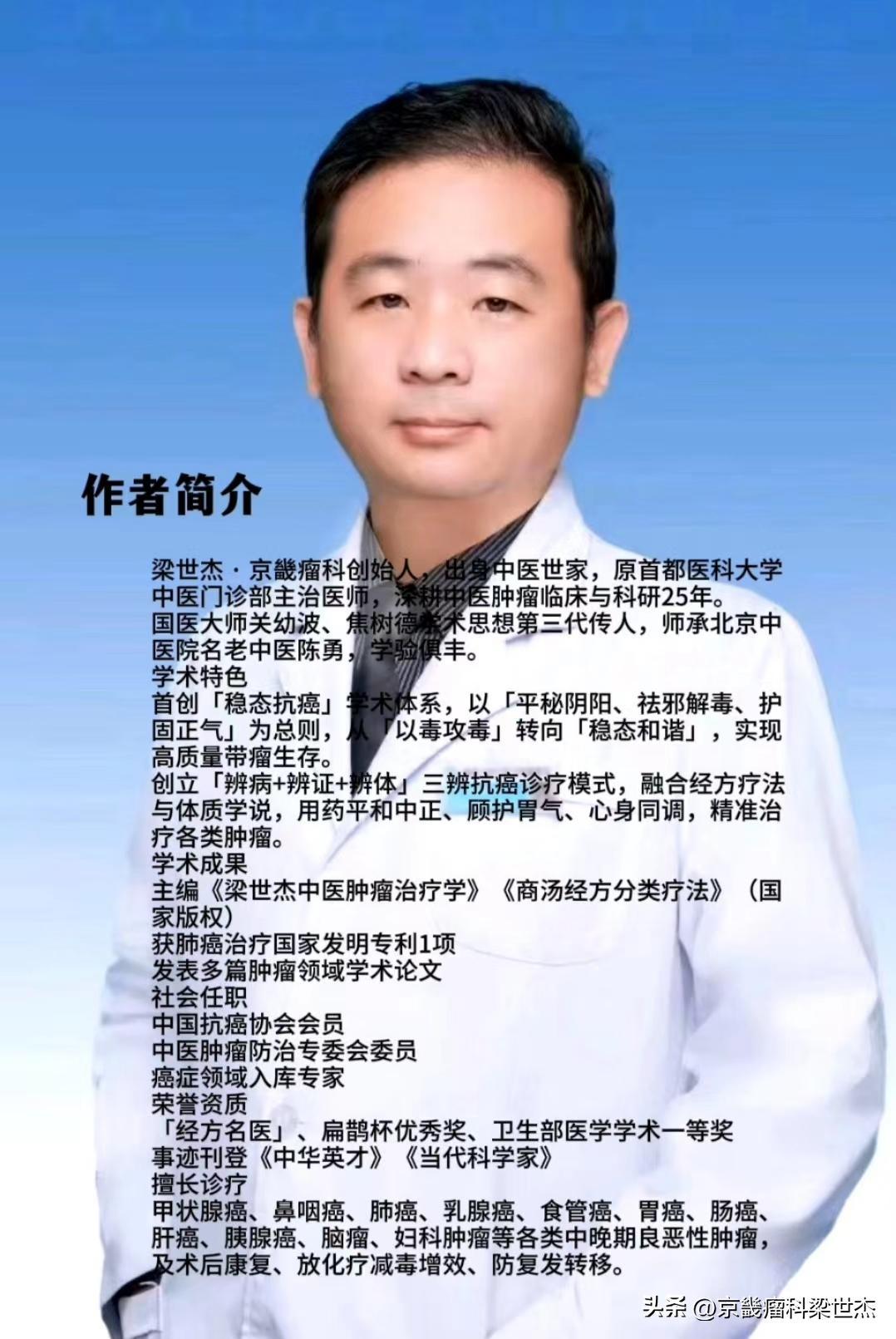
作者簡介:梁世傑,京畿瘤科創始人,出身中醫世家,原首都醫科大學中醫門診部主治醫師,畢業於河北醫科大學,深耕中醫腫瘤臨牀與科研25年。爲國醫大師、肝病泰斗關幼波,風溼病泰斗焦樹德學術思想第三代傳人,師承首都醫科大學附屬北京中醫院肝病科知名老中醫陳勇,侍診研習多年,盡得真傳,學驗俱豐。
一、學術思想與診療特色
作爲中醫腫瘤領域體系化創新學者,首創“穩態抗癌”核心學術體系,提出從“以毒攻毒”向“穩態和諧”範式轉型,以“平祕陰陽、祛邪解毒、護固正氣”爲治療總則,立足《黃帝內經》“正氣存內”理念,明確腫瘤爲全身失衡的局部顯現,通過調理臟腑氣血、改善“癌狀態”體質、切斷腫瘤微環境,實現高質量帶瘤生存,爲中晚期腫瘤治療確立“以人爲本、生命優先”的價值導向。
臨牀構建“辨病+辨證+辨體”三辨精準診療模式,融合抗癌專病專方與“商湯經方分類療法”、關幼波十綱辨證與焦樹德學術思想,創新“易學中醫辯證哲學思維模式”及象數五行體質應用;用藥恪守平和中正、攻補兼施、顧護胃氣原則,堅持全週期協同治療、心身同調,實現個體化、低損傷、長獲益的腫瘤診療目標。
二、學術與科研成果
主編專著:《梁世傑中醫腫瘤治療學》《商湯經方分類療法》,均獲國家版權登記;
發明專利:“三花五子六白散”治療肺癌國家發明專利1項;
學術論文:發表《古方青龍丸治療中晚期肺癌20例》等多篇腫瘤領域高價值學術論文。
三、學術任職
中國抗癌協會會員
衛生部中國醫促會中醫腫瘤防治專委會委員
中國藥文化研究會中醫藥慢病防治分會首批癌症領域入庫專家
四、榮譽與影響力
先後榮獲第八屆醫聖仲景南陽論壇“經方名醫”、首屆京津冀“扁鵲杯”燕趙醫學徵文優秀獎、衛生部全國醫學學術一等獎。學術事蹟榮登《中華英才》《當代科學家》等權威期刊,是國內中醫腫瘤領域理論體系完整、學術特色鮮明、臨牀療效確切的實力派專家。
五、擅長診療範圍
甲狀腺癌、鼻咽癌、肺癌、肺結節、乳腺癌、食管癌、胃癌、萎縮性胃炎、腸化生、腸癌、肝癌、胰腺癌、腎癌、膀胱癌、前列腺癌、淋巴瘤、腦瘤、宮頸癌、卵巢癌等各類中晚期良惡性腫瘤,及術後康復、放化療減毒增效、防復發轉移等疑難病症。
Liang Shijie: The underlying logic of the Theory of Five-Line Physiology
Why does the same regimen vary significantly in different populations and the clinical outcomes of the same treatment vary? The core cause is not prescription drugs and doses, but the basic link of diagnosis and treatment - physical identification. The essence of many cases of poor health care and conditioning is that the judgment of the individual''s physical state is not precise. Dr. Liang Shijie proposed the Theory of Five Elements of Physiology, based on classical traditional Chinese medicine theory, built a system of physical identification independent of modern medical testing instruments, and achieved the standardization, standardization and operability of traditional Chinese medical diagnosis through the combination of traditional four diagnoses. This paper provides a systematic overview of the core logic and practice of this doctrine.
I. Core concept: Like a table, count as a metric, and know the metric by means of a table
The Theory of the Inner Truth of Huangdi states that "all who are within must be physically external," which is the theoretical source of the theory of the physical sciences of the five branches. The changes in the function of the human organs and the rise and fall of the qi, blood and fluids will be intuitively displayed through external signs, which is the central expression of the holistic view of traditional Chinese medicine and the idea of extracorporeal diagnosis and treatment.
Modern Western medical diagnosis focuses on the microscopic level, relying on technical means such as imaging examination, biochemical testing and other means to identify organ diseases of the body. TCM diagnosis focuses on the macro dimension, assessing the overall function of the body and the state of yin and yang imbalance through comprehensive analysis of external signs and life states.
The core of Liang Shijie''s theory of the five-line physical sciences of elephants is the unity of elephant numbers:
Elephant: refers to the externally visually observable appearance of the body, including objective signs such as face color, tongue appearance, body shape, and mannerism;
Number: refers to quantifiable and descriptive life data, including life states and subjective feelings such as sleep, diet, poop, perception, mood, etc.
Five Elements: refers to the laws of inner and outer organs, qi and blood, yin and yang of the human body, with the five-element theory as the core.
The system does not require blood drawn, imaging tests and other auxiliary means throughout the whole process, and only collects body signals through four clinics, upgrading the traditional empirical diagnosis to a standardized diagnostic system.
II. Practical methods: Four medical consultations to standardize the identification of physical characteristics
The four consultations of looking, smelling, asking and cutting are the core method of traditional Chinese medicine diagnosis. In the Theory of Five Elements of Physiology, the four consultation each performs its functions and proves each other, forming a complete diagnostic closed loop with clear operating specifications and diagnostic directions.
(1) Visiting a doctor: Observe external appearances and judge the state of the stomach.
Visiting a doctor is the first step in physical identification, and by observing external signs, it directly reflects the state of internal organ function.
Facial color: The yellowing of the face indicates weakness of the spleen; Dark face indicates kidney weakness or blood bruising; A rosy face indicates a negative internal fever; Paleness suggests a lack of energy; A greasy face prone to acne indicates a hot and humid nature.
Tongue image: The tongue body is large and accompanied by tooth markings, which shows the presence of mucus and moisture; The color of the tongue is red and the tongue has little or no moss, which is a sign of dehydration and vigor; The tongue is thick and white, which is the manifestation of phlegm blockage.
Physical appearance: physical obesity and slow movement are mostly attributable to phlegm; They are thin and emotionally restless, and are mostly deceased or frail.
(2) Examining a patient: discerning the sound and smell, distinguishing between cold, hot and empty
Examination involves listening to sound and sniffing odor, and is a supportive basis for determining the truth of the body''s fever and fever.
Listen to sound: sound is loud and breathing strong, which is mostly evidence of full vigor; Being quiet and quiet is a sign of weakness.
Odors: The breath is heavy, with a sour and sour odor, mostly due to stomach heat and food accumulation; The body odor is sticky and heavy, mostly due to hot and humid conditions.
(3) Medical consultation: gathering life information and quantifying sensory status
The consultation is a key part of the doctrine, turning the vague subjective discomfort of the patient into an objective diagnostic basis, and realizing a quantitative analysis of the perception.
Dietary status: assess appetite, dietary preferences, frequency and traits of stool;
Sleep status: record sleep duration, difficulty falling asleep, quality of sleep;
Sense of cold and cold: distinguish between cold fear and heat fear, and judge whether the hands and feet are cold and sweaty.
Emotional state: Know whether there are symptoms of irritability, depression, chest tightness, and overzealousy.
The more detailed the medical information, the more accurate the physical classification.
(4) Clinical diagnosis: detect changes in pulse patterns and indicate increase or decrease in blood pressure
The consultation is the final stage of the four consultations, and is used to confirm the results of the consultation by looking at, hearing and interviewing.
The pulse is thin and weak, indicating hypoxia and virility; The pulse is slippery, indicating a swollen sputum and depressed liver; The pulse is detailed, indicating a febrile internal thermal state; The pulse is sluggish, indicating bruising and poor blood flow.
Four diagnostics are combined to achieve mutual evidence of appearance and data, comparison between external signs and internal functions, and precise targeting of individual physical types.
III. System application: nine basic qualitative classifications to achieve individualized conditioning
Relying on the comprehensive information collected by the four clinics, Dr. Liang Shijie based on the physical classification standard of National Medical Master Wang Qi, comprehensively covered the health status and pathological biased states, fundamentally circumventing the thousand-person misconception of conditioning, and providing a basis for individualized intervention.
Peace and quality: yin and yang are balanced, energetic, and the signs and living conditions are at a healthy level;
Hypoxia: characterized by fatigue, shortness of breath, vulnerability to cold, and weak pulse patterns;
Hypothyroidism: It is characterized by fear of cold and cold, liking warmth and cold, thin stools, and large tongue body;
Hypoxia: characterized by dry mouth and dry mouth, hot hands and feet and heart, insomnia and dreaming, red tongue and few mosses.
Phlegm: It is characterized by heavy body weight, obesity, thick tongue and sticky stools.
Moisture: The core characteristics are acne with facial oil, bitter bad breath, yellowish urine, and yellowish tongue.
Blood bruises: dark face, skin bruises, tingling in the limbs, and blood vessels under the tongue are the core characteristics;
Anxiety: emotional depression, chest tightness, sleepiness, insomnia, anxiety, and pulse strings are core characteristics;
Traits: The core characteristics are allergic tendencies, skin sensitivity, and susceptibility to allergic diseases.
IV. CONCLUSIONS
The core premise of health management and traditional Chinese medicine is precise physical judgment. The core of physical therapy is not whether the investment cost is high or low, but whether the direction of conditioning fits with the nature of the body.
Liang Shijie represents the theory of numerical five-line physical health, which is rooted in the classical theory of Huangdi Yin, and reconstructs the traditional traditional Chinese medicine physical health diagnosis system with the use of the four consultations as a practical means. The system does not rely on modern medical instruments, and always maintains the native features of traditional Chinese medicine, while at the same time it has considerable, discernible, quantifiable and enforceable rigor.
First of all, you must recognize your physical condition and then practice your health care. Knowing the facts and understanding the truth is the way to always. This is not only a return to traditional Chinese medicine diagnosis, but also a beneficial addition to modern health management models.
Author profile: Liang Shi-jie, the founder of the Jingyi Tumor Clinic, hails from a family of traditional Chinese medicine practitioners. He was a chief physician at the Traditional Chinese Medicine Outpatient Clinic of the former Capital Medical University. He graduated from Hebei Medical University and has devoted 25 years to clinical practice and research in traditional Chinese medicine oncology. He is the third generation of the academic lineage of Guan You-bo, a master of traditional Chinese medicine and a renowned expert in liver diseases, and Jia Shu-de, a master of rheumatology. He studied under Chen Yong, a well-known elderly traditional Chinese medicine practitioner in the liver disease department of Beijing Traditional Chinese Medicine Hospital affiliated to the Capital Medical University. He has gained extensive knowledge and experience through many years of study and practice.
I. Academic Thought and Diagnostic/Therapeutic Specialties
As a scholar specializing in systematized innovation in the field of traditional Chinese medicine oncology, I pioneered the core academic system of “steady state anti-cancer.” I proposed a transition from the paradigm of “using poison to counter poison” to “steady state harmony,” with the general principles of “balancing Yin and Yang, eliminating evil and detoxifying, and protecting and reinforcing healthy qi.” Grounded in the concept of “healthy qi resides within” from the Huangdi Neijing, I clarified that tumors are localized manifestations of overall imbalance. By regulating the qi and blood of internal organs, improving the “cancer state” constitution, and disrupting the microenvironment of tumors, we can achieve high-quality survival with a tumor present, thereby establishing a value orientation of “people-centeredness and prioritizing life” for the treatment of advanced and late-stage tumors.
Clinical construction of the “diagnosis + syndrome differentiation + constitution identification” three-step precise diagnosis and treatment model, integration of cancer-specific treatments and “Shang Tang classic prescription classification therapy,” Guan Youbo’s ten-category syndrome differentiation method, and Jiao Shude’s academic thoughts, innovation of the “easy-to-learn traditional Chinese medicine dialectical philosophical thinking mode” and the application of symbolic number and five-element constitution; adhering to the principles of moderation and balance, combining attack and supplementation, and protecting the stomach qi, maintaining comprehensive and coordinated treatment throughout the entire cycle, balancing mind and body, and achieving personalized, low-injury, and long-term benefits in cancer diagnosis and treatment.
II. Scholarly and Research Achievements
Co-authored monographs: “Liang Shi-jie’s Traditional Chinese Medicine for Cancer Treatment” and “Shang Tang’s Classification Therapy Based on Classical Prescriptions”; both have been registered for national copyright protection.
Patent for invention: One national patent for the invention of “Sanhua Wu Zi Li Bai San” for the treatment of lung cancer.
Academic Papers: Published numerous high-value academic papers in the field of oncology, including “The Treatment of 20 Cases of Advanced-Stage Lung Cancer with Ancient Formula Qinglong Pill.”
III. Academic Positions
Member of the Chinese Cancer Association.
Member, Expert Committee on Traditional Chinese Medicine Cancer Prevention and Treatment, China Medical Promotion Association, Ministry of Health.
First-batch cancer-related experts inducted into the Chinese Traditional Medicine Prevention and Treatment of Chronic Diseases Branch of the Chinese Pharmaceutical Culture Research Association.
IV. Recognition and Influence
He has been awarded the title of “Expert in Traditional Medicine” at the Eighth Symposium of the Medicine Saint Zhongniang of Nanyang, the Outstanding Award for Medical Writing at the First Beijing-Tianjin-Hebei “Bian Que Cup” Symposium on Yan-Zhao Medicine, and the First Prize for Medical Scholarship by the Ministry of Health. His academic achievements have been featured in prestigious journals such as “China’s Elite” and “Contemporary Scientists.” He is a highly respected expert in the field of traditional Chinese medicine oncology, known for his comprehensive theoretical framework, distinctive academic characteristics, and proven clinical efficacy.
V. Areas of Expertise
Thyroid cancer, nasopharyngeal cancer, lung cancer, pulmonary nodules, breast cancer, esophageal cancer, gastric cancer, atrophic gastritis, intestinal metaplasia, intestinal cancer, liver cancer, pancreatic cancer, kidney cancer, bladder cancer, prostate cancer, lymphoma, brain tumors, cervical cancer, ovarian cancer, and other various advanced and late-stage benign and malignant tumors, as well as post-operative rehabilitation, radiation and chemotherapy to reduce toxicity and enhance efficacy, and prevention of recurrence and metastasis, among other complex conditions.