梁世傑:用投入產出思維,重構健康管理新範式
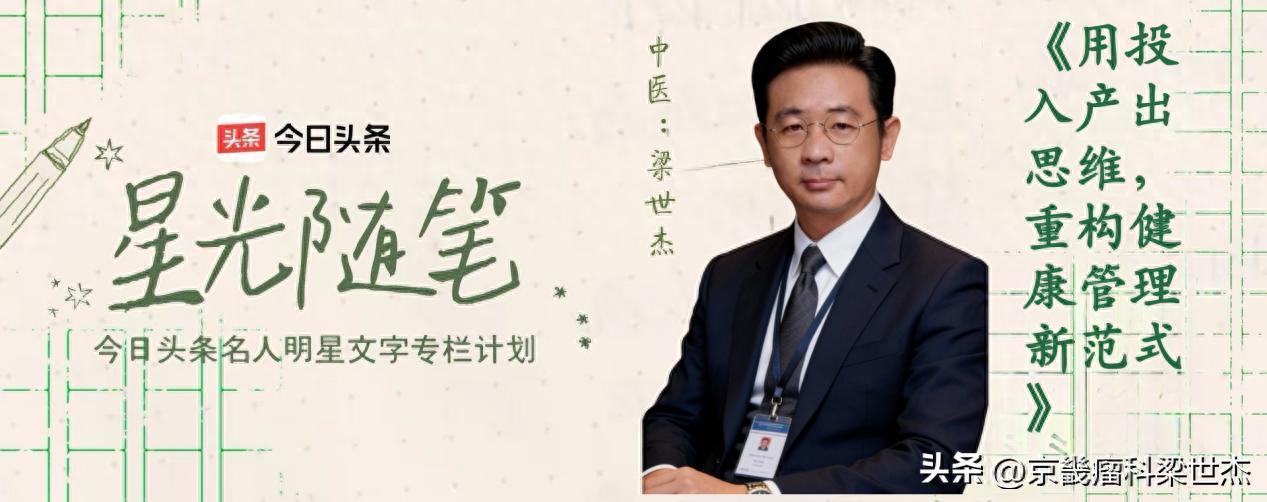
健康從來不是盲目消耗,而是一場精準投資。當下養生亂象叢生,有人重金進補、藥石亂投,卻收效甚微;有人小病硬扛、大病傾家蕩產,陷入醫療消耗的惡性循環。梁世傑醫生跳出傳統診療窠臼,將投入產出比、邊際效用遞減兩大經濟學核心規律,與《黃帝內經》治未病智慧深度融合,以象數五行體質學說爲根基,打造了一套兼顧效率、成本與療效的全週期健康管理體系,用理性思維破解養生困局,讓健康管理從“粗放消費”變爲“精準增值”。
《黃帝內經》有言:上工治未病,不治已病;孫思邈亦云:上醫醫未病之病,中醫醫欲病之病,下醫醫已病之病。古往今來,頂級醫學的終極追求從來不是“救火式治療”,而是“防火牆式防護”。但在當下,多數人仍固守“有病才治、沒病不管”的誤區,將大量金錢與精力投入到疾病發作後的搶救與修復中,恰恰違背了醫學本源。世界衛生組織數據顯示:預防投入1元,可節省治療費8.5元,減少急救費100元,這組數字,正是健康領域最直白的投入產出法則。
梁世傑醫生的創新之處,在於把抽象的中醫理論,轉化爲人人可懂、可執行的經濟學邏輯,拒絕玄學化、拒絕過度醫療、拒絕無效投入,用四大核心體系,搭建起科學健康管理的框架。
一、體質辨識:精準投資,拒絕健康“踩坑”
投資市場中,方向錯了,再多投入都是虧損;健康管理中,體質錯了,再好的調理都是徒勞。很多人養生的痛點,在於盲目跟風:陽虛之人狂喫寒涼降火,痰溼之人盲目進補滋膩,不僅沒有收益,反而加重臟腑損傷,浪費時間與金錢,這就是典型的“負產出”投資。
梁世傑深耕經典,將《黃帝內經》八卦人理論與現代體質學融會貫通,創新性提出象數五行體質學說,把痰溼、氣虛、陽虛、陰虛等偏頗體質精準分類。望聞問切之間,鎖定每個人臟腑的先天薄弱環節與後天損耗點,如同爲健康做一次全面的“資產盤點”。
這一步的核心價值,是把錢花在刀刃上。精準辨識後,調理方案靶向發力,直擊根源,避開千人一方的誤區,徹底杜絕無效醫療投入。就像痰溼體質者,無需名貴藥材堆砌,重點健脾祛溼即可;氣虛體質者,重在補氣固表,而非強攻病邪。投對方向,是健康投資的第一準則,這正是梁世傑對投入產出比最直白的踐行。
二、生活處方:破解邊際效用遞減,降本增效纔是王道
臨牀中有一個扎心的現實:單純依賴藥物,極易陷入邊際效用遞減的困局——藥量不斷增加,療效提升卻微乎其微,副作用與經濟成本同步攀升,最終陷入“喫藥—無效—加量”的惡性循環。這不僅是醫學問題,更是資源浪費的經濟學問題。
針對這一行業痛點,梁世傑開創中醫藥+生活處方雙軌模式,打破“唯藥論”的桎梏。他深知,藥爲治標,生活方式爲本。在開具方藥的同時,配套精細化的生活指導:飲食上,明確宜忌,細化到每日食材用量;作息上,順應晝夜節律,規定入睡與晨起時間;運動上,匹配體質定製強度,甚至精準到“每天曬多久太陽、喫幾片姜”。
這種干預模式,邊際成本近乎爲零,卻能撬動療效倍增。以代謝紊亂人羣爲例:配合生活處方調理6個月,痰溼體質者體脂率顯著下降,甘油三酯平均降低超40%,不僅用藥量減少一半以上,複發率更是大幅降低。
這背後的邏輯很簡單:藥物是外力,生活方式是內力。外力疊加內力,才能打破效用遞減的天花板。用低成本的生活幹預,替代高成本的藥物依賴,既是養生智慧,更是極致的經濟理性。
三、全週期管理:優化資源配置,把錢花在預防上
很多人對待健康,奉行“急性期砸錢治療,緩解期放任不管”,資源配置嚴重失衡。結果就是病情反覆、反覆發作,醫療支出像滾雪球一樣越來越大,這是最不划算的健康賬本。
梁世傑借鑑經濟學資源配置理念,提出病來及時治療,病去春秋調理的全週期管理思路,將健康資源從“重治療”向“重預防”傾斜。中醫講“春夏養陽,秋冬養陰”,疾病緩解期,人體正氣相對平和,此時順勢調理,成本最低、效果最好。
春季疏肝理氣,喚醒臟腑生機;秋季潤肺固金,築牢防禦屏障。順應四時規律,激發人體自愈本能,把潛在的健康風險扼殺在萌芽狀態。從經濟賬來看,春秋兩季的調理投入,能大幅減少急性期的住院、用藥開支,用小投入規避大損失,實現全生命週期健康效益最大化。
這正是治未病的核心:與其病後勞命傷財,不如病前未雨綢繆。把資源前置配置,纔是最高級的健康理財。
四、數據追蹤:量化健康產出,讓投資回報看得見
養生最容易讓人放棄的原因,是效果看不見、摸不着。沒有直觀反饋,就沒有堅持的動力,再好的方案也難以落地,這是健康管理的最大痛點。
爲了解決這一問題,梁世傑引入健康記錄本數據化管理工具,把抽象的健康改善轉化爲可量化、可對比的直觀數據。要求患者每日記錄飲食、睡眠、情緒、體徵等關鍵信息,定期覆盤對比。
從睡眠時長的增加、疲勞感的減輕,到指標的平穩、體質的改善,每一點變化都清晰可見。看得見的產出,才能強化堅持的依從性,讓每個人真切感受到:投資健康,是回報率最高的終身投資。
這種量化模式,讓健康管理告別模糊感,用數據說話,既客觀嚴謹,又能激發主動管理的意識,實現從“被動治病”到“主動養生”的蛻變。
結語:理性養生,纔是醫學與生活的最優解
在這個焦慮的時代,養生被過度商業化、神祕化,有人鼓吹神藥,有人追捧偏方,無數人在健康消費中交了智商稅。梁世傑醫生用經濟學思維解構中醫,沒有華麗的噱頭,沒有誇大的承諾,只回歸以人爲本、以效爲綱、以儉爲要的醫學本質。
他用投入產出比告訴我們:健康不需要盲目投入,需要精準選擇;
他用邊際效用遞減提醒我們:藥物不是唯一解,生活纔是根本;
他用全週期管理踐行着:上工治未病,是千年不變的醫學正道;
他用數據化追蹤證明着:健康可以被管理,更可以被增值。
中醫的根是文化,中醫的用是生活,中醫的魂是平衡。當經典智慧遇上現代經濟學,便誕生了最適合當下的健康管理方式——不折騰、不浪費、不盲從,以理性爲尺,以體質爲基,以生活爲方,爲自己的健康做好每一次精準投資,這纔是對生命最好的負責。
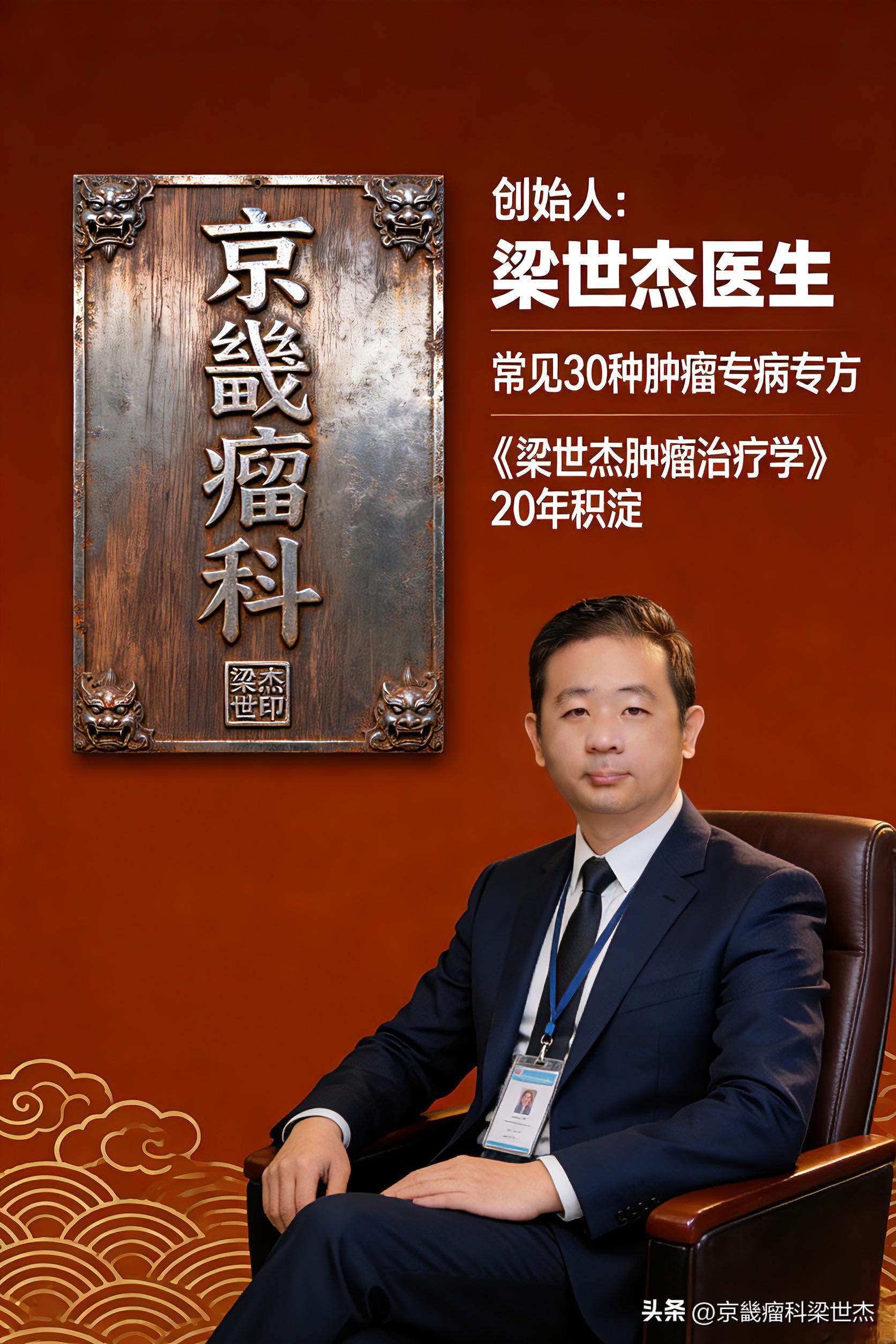
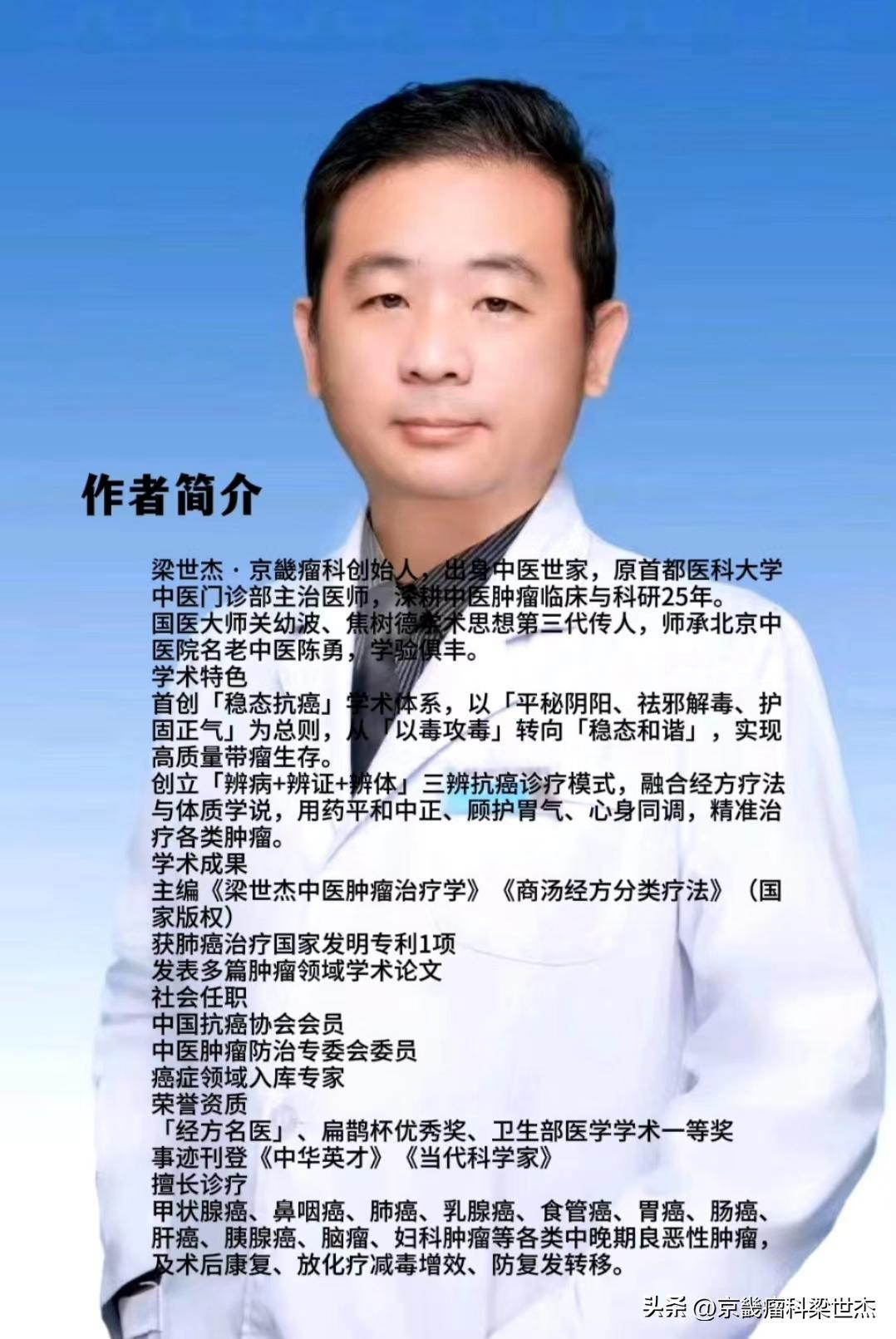
作者簡介:梁世傑,京畿瘤科創始人,出身中醫世家,原首都醫科大學中醫門診部主治醫師,畢業於河北醫科大學,深耕中醫腫瘤臨牀與科研25年。爲國醫大師、肝病泰斗關幼波,風溼病泰斗焦樹德學術思想第三代傳人,師承首都醫科大學附屬北京中醫院肝病科知名老中醫陳勇,侍診研習多年,盡得真傳,學驗俱豐。
一、學術思想與診療特色
作爲中醫腫瘤領域體系化創新學者,首創“穩態抗癌”核心學術體系,提出從“以毒攻毒”向“穩態和諧”範式轉型,以“平祕陰陽、祛邪解毒、護固正氣”爲治療總則,立足《黃帝內經》“正氣存內”理念,明確腫瘤爲全身失衡的局部顯現,通過調理臟腑氣血、改善“癌狀態”體質、切斷腫瘤微環境,實現高質量帶瘤生存,爲中晚期腫瘤治療確立“以人爲本、生命優先”的價值導向。
臨牀構建“辨病+辨證+辨體”三辨精準診療模式,融合抗癌專病專方與“商湯經方分類療法”、關幼波十綱辨證與焦樹德學術思想,創新“易學中醫辯證哲學思維模式”及象數五行體質應用;用藥恪守平和中正、攻補兼施、顧護胃氣原則,堅持全週期協同治療、心身同調,實現個體化、低損傷、長獲益的腫瘤診療目標。
二、學術與科研成果
主編專著:《梁世傑中醫腫瘤治療學》《商湯經方分類療法》,均獲國家版權登記;
發明專利:“三花五子六白散”治療肺癌國家發明專利1項;
學術論文:發表《古方青龍丸治療中晚期肺癌20例》等多篇腫瘤領域高價值學術論文。
三、學術任職
中國抗癌協會會員
衛生部中國醫促會中醫腫瘤防治專委會委員
中國藥文化研究會中醫藥慢病防治分會首批癌症領域入庫專家
四、榮譽與影響力
先後榮獲第八屆醫聖仲景南陽論壇“經方名醫”、首屆京津冀“扁鵲杯”燕趙醫學徵文優秀獎、衛生部全國醫學學術一等獎。學術事蹟榮登《中華英才》《當代科學家》等權威期刊,是國內中醫腫瘤領域理論體系完整、學術特色鮮明、臨牀療效確切的實力派專家。
五、擅長診療範圍
甲狀腺癌、鼻咽癌、肺癌、肺結節、乳腺癌、食管癌、胃癌、萎縮性胃炎、腸化生、腸癌、肝癌、胰腺癌、腎癌、膀胱癌、前列腺癌、淋巴瘤、腦瘤、宮頸癌、卵巢癌等各類中晚期良惡性腫瘤,及術後康復、放化療減毒增效、防復發轉移等疑難病症。
Liang Shijie: Reconstructing a new paradigm of health management with input-output thinking
Health is never a blind drain, but a precision investment. Nowadays, there is a huge amount of chaos in health care. Some people spend a lot of money on supplements and pills, but they have little success. Some people struggle with minor illnesses and lose their fortunes due to major illnesses, falling into a vicious cycle of medical consumption. Dr. Liang Shijie jumped out of the traditional practice of diagnosis and treatment, and invested in two core laws of economics: the ratio of output to output and the diminishing of marginal utility. Deeply integrated with the wisdom of Huangdi Yin for the treatment of pre-existing conditions, and based on the theory of the Five Elements of Physiology, we have built a whole-cycle health management system that takes into account efficiency, cost and efficacy. With rational thinking, we can solve the problems of health care, and we can change health management from "extravagant consumption" to "precision value added."
The Book of Huangdi says that working to cure a sick person does not cure an already sick person. Sun Simian also said that when a medical practitioner is not sick, when traditional Chinese medicine wants to be sick, and when another medical practitioner has already been sick. Throughout history, the ultimate pursuit of top medical care has never been "fire-fighting treatment," but "firewall-style protection." However, at present, most people still adhere to the mistake of "only treat a sick person, not care about a sickness," and invest a lot of money and energy in rescue and repair after a illness, which is contrary to the essence of medicine. According to the World Health Organization, 1 yuan of prevention investment can save 8.5 yuan of treatment costs and 100 yuan of first aid costs, which is the most straightforward investment-output law in the health field.
Dr. Liang Shijie''s innovation lies in transforming abstract traditional Chinese medicine theory into economic logic that can be understood and implemented by everyone. He rejects theorization, excessive medical treatment, and ineffective inputs, and uses four core systems to build a framework for scientific health management.
I. Physical identification: precision investment to reject health "clipping into a pit"
In the investment market, the direction is wrong, no matter how much you invest, you lose money. In health management, the physical condition is wrong, and even the best treatment is futile. The pain point of many people''s health care is to blindly follow the trend: men who are anorexic willingly eat cold to reduce their fire, and men who are phlegm willingly supplement and nibble. Not only do they have no gain, but they will worsen their internal damage and waste time and money. This is a typical "negative output" investment.
Liang Shijie deeply cultivated the classics, integrated the theory of gossip from the Huangdi Yin scripture with modern physical sciences, and innovatively proposed the theory on numbers of the five branches of physical chemistry, which categorised the biased physical traits such as phlegm, qi, yangxia, and cyxia. In between observations and questions, identifying the innate weaknesses and the innate depletion points of each person''s inner being is like a comprehensive "asset inventory" of health.
The core value of this step is to spend money on the blade. After accurate identification, the treatment plan is targeted, directly strikes the root cause, avoids the mistakes of 1,000 people, and completely eliminates ineffective medical inputs. Just like people with phlegm, there is no need to stack expensive medications, but focus on strengthening the spleen and healing the damp. People who are depressed are focused on repairing their breath rather than on attacking their diseases. Investing in the right direction is the first principle of healthy investment, and this is the most explicit implementation by Liang Shijie of the ratio of input to output.
II. Life prescription: cracking down on diminishing marginal efficiency, reducing costs and increasing efficiency is the king
There is a compelling reality in clinical practice: dependence on drugs alone is prone to a diminishing marginal utility - the amount of drugs keeps increasing, but the improvement in efficacy is negligible, side effects climb in line with economic costs, and eventually fall into a vicious circle of "taking drugs - ineffective - increased doses." This is not only a medical problem, but also an economic problem of wasted resources.
In response to this industry pain point, Liang Shijie pioneered the dual-track model of traditional Chinese medicine + life prescriptions, breaking the shackles of "medicinal theory." He knew that medicine was the cure and lifestyle was the essence. While prescribing prescription drugs, it is accompanied by refined life guidance: in the diet, it is clear what to avoid, and it is refined to the daily amount of ingredients. In terms of routine, follow the circadian rhythm and set the time for going to sleep and getting up in the morning. In exercise, the intensity is tailored to match the physique, even to the point of "how much sun you get and eat a few slices of ginger every day."
This model of intervention has a marginal cost of almost zero, yet it can generate a doubling of efficacy. Take the example of people with metabolic disorders: With the lifestyle prescription, the body fat rate of people with sputum has significantly decreased, triglycerides have been reduced by more than 40% on average, not only has the medication amount reduced by over half, but the recurrence rate has also been greatly reduced.
The logic behind this is simple: drugs are external forces, lifestyle is internal forces. External forces superimposed internal forces to break the ceiling of diminishing utility. Replacing high-cost drug dependence with low-cost life interventions is not only health wise, but also the ultimate economic rationality.
III. Full-cycle management: optimize resource allocation and spend money on prevention
Many people approach health, following the principle of "throw money for treatment in the acute period and let go of the remission period," and the allocation of resources is severely imbalanced. The result is repeated illnesses, recurring episodes, and healthcare spending snowballing, which is the least cost-effective health book.
Liang Shijie draws on the concept of economics of resource allocation, proposes a whole-cycle management approach to treat illnesses in time, and treat ill people in spring and autumn, and tilts health resources from "heavy on treatment" to "heavy on prevention." According to Chinese medicine, "to maintain the yang in spring and autumn, to maintain the yin in winter." During the period of disease remission, the human body''s vigor is relatively peaceful. At this time, the cost is lowest and the effectiveness is best.
Spring is a time to detoxify the liver and awaken the inner lining to life. In the fall, rub your lungs and solidify your defense barriers. Adherence to the four-day rule inspires the human body''s instinct to heal itself and kills potential health risks in the bud. From the economic accounting point of view, the treatment investment in spring and autumn can greatly reduce the expenses of hospitalization and medication in the acute period, avoid large losses with small investment, and maximize the health benefits of the whole life cycle.
This is at the heart of a cure for illnesses: rather than trying to lose life and money after illness, it is better to plan for it before illness. Allocating resources forward is the highest level of health management.
IV. Data Tracking: Quantifying Healthy Outcomes and Making Investment Returns Visible
The most common reason why people give up on exercise is that the effects are invisible and unfeeling. Without intuitive feedback, there is no incentive to persevere, and even good programmes are difficult to implement, which is the biggest pain point in health management.
To solve this problem, Leung introduced a data management tool called Health Records, which translates abstract health improvements into quantifiable, comparable and intuitive data. The patient is required to record key information such as diet, sleep, mood, signs and other information on a daily basis, and review the comparison regularly.
From an increase in sleep duration and a reduction in fatigue to steady indicators and improved physical fitness, every change is clearly visible. Visible outputs strengthen adherence and make everyone feel that investing in health is the most rewarding lifetime investment.
This quantitative model allows health management to say goodbye to the ambiguity of health management, speaking with data, which is both objective and rigorous, and can inspire the awareness of active management, realizing the transformation from "passive treatment of disease" to "active maintenance."
Conclusion: rational health care is the best solution to medicine and life
In these anxious times, healing has been overly commercialized and mysticalized, some advocate miracle cures, some promote traditional remedies, and countless people have paid an IQ tax on health consumption. Dr. Liang Shijie deconstructed Chinese medicine with economic thinking, without flashy gimmicks or exaggerated promises, but only returning to the essence of medicine that puts people first, takes effect as a principle, and values frugality.
Using the ratio of input to output, he tells us that health does not require blind input, but requires precise choice.
He reminds us, with diminishing marginal utility, that drugs are not the only solution, that life is the essence.
He uses full-cycle management to demonstrate that working to cure illnesses is the unchanging medical path for thousands of years.
Using data tracking, he demonstrated that health can be managed, and it can be added value.
The root of traditional Chinese medicine is culture, the use of traditional medicine is life, and the soul of traditional China is balance. When classical wisdom met modern economics, it gave birth to the best way to manage health today - not to mess, not to waste, not to be blindly obedient, to use reason as a yardstick, to be physically based, to be life-oriented, to make every accurate investment in your health, which is the best responsibility for your life.
Author profile: Liang Shi-jie, the founder of the Jingyi Tumor Clinic, hails from a family of traditional Chinese medicine practitioners. He was a chief physician at the Traditional Chinese Medicine Outpatient Clinic of the former Capital Medical University. He graduated from Hebei Medical University and has devoted 25 years to clinical practice and research in traditional Chinese medicine oncology. He is the third generation of the academic lineage of Guan You-bo, a master of traditional Chinese medicine and a renowned expert in liver diseases, and Jia Shu-de, a master of rheumatology. He studied under Chen Yong, a well-known elderly traditional Chinese medicine practitioner in the liver disease department of Beijing Traditional Chinese Medicine Hospital affiliated to the Capital Medical University. He has gained extensive knowledge and experience through many years of study and practice.
I. Academic Thought and Diagnostic/Therapeutic Specialties
As a scholar specializing in systematized innovation in the field of traditional Chinese medicine oncology, I pioneered the core academic system of “steady state anti-cancer.” I proposed a transition from the paradigm of “using poison to counter poison” to “steady state harmony,” with the general principles of “balancing Yin and Yang, eliminating evil and detoxifying, and protecting and reinforcing healthy qi.” Grounded in the concept of “healthy qi resides within” from the Huangdi Neijing, I clarified that tumors are localized manifestations of overall imbalance. By regulating the qi and blood of internal organs, improving the “cancer state” constitution, and disrupting the microenvironment of tumors, we can achieve high-quality survival with a tumor present, thereby establishing a value orientation of “people-centeredness and prioritizing life” for the treatment of advanced and late-stage tumors.
Clinical construction of the “diagnosis + syndrome differentiation + constitution identification” three-step precise diagnosis and treatment model, integration of cancer-specific treatments and “Shang Tang classic prescription classification therapy,” Guan Youbo’s ten-category syndrome differentiation method, and Jiao Shude’s academic thoughts, innovation of the “easy-to-learn traditional Chinese medicine dialectical philosophical thinking mode” and the application of symbolic number and five-element constitution; adhering to the principles of moderation and balance, combining attack and supplementation, and protecting the stomach qi, maintaining comprehensive and coordinated treatment throughout the entire cycle, balancing mind and body, and achieving personalized, low-injury, and long-term benefits in cancer diagnosis and treatment.
II. Scholarly and Research Achievements
Co-authored monographs: “Liang Shi-jie’s Traditional Chinese Medicine for Cancer Treatment” and “Shang Tang’s Classification Therapy Based on Classical Prescriptions”; both have been registered for national copyright protection.
Patent for invention: One national patent for the invention of “Sanhua Wu Zi Li Bai San” for the treatment of lung cancer.
Academic Papers: Published numerous high-value academic papers in the field of oncology, including “The Treatment of 20 Cases of Advanced-Stage Lung Cancer with Ancient Formula Qinglong Pill.”
III. Academic Positions
Member of the Chinese Cancer Association.
Member, Expert Committee on Traditional Chinese Medicine Cancer Prevention and Treatment, China Medical Promotion Association, Ministry of Health.
First-batch cancer-related experts inducted into the Chinese Traditional Medicine Prevention and Treatment of Chronic Diseases Branch of the Chinese Pharmaceutical Culture Research Association.
IV. Recognition and Influence
He has been awarded the title of “Expert in Traditional Medicine” at the Eighth Symposium of the Medicine Saint Zhongniang of Nanyang, the Outstanding Award for Medical Writing at the First Beijing-Tianjin-Hebei “Bian Que Cup” Symposium on Yan-Zhao Medicine, and the First Prize for Medical Scholarship by the Ministry of Health. His academic achievements have been featured in prestigious journals such as “China’s Elite” and “Contemporary Scientists.” He is a highly respected expert in the field of traditional Chinese medicine oncology, known for his comprehensive theoretical framework, distinctive academic characteristics, and proven clinical efficacy.
V. Areas of Expertise
Thyroid cancer, nasopharyngeal cancer, lung cancer, pulmonary nodules, breast cancer, esophageal cancer, gastric cancer, atrophic gastritis, intestinal metaplasia, intestinal cancer, liver cancer, pancreatic cancer, kidney cancer, bladder cancer, prostate cancer, lymphoma, brain tumors, cervical cancer, ovarian cancer, and other various advanced and late-stage benign and malignant tumors, as well as post-operative rehabilitation, radiation and chemotherapy to reduce toxicity and enhance efficacy, and prevention of recurrence and metastasis, among other complex conditions.