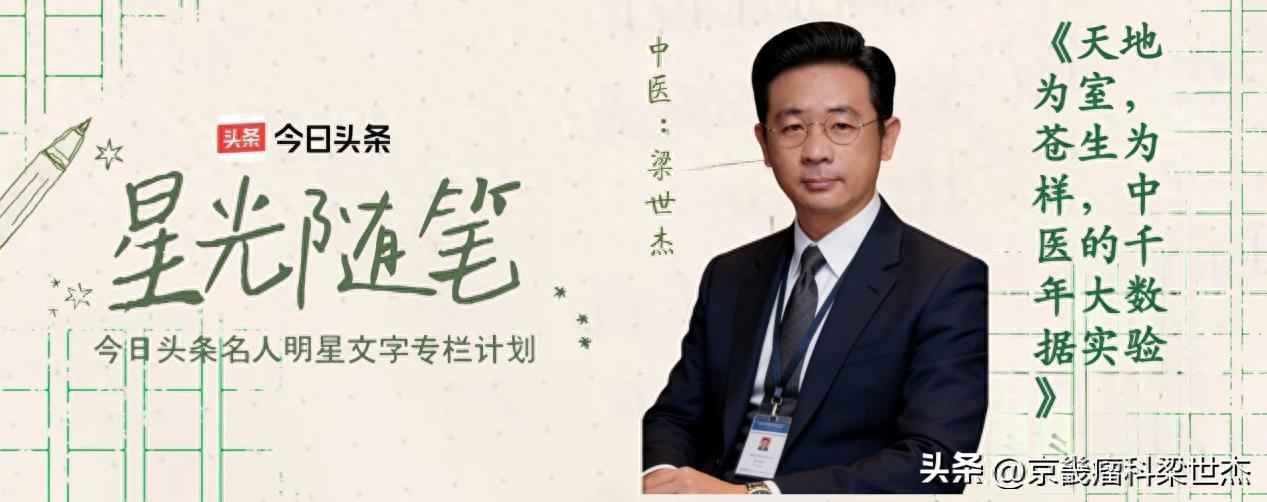
梁世傑:天地爲室,蒼生爲樣,中醫的千年大數據實驗
西醫的實驗室,是明碼標價的精密儀器、恆溫恆溼的封閉空間,是一座樓、一層房、幾百平米的方寸之地,用玻璃器皿模擬人體,用數字指標定義健康;而中醫的實驗室,從來都是天地六合爲牆,四季五行爲尺,芸芸衆生爲樣本,在春風夏雨、秋霜冬雪的更迭裏,在柴米油鹽、生老病死的日常中,做了一場跨越三千年的真實世界實驗。這實驗無對照組,卻有億萬人次的實踐;無雙盲設計,卻有自然規律的鐵證;無短期數據,卻有歲月沉澱的答案。《黃帝內經》言:“人與天地相參也,與日月相應也。” 這便是中醫實驗室的底層邏輯,亦是其遠超模擬實驗的循證本質。
一、實驗室之辨:封閉模擬VS開放真實
倘若把西醫研究比作“溫室養花”,那麼中醫實踐便是“曠野植林”。
西醫的實驗室,是高度可控的“模擬場”:用小白鼠替代人體,用細胞培養皿模擬臟腑,用單一變量驗證藥效,試圖在排除一切干擾的情況下,找到“藥”與“病”的精準對應。這種研究方式,讓青黴素攻克感染,讓疫苗阻斷傳染病,讓外科手術修復臟器,其精準性值得敬畏。但不可否認的是,它也存在天然的侷限:實驗室的小白鼠,不會經歷春夏秋冬的氣候變遷;培養皿裏的細胞,不會有七情六慾的情緒波動;臨牀試驗的樣本,往往剔除了老人、孕婦、合併多種疾病的複雜人羣,終究是“理想化的人體”。就像研究一棵大樹,只取了一片葉子做實驗,再精準的結論,也難涵蓋整棵樹的生長規律。
而中醫的實驗室,是毫無濾鏡的“真實世界”:上至星河運轉,下至水土變遷,中至人體氣血,皆是實驗變量;春耕夏種、秋收冬藏,飲食起居、喜怒哀樂,皆是實驗場景。春日肝氣升發,人易頭暈目眩、情緒易怒,便有“疏肝理氣”的調理之法;夏日心火亢盛,人易口舌生瘡、心煩失眠,便有“清心瀉火”的養生之道;秋日肺金燥盛,人易乾咳咽乾、皮膚乾燥,便有“潤肺生津”的食養方;冬日腎水封藏,人易畏寒肢冷、腰膝痠軟,便有“溫補腎陽”的進補之術。這不是憑空臆想,而是古人在天地間觀察了無數人的生理變化,總結出的“人體與四季共振規律”。
就像春季養肝的實踐:《素問·四氣調神大論》要求“夜臥早起,廣步於庭”,現代生活中,那些堅持春季早睡早起、多做戶外舒展的人,確實更少出現春困、偏頭痛、過敏等問題;而熬夜加班、久坐不動者,往往肝氣鬱結,病痛纏身。這便是天地實驗室的“數據反饋”,無需儀器檢測,卻人人皆可感知。

二、循證之核:短期樣本VS千年大數據
現代循證醫學推崇“大樣本、多中心、隨機對照”,殊不知,中醫早已用三千年的實踐,完成了一場規模空前的“大數據研究”。
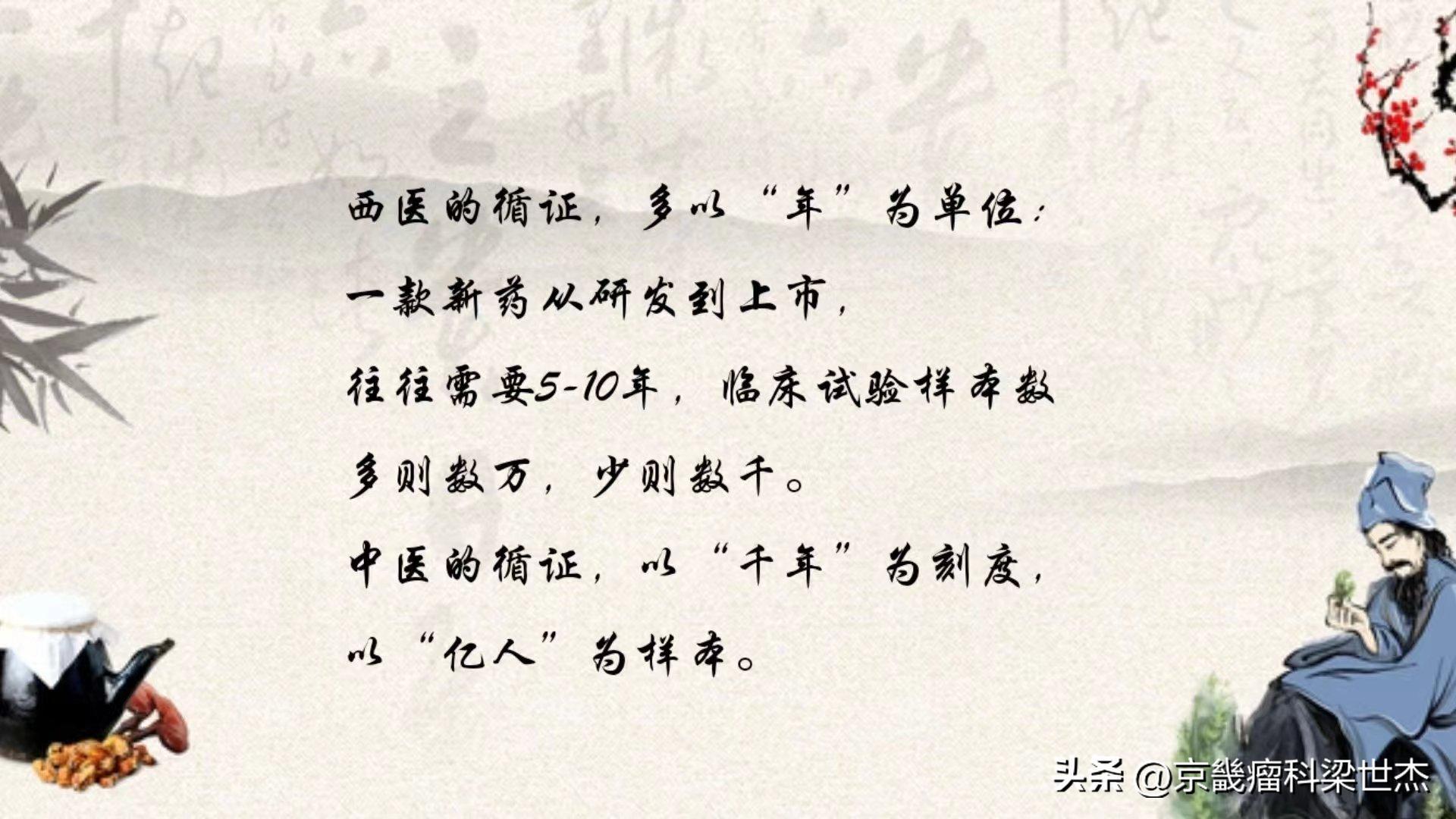
西醫的循證,多以“年”爲單位:一款新藥從研發到上市,往往需要5-10年,臨牀試驗樣本數多則數萬,少則數千。這種研究,讓藥物的療效與風險有了明確的量化標準,卻也受限於時間與樣本:對於罕見病、慢性病的長期影響,對於藥物與人體的微妙互動,往往難以捕捉。就像阿司匹林的一級預防作用,歷經數十年研究,結論幾經反轉,從“全民推薦”到“慎用低危人羣”,足見短期樣本的侷限性。
而中醫的循證,以“千年”爲刻度,以“億人”爲樣本。從神農嘗百草的原始探索,到《傷寒雜病論》的辨證論治,從《千金方》的方劑積累,到《本草綱目》的藥物考證,中醫的每一個理論、每一首方劑、每一味藥材,都經過了歷代醫家與普通百姓的“人體試錯”。這試錯,不是魯莽的冒險,而是自然選擇的智慧:若某一味藥材有劇毒,某一個方劑無療效,必然會在一次次的臨牀實踐中被淘汰,絕無可能流傳千年。

以附子爲例,這味含烏頭鹼的劇毒藥材,生品口服3-5mg即可致命,卻能成爲中醫“回陽救逆”的要藥。何也?因爲古人在天地實驗室中,用了上千年的時間,摸索出了“炮製減毒、久煎去毒、配伍製毒、劑量控毒”的完整體系:砂炒、水漂讓烏頭鹼毒性降低至1/2000以下,先煎1-2小時進一步減少有毒成分,與甘草、乾薑配伍則能中和毒性。歷經數萬人次的實踐,最終讓劇毒藥材成爲臨牀安全用藥,這便是“天然大數據”的篩選結果,比任何實驗室的模擬實驗都更貼近人體真實。
據考證,中醫的臨牀實踐樣本,累計覆蓋了華夏大地不同地域、不同民族、不同年齡的人羣,人次達億級規模,時間跨度超3000年。這樣的“大數據”,不是冰冷的數字,而是一個個鮮活的生命體驗;這樣的“循證”,不是紙上的結論,而是刻在民族基因裏的健康智慧。
三、規律之證:局部指標VS整體節律
西醫研究人體,如同“拆解機器”,聚焦於器官、細胞、分子的局部指標,試圖找到“故障零件”並修復;中醫觀察人體,如同“欣賞花園”,關注的是氣血、陰陽、經絡的整體節律,追求的是“生態平衡”的自愈能力。這兩種視角,源於不同的實驗室邏輯,也造就了不同的健康認知。
西醫的實驗室,讓人類看清了細胞的結構、基因的序列、疾病的靶點,卻也容易陷入“頭痛醫頭、腳痛醫腳”的侷限。比如高血壓,西醫會用藥物直接擴張血管、降低血壓,卻難以解決“肝陽上亢、氣虛血瘀”的根本問題;比如糖尿病,西醫會用胰島素控制血糖,卻難以改善“脾虛溼盛、腎陰虧虛”的體質偏頗。這些指標的改善,能緩解症狀,卻未必能讓身體恢復真正的健康。
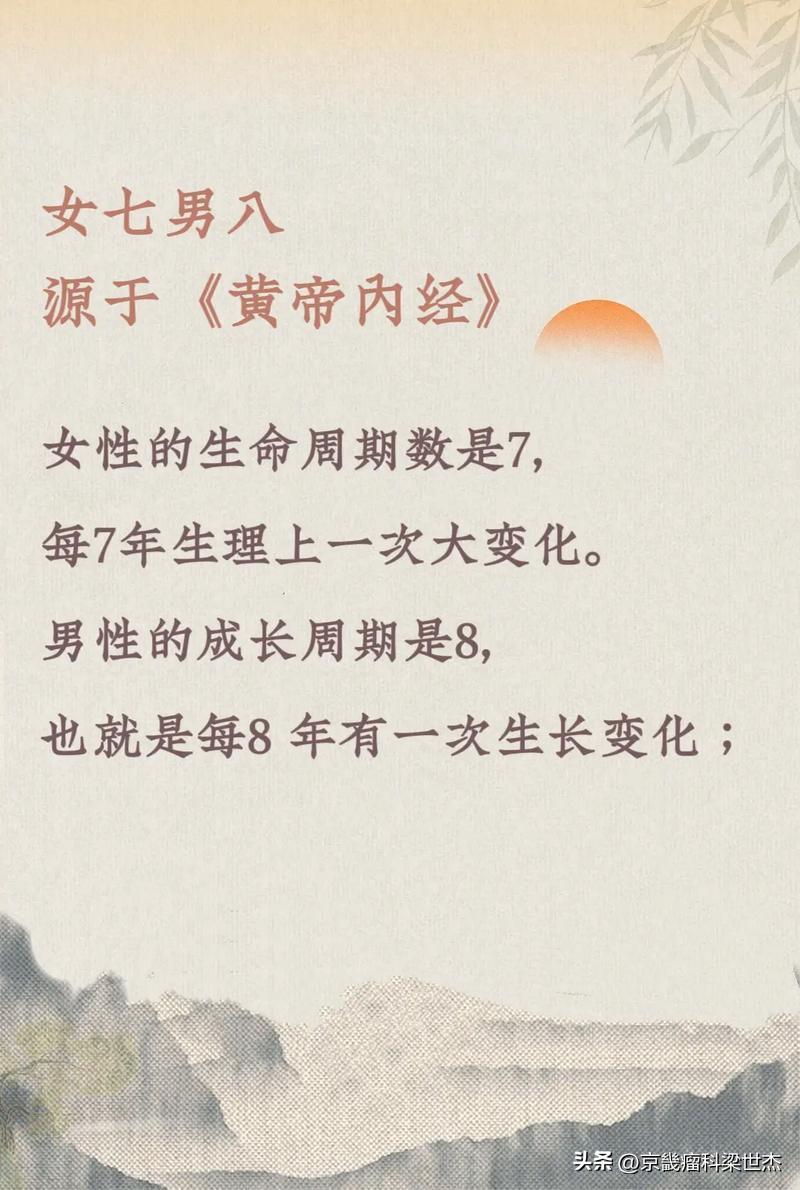
而中醫的天地實驗室,讓人類讀懂了人體與自然的共生規律。《黃帝內經》將人體的生長壯老已,與天地的生老病死滅相對應:“女子七歲,腎氣盛,齒更髮長;二七而天癸至,任脈通,太沖脈盛,月事以時下……七七,任脈虛,太沖脈衰少,天癸竭,地道不通,故形壞而無子也。” 這不僅是對女性生理規律的精準描述,更是對“人體隨天地節律變化”的深刻洞察。
現實生活中,這樣的規律比比皆是:長期熬夜的人,腎精耗損,往往早衰;飲食無度的人,脾胃受損,多生痰溼;情緒抑鬱的人,肝氣鬱結,易患結節。而遵循天地節律的人,晨起順應陽氣升發,入夜配合陰氣封藏,飲食貼合四季五味,便能少生病、少衰老。這不是玄學,而是中醫在天地實驗室中總結的“人體生物鐘”,是比任何精密儀器都更精準的健康指南。
四、懸念與思考:何爲真正的科學?
有人質疑中醫:“無實驗室數據,無精準指標,何來科學性?” 這實則是用“溫室養花”的標準,去評判“曠野植林”的成果,是對科學的狹隘理解。
科學的本質,是“發現規律、驗證規律、運用規律”,而非侷限於某種研究方式。西醫的實驗室,是發現規律的一種路徑;中醫的天地實驗室,亦是發現規律的另一種路徑。前者在封閉中追求精準,後者在開放中追求本質;前者解決“急症難題”,後者呵護“長期健康”;前者是“對抗疾病”的利器,後者是“順應自然”的智慧。
當西醫的模擬實驗,在慢性病、亞健康、衰老等領域遭遇瓶頸時,不妨回頭看看中醫的天地實驗室:三千年的實踐,早已告訴我們人體與自然的相處之道;億萬人次的體驗,早已沉澱出調理體質、預防疾病的有效方法。《黃帝內經》提出的“治未病”理念,比現代預防醫學早了兩千多年;中醫的“整體觀”,與現代系統生物學不謀而合;中醫的“辨證論治”,更是精準醫療的原始雛形。

這場跨越三千年的天地實驗,仍在繼續。春風依舊吹拂,秋雨依舊淅瀝,人體的規律依舊與天地共振。中醫的實驗室,從未關門;中醫的智慧,從未過時。它藏在晨起的一杯溫水裏,藏在冬日的一碗薑湯裏,藏在四季的飲食起居里,藏在每一個普通人的生活中。這,便是最樸素的循證,最珍貴的科學。
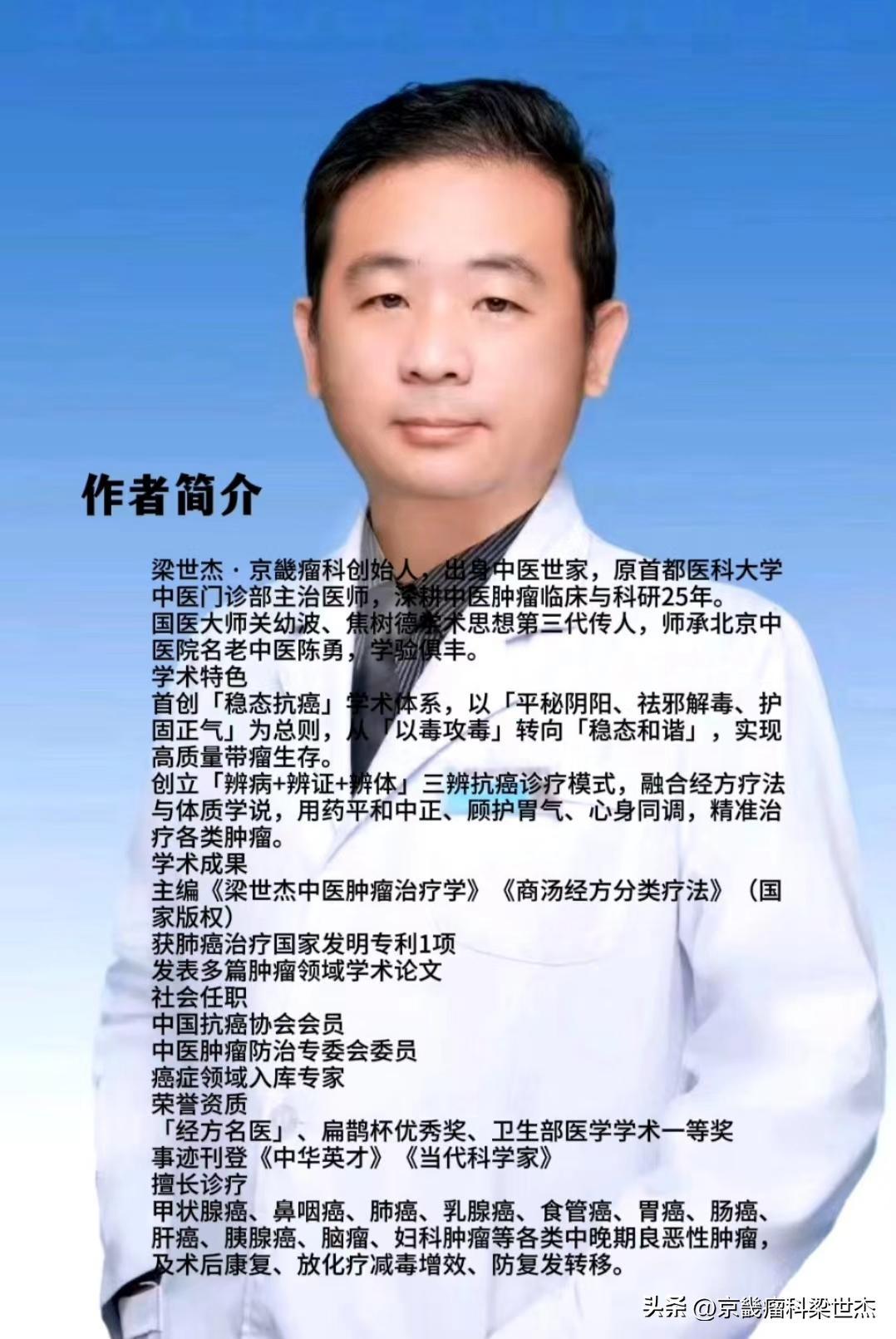
梁世傑 中醫腫瘤專家簡歷
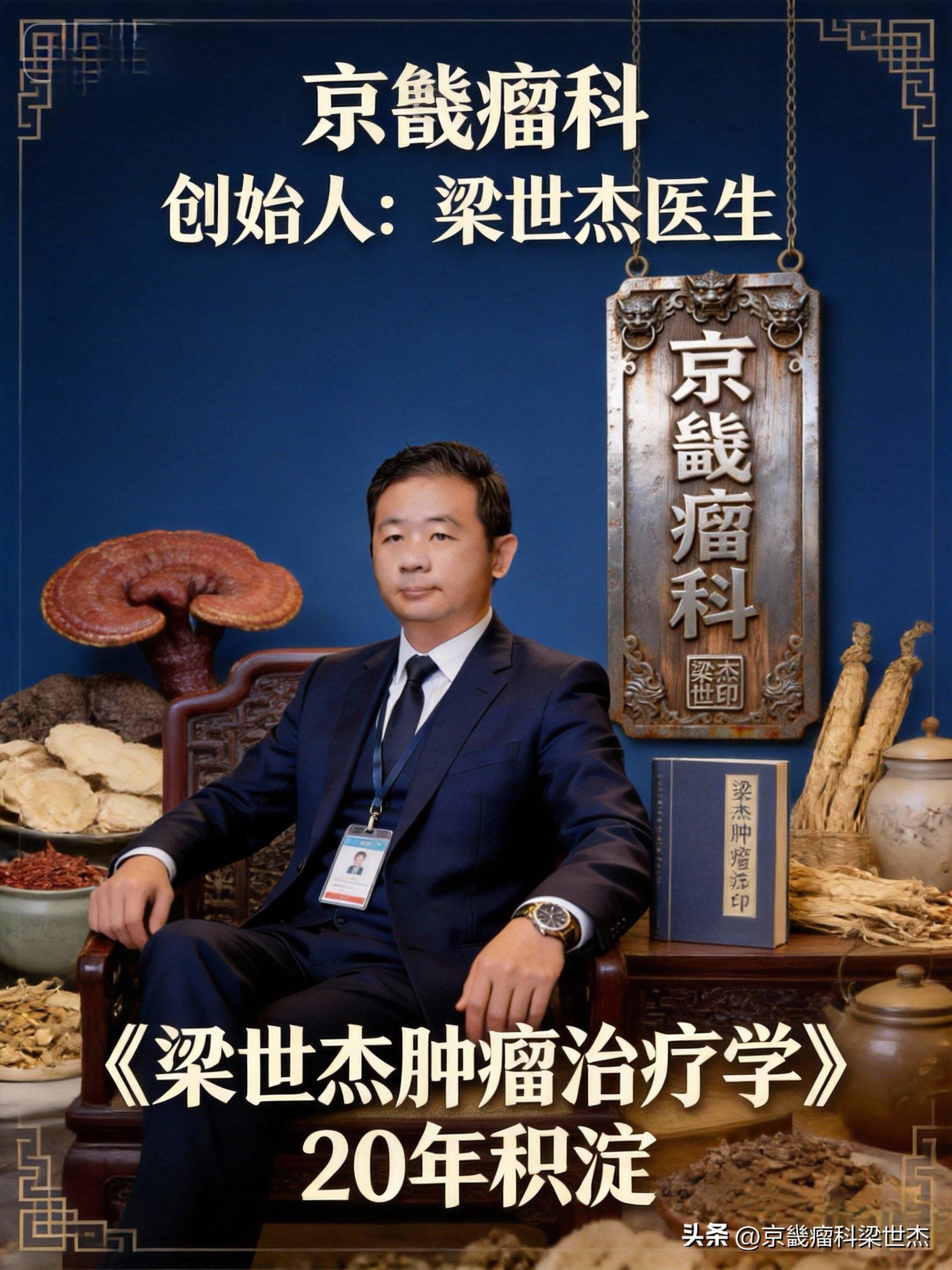
梁世傑,京畿瘤科創始人,出身中醫世家,原首都醫科大學中醫門診部主治醫師,畢業於河北醫科大學,深耕中醫腫瘤臨牀與科研25年。爲國醫大師、肝病泰斗關幼波,風溼病泰斗焦樹德學術思想第三代傳人,師承首都醫科大學附屬北京中醫院肝病科知名老中醫陳勇,侍診研習多年,盡得真傳,學驗俱豐。
一、學術思想與診療特色
作爲中醫腫瘤領域體系化創新學者,首創“穩態抗癌”核心學術體系,提出從“以毒攻毒”向“穩態和諧”範式轉型,以“平祕陰陽、祛邪解毒、護固正氣”爲治療總則,立足《黃帝內經》“正氣存內”理念,明確腫瘤爲全身失衡的局部顯現,通過調理臟腑氣血、改善“癌狀態”體質、切斷腫瘤微環境,實現高質量帶瘤生存,爲中晚期腫瘤治療確立“以人爲本、生命優先”的價值導向。
臨牀構建“辨病+辨證+辨體”三辨精準診療模式,融合抗癌專病專方與“商湯經方分類療法”、關幼波十綱辨證與焦樹德學術思想,創新“易學中醫辯證哲學思維模式”及象數五行體質應用;用藥恪守平和中正、攻補兼施、顧護胃氣原則,堅持全週期協同治療、心身同調,實現個體化、低損傷、長獲益的腫瘤診療目標。
二、學術與科研成果
主編專著:《梁世傑中醫腫瘤治療學》《商湯經方分類療法》,均獲國家版權登記;
發明專利:“三花五子六白散”治療肺癌國家發明專利1項;
學術論文:發表《古方青龍丸治療中晚期肺癌20例》等多篇腫瘤領域高價值學術論文。
三、學術任職
中國抗癌協會會員
衛生部中國醫促會中醫腫瘤防治專委會委員
中國藥文化研究會中醫藥慢病防治分會首批癌症領域入庫專家
四、榮譽與影響力
先後榮獲第八屆醫聖仲景南陽論壇“經方名醫”、首屆京津冀“扁鵲杯”燕趙醫學徵文優秀獎、衛生部全國醫學學術一等獎。學術事蹟榮登《中華英才》《當代科學家》等權威期刊,是國內中醫腫瘤領域理論體系完整、學術特色鮮明、臨牀療效確切的實力派專家。
五、擅長診療範圍
甲狀腺癌、鼻咽癌、肺癌、肺結節、乳腺癌、食管癌、胃癌、萎縮性胃炎、腸化生、腸癌、肝癌、胰腺癌、腎癌、膀胱癌、前列腺癌、淋巴瘤、腦瘤、宮頸癌、卵巢癌等各類中晚期良惡性腫瘤,及術後康復、放化療減毒增效、防復發轉移等疑難病症。
Liang Shi-jie: The heavens and earth serve as a dwelling, and humanity is the subject. A millennium-long big data experiment in traditional Chinese medicine.
The laboratory of Western medicine is a closed space with priced precision instruments, constant temperature and humidity, a building, a floor, hundreds of square meters, using glass vessels to simulate the human body, and defining health with numerical indicators. The laboratory of traditional Chinese medicine has always been surrounded by heaven and earth, with four seasons and five dimensions, and samples of all kinds of human beings. During the changes of spring wind, summer rain, autumn frost, winter snow, diesel oil and salt, aging, sickness, and death, it has conducted a real-world experiment spanning three thousand years. The experiment had no control group, but had hundreds of millions of practices. There is no double blind design, but there is strong evidence of natural laws. There is no short-term data, but there is a time-honoured answer. The Book of the Huangdi says, "Man and the heaven and the earth are related to each other, and correspond to the sun and moon." This is the underlying logic of a traditional Chinese medicine laboratory, and it is the evidence-based nature that far exceeds that of a simulated experiment.
1.Difference of Real Inspection Room: Closed Simulation VS Open Reality
If Western medical research is likened to "growing flowers in a greenhouse," then traditional Chinese medicine practice is "foresting in the wilderness."
The laboratory of Western medicine is a highly controlled "simulation field": mice are used to replace the human body, cell culture dishes are used to simulate the insides of the intestines, and a single variable is used to verify the effectiveness of medicines, attempting to find an accurate correspondence between "medicine" and "disease" without any interference. The precision of this approach to research, which allows penicillin to combat infections, vaccines to block infectious diseases, and surgical procedures to repair organs, is awe-inspiring. But there are undeniable limitations: mice in the lab do not experience climate change in spring and summer; Cells in a dish do not have emotional fluctuations of passion. The sample of clinical trials often excludes the elderly, pregnant women, and complex populations with multiple diseases, and is ultimately an "idealized human body." Like studying a large tree, taking only one leaf for the experiment, even a precise conclusion cannot cover the growth patterns of the whole tree.
The laboratory of traditional Chinese medicine is a "real world" without filters: everything from the operation of the stars to soil and water changes to the human body''s breath and blood are experimental variables. Farming in the spring and planting in the summer, harvesting in the autumn and storing in the winter, eating, sleeping, rejoicing and sorrow are all experimental scenes. In spring, the liver gland rises, and people are prone to dizziness and irritability, so there is a method of "calming the liver and conditioning the liver." When the heart fire is high in summer, people are prone to mouth and tongue sores, heart irritation and insomnia, so there is a healthy way to "clear the heart and lay the fire." In autumn, the lungs are dry and full, and people are prone to dry coughing and swallowing and dry skin, so there are diet recipes for "lung health." During winter, kidney water is hidden, and people are prone to cold, cold limbs, and weakness in the knee and lower back, so there is a complementary technique to "warm up the kidneys." This is not a figment of the imagination, but the "harmony law between the human body and the four seasons" that ancient people observed the physical changes of countless people across the heavens and the earth, and concluded.
Just like the practice of keeping the liver healthy in the spring: The Great Theory of Four Breaths requires "sleeping early at night and walking in the courtyard." In modern life, those who insist on sleeping early and getting up early in the spring and doing more outdoor recreation are actually less likely to suffer from spring sleepiness, migraines, allergies and other problems. And those who stay up late and work overtime and are sedentary, often have a depressed liver and suffer from illnesses. This is the "data feedback" of Heaven and Earth Laboratory, which does not require instrument testing but is perceived by everyone.
II. The Core of Evidence-based: Short-term Sample vs. Millennium Big Data
Modern evidence-based medicine promotes "large samples, multicenters, and randomized controls," but traditional Chinese medicine has already completed a "big data study" on an unprecedented scale using three thousand years of practice.
The evidence-based nature of Western medicine is mostly in the units of "years": it often takes 5-10 years for a new drug to be developed to be marketed, and the number of samples in clinical trials is many tens of thousands, and fewer than thousands. Such studies, which have provided clear quantitative criteria for drug efficacy and risk, are also limited by time and sample: the long-term effects of rare and chronic diseases and the subtle interactions between drugs and the human body are often difficult to capture. Just as the primary preventive effect of aspirin has been studied over decades, with conclusions reversed several times, from "universal recommendation" to "prudent use in low-risk populations," a reflection of the limitations of short-term samples.
The evidence-based approach to traditional Chinese medicine is measured by a "thousand years" and a sample of "hundreds of millions of people." From Shennong''s original exploration of a wide variety of plants to the dialectical treatment of Typhoid, From the accumulation of prescriptions in the Thousand Golden Herbals to the medicinal testing in the Materia Medica, every theory, every prescription, and every flavor of herbal medicine in traditional Chinese medicine has passed the "human trial and error" of generations of medical practitioners and ordinary people. This trial and error is not a reckless risk, but the wisdom of natural selection: if a particular medicine is highly toxic and a particular formulation is ineffective, it will inevitably be eliminated in clinical practice and will never survive for a thousand years.
Take aconite as an example, this taste contains aconitine highly toxic medicinal materials, raw oral 3-5mg can be fatal, but can become Chinese medicine "Huiyang save inverse" medicine. So why? Because the ancient man spent thousands of years in the heaven and earth laboratory, The complete system of "concocted poison reduction, long-fried poison removal, compound poison preparation, dose control poison" was found: sand and stir-fry and water float reduced the toxicity of uranium to less than 1 / 2000, frying for 1-2 hours further reduced the toxic components, and compounding with licorice and dried ginger can neutralize the toxicities. After tens of thousands of practices, it has finally made highly toxic drugs a clinical safe drug, and this is the screening result of "natural big data," which is closer to human reality than any laboratory simulation experiment.
According to verification, the samples of clinical practice of TCM covered people of different geographical areas, ethnic groups and ages in China, with a scale of hundreds of millions of people and a span of more than 3,000 years. Such "big data" is not cold numbers, but vivid life experiences. Such "evidence-based evidence" is not a conclusion on paper, but a healthy wisdom that is in the genes of the nation.
III. Evidence of the Law: Local Index VS Overall Rhythm
Western medicine studies the human body as a "disassembly machine," focusing on local indicators of organs, cells, and molecules in an attempt to find "broken parts" and repair them. TCM observes the human body like "enjoying the garden," focusing on the overall rhythm of qi, blood, yin and yang, and meridians, and pursuing the self-healing ability of "ecological balance." These two perspectives derive from different laboratory logic and generate different health perceptions.
Western medical laboratories have allowed human beings to see clearly the structure of cells, the sequence of genes, and the targets of disease, but they are also easily stuck in the limitation of "doctoring headaches and doctoring feet." For example, high blood pressure, Western medicine will use drugs to directly expand blood vessels and lower blood pressure, but it is difficult to solve the root problem of "hyperthyroidism, hypoxia and blood bruising"; For example, for diabetes, Western medicine will use insulin to control blood sugar, but it is difficult to improve the physical irregularity of "swollen spleen and depressed kidneys." While improvements in these indicators may ease symptoms, they may not necessarily lead to a return to real health.
The heaven and earth laboratory of traditional Chinese medicine has allowed human beings to understand the symbiotic laws of the human body and nature. The Huangdi Yin scripture corresponds to the growth, strengthening and aging of the human body with the growth and sickness and death of the heavens and the earth:“The woman was seven years old, her kidneys were full and her teeth were longer. 27 / 7 and the day is the thirtieth, whenever the pulse is clear, the pulse becomes strong, and the monthly event is now... Seventy-seven, the pulse is weak, the arteries are thin, the earth is exhausted, and the tunnel is not accessible, so it is broken and without children.”This is not only a precise description of the physical laws of women, but also a profound insight into the "changes of the human body with the rhythm of the earth and the sky."
In real life, such a pattern abound: people who stay up late for a long time, their kidneys are depleted, and they tend to age prematurely; People who eat excessively have damage to their spleen and stomach, and are prone to phlegm; People who are emotionally depressed have a depressed liver and are prone to nodules. People who follow the rhythm of the heavens and the earth, rising in the morning in accordance with the rising of the yang, staying at night in accordance to the shelter of the yang and eating a diet that is consistent with the four seasons and the five tastes, can be less sick and less ageing. This is not metaphysics, but the "human body clock" summarized by traditional Chinese medicine in the Tianhe Lab, which is a more accurate health guide than any precision instrument.
IV. Suspension and reflection: What is true science?
Some people question traditional Chinese medicine: "Without laboratory data, without precise indicators, why is it scientific?" This is in fact a narrow understanding of science by using the criteria of "greenhouse cultivation" to judge the results of "wilderness afforestation."
The essence of science is "the law of discovery, the law of verification, and the law of application," and is not limited to a certain way of study. The laboratory of Western medicine is a pathway to discovery of patterns; The heaven and earth laboratory of traditional Chinese medicine is another way to discover the laws. The former seeks precision in closedness, the latter seeks essence in openness; The former solves "acute problems," while the latter protects "long-term health." The former is a powerful tool "against disease," while the latter is the wisdom "to conform to nature."
When Western medical simulations encounter bottlenecks in areas such as chronic diseases, sub-health, and aging, it is worth looking back at the heaven and earth laboratory of traditional Chinese medicine: three thousand years of practice have long taught us how to get along with nature. Hundreds of millions of experiences have already developed effective methods for managing the body and preventing disease. The concept of "healing the sick" proposed in the Huangdi Yin script predates modern preventive medicine by more than two thousand years. The "whole view" of traditional Chinese medicine coincides with modern systems biology; The "dialectical treatment" of traditional Chinese medicine is a primitive form of precision medicine.
This heaven and earth experiment, which spans three thousand years, continues. The spring wind still blows, the autumn rain still drizzles, and the laws of the human body still resonate with the heavens and the earth. The laboratory of traditional Chinese medicine never closes its doors. The wisdom of Chinese medicine has never been out of date. It is hidden in a cup of warm water in the morning, in a bowl of ginger soup in the winter, in the diet and habits of the four seasons, and in the life of every ordinary person. This is the simplest evidence-based and most precious science.
Liang Shi-jie’s Resume as a Chinese Medicine Specialist in Oncology
Liang Shi-jie, the founder of the Jingyi Tumor Clinic, hails from a family of traditional Chinese medicine practitioners. He was a chief physician at the Traditional Chinese Medicine Outpatient Clinic of the former Capital Medical University. He graduated from Hebei Medical University and has devoted 25 years to clinical practice and research in traditional Chinese medicine oncology. He is the third generation of the academic lineage of Guan You-bo, a master of traditional Chinese medicine and a renowned expert in liver diseases, and Jia Shu-de, a master of rheumatology. He studied under Chen Yong, a well-known elderly traditional Chinese medicine practitioner in the liver disease department of Beijing Traditional Chinese Medicine Hospital affiliated to the Capital Medical University. He has gained extensive knowledge and experience through many years of study and practice.
I. Academic Thought and Diagnostic/Therapeutic Specialties
As a scholar specializing in systematized innovation in the field of traditional Chinese medicine oncology, I pioneered the core academic system of “steady state anti-cancer.” I proposed a transition from the paradigm of “using poison to counter poison” to “steady state harmony,” with the general principles of “balancing Yin and Yang, eliminating evil and detoxifying, and protecting and reinforcing healthy qi.” Grounded in the concept of “healthy qi resides within” from the Huangdi Neijing, I clarified that tumors are localized manifestations of overall imbalance. By regulating the qi and blood of internal organs, improving the “cancer state” constitution, and disrupting the microenvironment of tumors, we can achieve high-quality survival with a tumor present, thereby establishing a value orientation of “people-centeredness and prioritizing life” for the treatment of advanced and late-stage tumors.
Clinical construction of the “diagnosis + syndrome differentiation + constitution identification” three-step precise diagnosis and treatment model, integration of cancer-specific treatments and “Shang Tang classic prescription classification therapy,” Guan Youbo’s ten-category syndrome differentiation method, and Jiao Shude’s academic thoughts, innovation of the “easy-to-learn traditional Chinese medicine dialectical philosophical thinking mode” and the application of symbolic number and five-element constitution; adhering to the principles of moderation and balance, combining attack and supplementation, and protecting the stomach qi, maintaining comprehensive and coordinated treatment throughout the entire cycle, balancing mind and body, and achieving personalized, low-injury, and long-term benefits in cancer diagnosis and treatment.
II. Scholarly and Research Achievements
Co-authored monographs: “Liang Shi-jie’s Traditional Chinese Medicine for Cancer Treatment” and “Shang Tang’s Classification Therapy Based on Classical Prescriptions”; both have been registered for national copyright protection.
Patent for invention: One national patent for the invention of “Sanhua Wu Zi Li Bai San” for the treatment of lung cancer.
Academic Papers: Published numerous high-value academic papers in the field of oncology, including “The Treatment of 20 Cases of Advanced-Stage Lung Cancer with Ancient Formula Qinglong Pill.”
III. Academic Positions
Member of the Chinese Cancer Association.
Member, Expert Committee on Traditional Chinese Medicine Cancer Prevention and Treatment, China Medical Promotion Association, Ministry of Health.
First-batch cancer-related experts inducted into the Chinese Traditional Medicine Prevention and Treatment of Chronic Diseases Branch of the Chinese Pharmaceutical Culture Research Association.
IV. Recognition and Influence
He has been awarded the title of “Expert in Traditional Medicine” at the Eighth Symposium of the Medicine Saint Zhongniang of Nanyang, the Outstanding Award for Medical Writing at the First Beijing-Tianjin-Hebei “Bian Que Cup” Symposium on Yan-Zhao Medicine, and the First Prize for Medical Scholarship by the Ministry of Health. His academic achievements have been featured in prestigious journals such as “China’s Elite” and “Contemporary Scientists.” He is a highly respected expert in the field of traditional Chinese medicine oncology, known for his comprehensive theoretical framework, distinctive academic characteristics, and proven clinical efficacy.
V. Areas of Expertise
Thyroid cancer, nasopharyngeal cancer, lung cancer, pulmonary nodules, breast cancer, esophageal cancer, gastric cancer, atrophic gastritis, intestinal metaplasia, intestinal cancer, liver cancer, pancreatic cancer, kidney cancer, bladder cancer, prostate cancer, lymphoma, brain tumors, cervical cancer, ovarian cancer, and other various advanced and late-stage benign and malignant tumors, as well as post-operative rehabilitation, radiation and chemotherapy to reduce toxicity and enhance efficacy, and prevention of recurrence and metastasis, among other complex conditions.