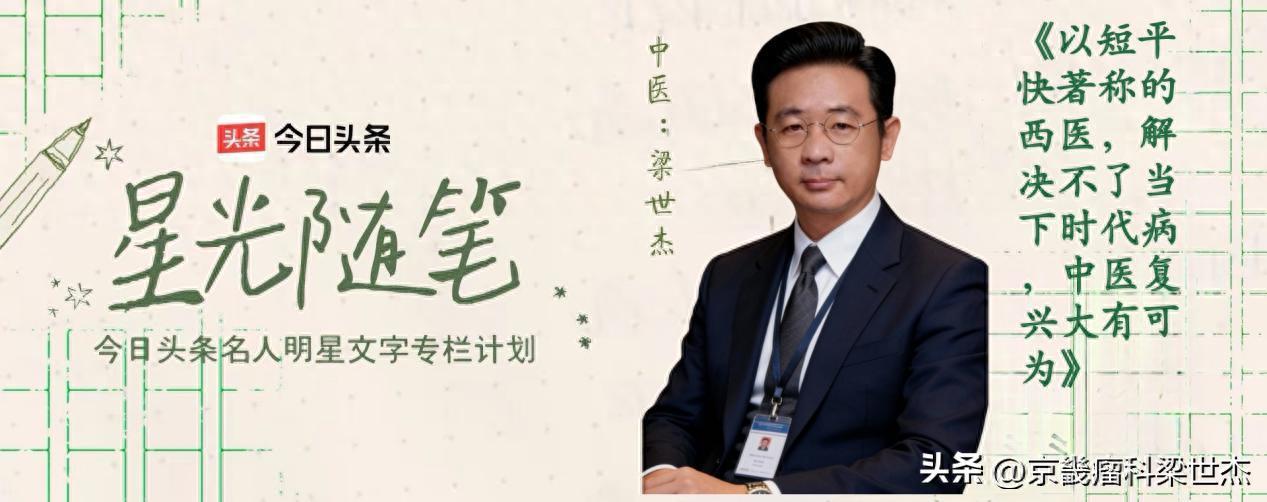
梁世傑:短平快著稱的西醫解決不了當下時代病,中醫復興大有可爲
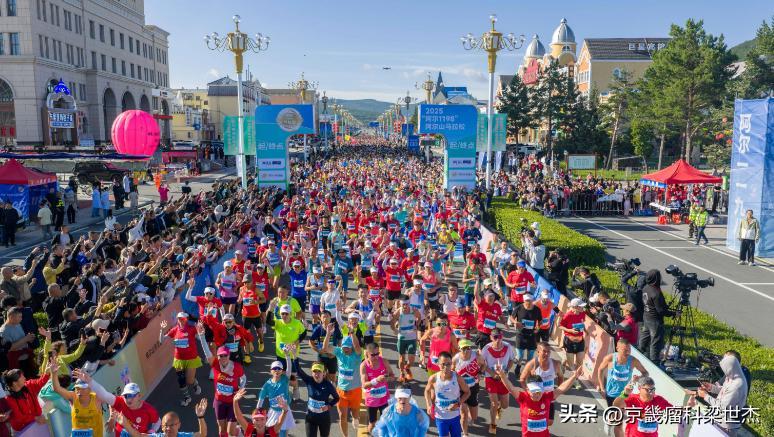
如果把當代健康賽道比作一場百米賽跑,西醫憑藉“藥片一吞、針劑一推”的短平快,確實包攬了大部分金牌。可當賽場延伸至馬拉松——面對層出不窮的“時代病”,比如長期熬夜導致的慢性疲勞、久坐不動引發的頸肩腰腿痛、飲食失調催生的代謝紊亂,甚至是那些纏上年輕人的“亞健康焦慮症”,以急救和對症爲核心的西醫,漸漸露出了力不從心的破綻。
這不是西醫的錯,而是它的“賽道屬性”決定的。西醫的優勢在於“快準狠”,用精準的數據、明確的靶點解決急性病、危重症,就像一把鋒利的手術刀,能快速切除病竈、阻斷危機。但當代人真正的痛點,早已不是“突發急症”,而是“慢性耗損”;不是“單一病竈”,而是“身心交織”。這些問題,沒有明確的“病變邊界”,沒有立竿見影的“特效藥”,靠輸液、喫藥根本治標不治本。而這,恰恰是中醫藥深耕千年的核心賽道,也是中醫復興的底氣所在。
一、西醫的“短平快”,贏不了“時代病”的持久戰
先看一組數據:據《中國居民健康素養監測報告》,我國慢性非傳染性疾病患者已超4億人,其中高血壓、糖尿病、脂肪肝等代謝性疾病,佔比達70%以上;而《2024年中國亞健康人羣白皮書》顯示,超85%的職場人處於不同程度的亞健康狀態,失眠、焦慮、頸肩疼痛成爲“國民通病”。
這些“時代病”,本質上是身體的“慢性失衡”。就拿失眠來說,西醫的常規操作是開助眠藥,短期確實能入睡,但長期服用會產生依賴,打亂睡眠節律,反而讓失眠更頑固。再看慢性疲勞綜合徵,西醫檢查往往指標正常,卻查不出明確病因,只能建議“多休息”,可身體的疲憊感、沉重感、注意力渙散,依舊揮之不去。
更關鍵的是,當代人的健康問題,早已突破“生理單一維度”。很多年輕人熬夜加班、焦慮內耗,導致肝氣鬱結、脾胃失調,明明沒有器質性病變,卻渾身難受。這種“身心同病”,西醫擅長處理軀體症狀,卻很難兼顧情緒、壓力、生活方式對身體的深層影響。就像一個漏水的水桶,西醫能忙着補破洞,卻忽略了源頭不斷往桶裏倒水的生活習慣。
而西醫的“短平快”,本質上是“對症處理”,追求的是“快速見效”,卻難以解決“失衡根源”。當代人要的不是“暫時止痛”,而是“長期調理”;不是“指標正常”,而是“身心安穩”。這一點,恰恰是中醫藥的長板。
二、中醫的“慢調理”,纔是時代病的“對症解法”
中醫藥從來不是“慢郎中”,它的“慢”,是順應身體規律的“精準節奏”。《黃帝內經》講“正氣存內,邪不可幹”,核心就是通過調理身體的“正氣”,讓身體自己擁有抗病能力。這種“調衡思維”,正好契合當代時代病的核心痛點——身體失衡,而非單一病竈。
舉個最常見的例子:年輕人熬夜導致的脫髮、失眠、乏力,西醫往往束手無策,頂多開點維生素、生髮水,效果微乎其微。但中醫會辨證論治:如果是肝鬱氣滯,就疏肝理氣,配合調整作息、情緒;如果是肝腎虧虛,就滋補肝腎,搭配食療、養生功法。比如90後程序員小李,長期熬夜加班,脫髮嚴重、失眠多夢,西醫檢查各項指標正常,中醫辨證爲“肝腎陰虛、肝鬱化火”,通過滋陰養肝、疏肝解鬱的中藥調理,再配合八段錦、早睡早起,三個月後脫髮緩解,睡眠質量大幅提升,整個人狀態煥然一新。
再比如代謝性疾病,像糖尿病、高血壓,西醫靠降糖藥、降壓藥控制指標,但很多患者長期服藥後,會出現手腳麻木、腸胃不適等副作用。而中醫通過“健脾祛溼、活血化瘀、滋陰潤燥”的調理,既能輔助穩定指標,又能改善肢體麻木、口乾乏力等併發症,讓患者的生活質量大幅提升。廣東的一位糖尿病患者,患病十年,血糖控制不穩定,伴隨手腳麻木,中醫以“健脾降糖方”爲基礎,結合穴位按摩、食療調理,半年後血糖趨於平穩,麻木感基本消失,無需額外增加西藥劑量。
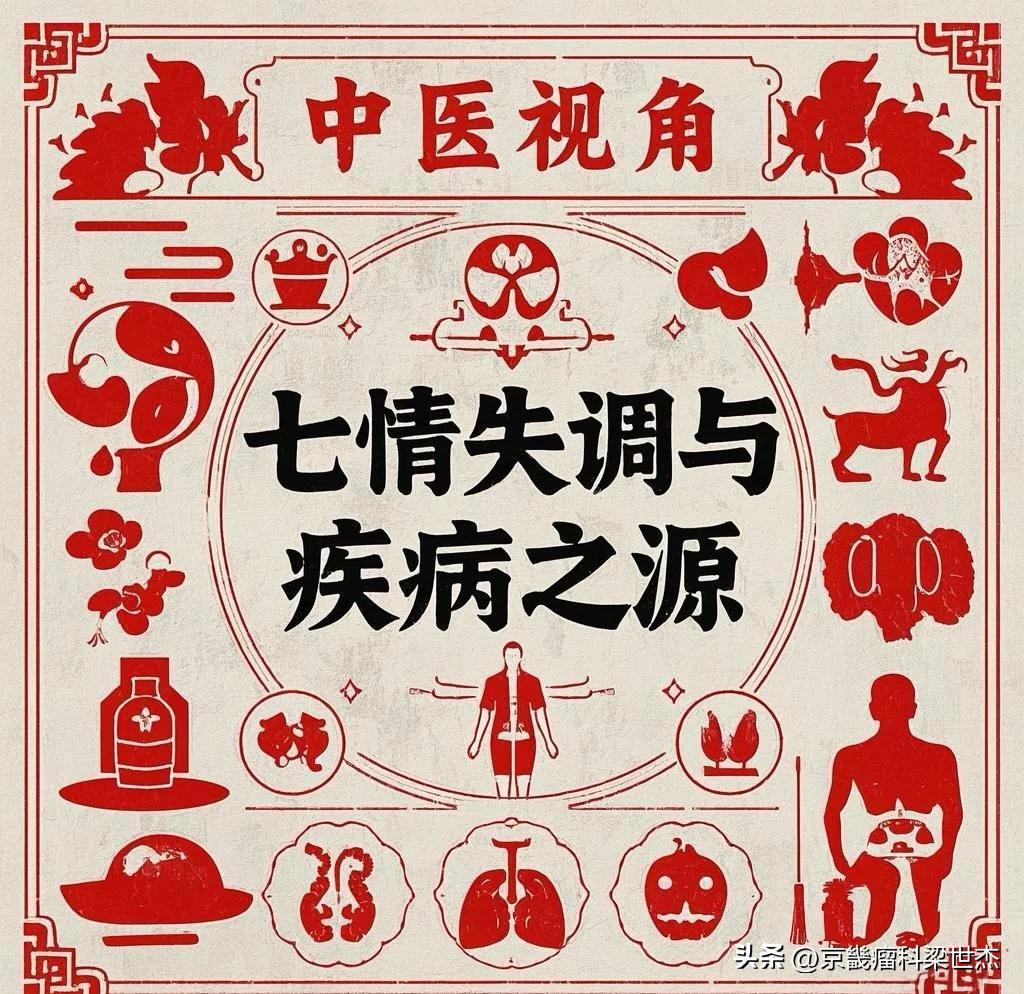
還有被年輕人追捧的“情緒病”——焦慮、抑鬱,西醫靠抗焦慮藥物,但副作用明顯。而中醫從“情志致病”角度入手,認爲“怒傷肝、喜傷心、思傷脾”,通過疏肝解鬱、健脾養心的調理,配合冥想、艾灸等養生方式,能有效緩解情緒困擾。很多年輕人靠中醫調理,擺脫了對情緒藥物的依賴,找回了情緒穩定的狀態。
中醫的“慢”,不是拖沓,而是“精準施策”。它不追求“一口吃成胖子”,而是像春雨潤物一樣,一點點修復身體的失衡,讓身體自己慢慢恢復到“平衡狀態”。這種“調衡思維”,正好解決了西醫難以覆蓋的“慢性耗損”和“身心交織”問題,完美適配當代時代病的需求。
三、中醫復興,不是“復古倒退”,而是“與時俱進”
有人說,中醫復興就是“熬草藥、扎銀針”的復古。大錯特錯!當代中醫的復興,從來不是固守傳統,而是“守正創新”,用現代語言、現代方式,讓中醫藥適配當代人的生活節奏。
首先,是“形式創新”,讓中醫藥更便捷。以前熬藥要等數小時,現在有了免煎顆粒、中藥飲片,開水一衝就能喝,方便快捷;以前鍼灸、推拿要到醫院,現在社區中醫館、上門養生服務遍地都是,不出小區就能調理;以前中醫藥文化晦澀難懂,現在通過卡通科普、短視頻腳本、動畫講解,把“陰陽五行”“經絡氣血”轉化爲普通人能聽懂的語言,讓中老年人也能輕鬆理解。比如某中醫平臺推出的“八段錦動畫教學”,上線半年播放量破億,讓年輕人主動跟着練,把養生變成了日常習慣。
其次,是“技術創新”,讓中醫藥更科學。現在中醫結合現代檢測設備,比如脈象儀、經絡檢測儀,能更精準地辨證;通過藥理研究,明確中藥的有效成分,比如青蒿素的提取,讓中醫藥走向世界;開展“非遺中醫技藝傳承”,把傳統的膏方製作、鍼灸技法、艾灸技藝標準化,讓中醫藥的療效更有保障。比如某中醫團隊研發的“非遺膏方”,結合現代工藝,既保留了傳統膏方的滋補功效,又解決了“熬製麻煩、不易保存”的問題,深受中老年人青睞。
更重要的是,“理念創新”,讓中醫藥更貼合當代生活。中醫倡導的“治未病”理念,正好契合當代人的“健康預防需求”。以前大家“生病才就醫”,現在越來越多人通過中醫調理、養生,提前預防疾病。比如很多家庭常備金銀花、羅漢果,用來清熱潤肺;上班族定期做艾灸、拔罐,來祛溼散寒;家長給孩子做小兒推拿,來增強體質。這種“預防爲主”的理念,從根源上減少了時代病的發生。

四、結語:中醫復興,是時代選擇,更是民心所向
當代時代病的核心,是“快節奏帶來的身心失衡”。西醫的短平快,能解決急性危機,卻解不了慢性失衡;中醫的慢調理,看似緩慢,實則精準,能從根源上修復身體的平衡,兼顧身心同調。
中醫藥不是“過時的老古董”,它是歷經千年檢驗的“健康智慧”。從田間地頭的草藥,到現代實驗室的中藥提取;從老中醫的望聞問切,到年輕人追捧的中醫養生,中醫藥始終在與時俱進,不斷適配當代人的需求。
中醫復興,不是要取代西醫,而是要與西醫相輔相成。急性病找西醫,慢性病、亞健康找中醫,兩者結合,才能構建完整的健康體系。這不是“非此即彼”的選擇,而是“各取所長”的智慧。
當下,越來越多的人開始厭倦“短平快”帶來的副作用,追求“身心安穩”的健康狀態;越來越多的年輕人開始重視養生,主動擁抱中醫調理;越來越多的機構開始重視中醫藥的傳承與創新,推動中醫藥走向大衆。
中醫復興,早已不是一句口號,而是時代的必然選擇,是民心的真實所向。當越來越多的人在亞健康、慢性病面前,第一時間想起中醫的調理智慧;當中醫藥文化融入日常,成爲全民的健康共識,中醫復興的浪潮,必將席捲整個健康產業,爲當代人帶來真正的“身心安康”。
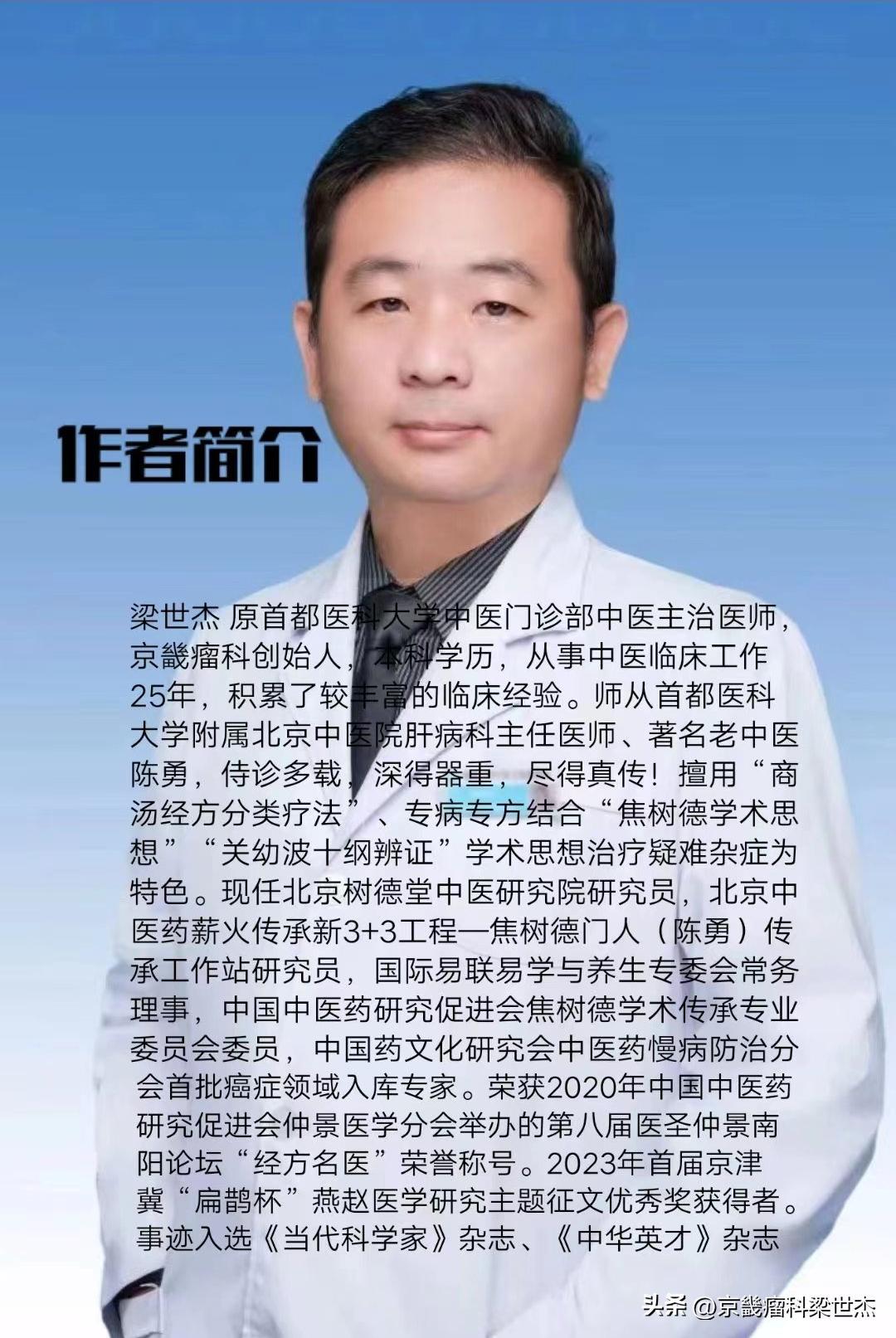
作者簡介:梁世傑 原首都醫科大學中醫門診部中醫主治醫師,京畿瘤科創始人,本科學歷,從事中醫臨牀工作25年,積累了較豐富的臨牀經驗。師從首都醫科大學附屬北京中醫院肝病科主任醫師、著名老中醫陳勇,侍診多載,深得器重,盡得真傳!擅用“商湯經方分類療法”、專病專方結合“焦樹德學術思想”“關幼波十綱辨證”學術思想治療疑難雜症爲特色。現任北京樹德堂中醫研究院研究員,北京中醫藥薪火傳承新3+3工程—焦樹德門人(陳勇)傳承工作站研究員,國際易聯易學與養生專委會常務理事,中國中醫藥研究促進會焦樹德學術傳承專業委員會委員,中國藥文化研究會中醫藥慢病防治分會首批癌症領域入庫專家。榮獲2020年中國中醫藥研究促進會仲景醫學分會舉辦的第八屆醫聖仲景南陽論壇“經方名醫”榮譽稱號。2023年首屆京津冀“扁鵲杯”燕趙醫學研究主題徵文優秀獎獲得者。事蹟入選《當代科學家》雜誌、《中華英才》雜誌。
Liang Shijie: Western medicine, known for its brevity and speed, cannot solve the diseases of the present era, and there is much to be done to revive traditional Chinese medicine
If the contemporary health race is likened to a 100-meter race, Western medicine has indeed won most of the gold medals with the short speed of "one pill, one needle, one push." But when the field extends to the marathon - facing a steady stream of "diseases of the times," For example, chronic fatigue caused by long-term staying up late, neck, shoulder, waist and leg pain caused by sedentary behavior, metabolic disorders caused by eating disorders, and even those "sub-health anxiety syndromes" that afflict young people, Western medicine with first aid and treatment as its core has gradually revealed its inability to cope.
This is not Western medicine''s fault, but rather its "race track attributes." The advantage of Western medicine is "fast and accurate," using precise data and clear targets to solve acute diseases and critical cases, like a sharp surgical knife, which can quickly remove lesions and block crises. But the real pain points of modern people are no longer "emergencies," but "chronic depletion." It is not a "single lesion," but a "intersection of mind and body." These problems have no clear "boundaries of disease," no immediate "effective drugs," and reliance on infusions and medications cures the symptoms rather than the root cause. This is precisely the core track of traditional Chinese medicine cultivation for thousands of years, and the foundation for the revival of traditional medicine.
I. Western medicine''s "short and fast" won''t win the long battle against "the disease of the times."
According to the Health Literacy Monitoring Report of Chinese Residents, there are more than 400 million people suffering from chronic non-communicable diseases in China, among which metabolic diseases such as hypertension, diabetes and fatty liver account for more than 70%. The "White Paper on China''s Sub-Health Population 2024" shows that more than 85% of workers are in some degree of sub-health, and insomnia, anxiety, neck and shoulder pain have become "common national diseases."
These "age diseases" are essentially "chronic imbalances" of the body. In the case of insomnia, the usual operation of Western medicine is to prescribe sleep aid pills, which do induce sleep in the short term, but long-term use will create dependence, disrupt the sleep rhythm, and make insomnia more stubborn. Looking at chronic fatigue syndrome, Western medical tests often show normal indicators, but cannot find a clear cause, and can only recommend "more rest," but the feeling of physical exhaustion, heavy weight, and distracted attention still persists.
More importantly, the health problems of contemporary people have long gone beyond the "single dimension of physiology." Many young people stay up late and work overtime and suffer from internal anxiety, which leads to liver depression and stomach disorders, and they feel sick even though there are no organ diseases. With this "body and mind disease," Western medicine is adept at dealing with the symptoms of the body, but it is difficult to reconcile emotions, stress, and the deep influence of lifestyle on the body. Like a leaky bucket, Western medicine can be busy fixing the hole, but ignores the habit of the source constantly pouring water into the bucket.
Western medicine''s "short and fast" is essentially "treatment for the disease," and it seeks "rapid results," but it is difficult to solve the "root cause of imbalance." Today''s people don''t want "temporary pain relief," but "long-term treatment." It is not "normal indicators," but "physical and mental well-being." This is precisely the strength of traditional Chinese medicine.
II. The "slow treatment" of traditional Chinese medicine is the "cure" for the diseases of our times.
Traditional Chinese medicine is never "slow," its "slow" is a "precision rhythm" that conforms to the laws of the body. The Huangdi Yin scripture says that "the right qi remains in the body, and the evil cannot be acted upon." The core of the scripture is to enable the body to have its own ability to fight disease by regulating the "right qi" of the body. This "balanced thinking" fits right into the core pain point of modern-day diseases - physical imbalance, not a single disease.
To take the most common example, young people who stay up late often have hair loss, insomnia, and fatigue. Western medicine often cannot help. The best thing to do is to prescribe vitamins and hair water, which have little effect. However, traditional Chinese medicine can diagnose and treat: if it is liver depressed and stagnant, we should detoxify our liver and adjust our routine and mood. If the liver and kidney are deficient, it is necessary to nourish the liver or kidney, along with diet and physical exercises. For example, Xiao Li, a programmer from the 1990s, stayed up late and worked overtime for a long time, and had serious hair loss. Insomnia and dreaminess were common, and the indicators checked by Western medicine were normal. TCM diagnosis was "liver and kidney weakness, liver depression, and the cure of fire." TCM therapy was used to nourish the liver, detoxify the liver and soothe the liver. Coupled with eight regimens, going to bed early and waking up early, hair loss eased after three months, and the quality of sleep improved significantly, and the whole person''s state was changed.
For example, metabolic diseases, such as diabetes and hypertension, Western medicine relies on glucose and blood pressure control indicators, but many patients who take medication for a long time will experience side effects such as numbness of hands and feet and gastrointestinal discomfort. Traditional Chinese medicine, through the treatment of "strengthening the spleen, healing the wet, healing blood, and nourishing the lining and dryness," can not only assist in stabilizing indicators, but also improve the complications of limb numbness, dry mouth and weakness, and greatly improve the quality of life of patients. A diabetic patient in Guangdong has been suffering from a ten-year illness with unstable blood sugar control, accompanied by numbness of hands and feet. TCM is based on the "healthy spleen and reduced sugar formula" combined with acupuncture massage and therapeutic diet. After half a year, the blood sugar has stabilized and the numbness basically disappeared without the need to increase the dose of Western medicine.
There are also "emotional diseases" - anxiety, depression - that are sought after by young people. Western medicine relies on anti-anxiety drugs, but the side effects are obvious. Traditional Chinese medicine starts from the perspective of "emotional causes of illness," believing that "angry hurts the liver, happy hurts the heart, and thoughts hurt the spleen," through liver relief, healthy spleen, and other maintenance methods, along with meditation and acupuncture, can effectively alleviate emotional distress. Many young people rely on traditional Chinese medicine to get rid of their dependence on mood medicine and regain a state of emotional stability.
The "slowness" of traditional Chinese medicine is not drudgery, but "precision measures." It does not pursue "eating one bite to become fat," but like spring moisturizer, it repairs the body''s imbalance little by little, allowing the body to slowly return to its "equilibrium state." This "balanced thinking" correctly solves the problems of "chronic depletion" and "intersection of mind and body" that are difficult to cover in Western medicine, and perfectly adapts to the needs of contemporary diseases.
III. The revival of traditional Chinese medicine is not "retrogression," but "pacing with the times."
Some people say that the revival of traditional Chinese medicine is a renaissance of "cooking herbs and applying silver needles." What a huge mistake! The revival of contemporary Chinese medicine has never been based on tradition, but on "conformity and innovation," using modern language and modern ways to adapt Chinese medicine to the rhythm of life of contemporary people.
First, there is "form innovation" to make Chinese medicine more convenient. Before, it used to take hours to make a medicine, but now there are non-fried particles and traditional Chinese medicine drinks, and they can be drank with a splash of boiling water, which is convenient and quick. In the past, acupuncture and massage required hospitals, but now community traditional Chinese medicine clinics and door-to-door nursing services are everywhere, and you can massage without entering the community. In the past, traditional Chinese medicine culture was esoteric and difficult to understand. Now, through cartoons, short video scripts, and animated explanations, the "yin and yang" and "meridians, qi and blood" are translated into language that ordinary people can understand, so that middle-aged and elderly people can easily understand. For example, the "Eight Sequence Animation Teaching" launched by a traditional Chinese medicine platform has reached a hundred million viewership in the first six months of its launch, allowing young people to actively follow the practice and turn their health care into a daily habit.
Second, there is "technological innovation" to make Chinese medicine more scientific. Now, traditional Chinese medicine combines with modern testing equipment, such as pulse oximeters and meridian detectors, to identify the evidence more accurately. Through pharmacological research, we can identify the effective components of traditional Chinese medicine, such as the extraction of artemisinin, and let traditional Chinese Medicine go to the world; Undertake the "inheritance of non-heritage traditional Chinese medicine techniques," standardize the traditional paste-making, acupuncture and acupuncture techniques, so as to make the efficacy of Chinese medicine more secure. For example, the "non-heritage curative recipes" developed by a team of Chinese medicine, combined with modern craftsmanship, not only retained the nourishing effects of traditional curative preparations, but also solved the problem of "difficulty in preparation and difficulty in preservation," which is widely appreciated by middle-aged and elderly people.
More importantly, "conceptual innovation" makes traditional Chinese medicine more appropriate to contemporary life. The concept of "healing diseases" advocated by traditional Chinese medicine meets the "health prevention needs" of modern people. In the past, people "only seek medical treatment when they are sick," and now more and more people use Chinese medicine to prevent diseases early. For example, many families always have gold and silver flowers and lily nuts to clean the fever and lubricate the lungs. Office workers regularly do acupuncture and pull cans to ward off the damp and chilly. Parents give their children massages to strengthen their health. This "prevention-first" philosophy reduces the occurrence of diseases at the root of the disease.
IV. CONCLUSIONS: The revival of traditional Chinese medicine is a choice of the times and a popular aspiration
At the heart of modern-day diseases is the "physical and mental imbalance brought about by fast pace." Western medicine can solve acute crises but cannot solve chronic imbalances. The slow treatment of traditional Chinese medicine, which seems to be slow, is accurate, and can repair the balance of the body at the root and reconcile the mind and body.
Traditional Chinese medicine is not an "obsolete antiques," it is a "health wisdom" that has been tested over the millennia. From herbal medicines in the fields to traditional Chinese medicine extraction in modern laboratories; From the wisdom and concerns of traditional Chinese medicine to the traditional Chinese health care sought by young people, traditional Chinese Medicine has always evolved with the times and continuously adapted to the needs of modern people.
The revival of traditional Chinese medicine is not to replace Western medicine, but to complement Western medicine. For acute diseases, seek Western medicine, and for chronic diseases and sub-health, seek traditional Chinese medicine. Only by combining the two can we build a complete health system. This is not the choice of "either or the other," but the wisdom of "picking what is best."
At present, more and more people are tired of the side effects of "shortness and speed" and seek a healthy state of "physical and mental stability"; More and more young people are beginning to attach importance to healthy living and actively embrace traditional Chinese medicine. More and more institutions have begun to attach importance to the inheritance and innovation of traditional Chinese medicine to promote the spread of traditional medicine to the general public.
The revival of traditional Chinese medicine is no longer a slogan, but an inevitable choice of the times and the true aspiration of the people. When more and more people are confronted with sub-healthy and chronic diseases, they think of the healing wisdom of traditional Chinese medicine at the first time. The culture of Chinese medicine is integrated into daily life and becomes a national consensus on health, and the wave of Chinese medicine renaissance will surely engulf the entire health industry, bringing true "physical and mental well-being" to the present generation.
Author profile: Liang Shi-jie was a chief physician of traditional Chinese medicine at the Traditional Chinese Medicine Outpatient Clinic of Capital Medical University. He was the founder of Jingyi Tumor Clinic. He holds a bachelor’s degree and has been engaged in clinical work in traditional Chinese medicine for 25 years, accumulating extensive clinical experience. He studied under Chen Yong, a renowned senior traditional Chinese medicine practitioner at the Hepatology Department of Beijing Traditional Chinese Medicine Hospital affiliated to Capital Medical University. Over the years, he gained great respect and acquired genuine expertise. He specializes in using the “Shang Tang Classic Classification Therapy” and combining specific treatments for specific diseases with the “Jiao Shu-de Academic Thought” and the “Guan You-bo Ten-Principle Diagnosis” approach to treat complex medical conditions. He is currently a researcher at the Beijing Shu-de-Tang Traditional Chinese Medicine Research Institute and a researcher at the Beijing New 3+3 Project for the Inheritance of Traditional Chinese Medicine – Jiao Shu-de’s Disciples (Chen Yong) Heritage Workstation. He is a Standing director of the International Yi-lian Yi-xue and Health Preservation Committee and a member of the Committee for the Inheritance of Jiao Shu-de’s Academic Thought of the China Research Promotion Association for Traditional Chinese Medicine. He is also a member of the inaugural Cancer Expert Pool of the China Cultural Research Association for Traditional Chinese Medicine’s Prevention of Chronic Diseases. He was awarded the title of “Expert in Classic Prescriptions” at the Eighth Nanyang Forum of the Zhang Zhongjing Medical Division of the China Research Promotion Association in 2020. In 2023, he won the Excellence Award in the First Beijing-Tianjin-Hebei “Bian Que Cup” Yan-Zhao Medical Research Theme Essay Competition. His achievements have been featured in the magazines “Contemporary Scientists” and “China’s Elite”.